MWC25: Fujitsu CTO on 5G Goals & Telco Transformation
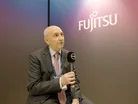
Fujitsu revealed plenty of exciting opportunities at MWC, including its photonics technology and Open RAN portfolio, as telecommunications companies seek ways to boost returns on investment on their 5G infrastructure innovations.
Carlos Cordero, CTO for Fujitsu Spain, therefore explains that his role is different to that of a traditional CTO.
“I do two things. One is to be in close contact with Fujitsu’s research and development (R&D) division across the world to understand what's going on in the five different key technology areas we work in.
“I then try to match those development projects to customer understanding, while looking at what pain points our technology can solve.”

We spoke exclusively with Carlos about Fujitsu’s goals for the telco industry and how the company is using its latest technology to support operators.
Fujitsu’s 5G goals, unpacked
At this year's event, Carlos explains that Fujitsu has two primary focus areas.
“We are focused on network and communications, with two different kinds of technologies: Photonic and Open RAN.”
He adds: “Photonics is able to put a lot of data on fibre optic, which is something we are extremely good at.
“We have also been promoting Open RAN technology for some time now, as an early advocate, and we have a fantastic portfolio on the technology.”
Some of the developments Fujitsu has announced in these areas include its AI-RAN solution, which optimises resource allocation on GPU servers by integrating RAN functions and AI applications for efficient resource management.
Likewise, the company’s Private 5G network solutions represent another key element of its MWC display, which is designed to meet rising demands for connectivity. Carlos explains that these networks are a potential growth area for both telecom providers and technology companies like Fujitsu.
“Our Private 5G solution is quite new, but now the cost of these networks is going down, people can deploy Private 5G even in small businesses,” he says. “Beforehand the cost was very big, given the different bits needed to connect devices to the infrastructure.”
This cost reduction creates opportunities for telecommunications companies to increase returns on their 5G investments.
“There are two hot topics for telcos. One is to increase that return of investment with 5G networks and the other is to find new revenue streams,” Carlos says. “In both areas, Fujitsu is positioned to help our portfolio, including the management and operation of the network, which is also important to manage return of investment.”
Enabling 5G transformation across key industries
Carlos views 5G as a fundamental advancement compared to previous generations of mobile technology.
He says: “5G technology is extremely different compared with 4G and 3G - it really makes a difference from a technology point of view.
“Today with 5G Standalone, you may achieve things which were not possible with the previous generations. And that's an opportunity in many sectors.”
These capabilities extend into multiple industries, transforming processes in critical industries such as manufacturing and healthcare.
“It may allow you to automatise a factory and make it really intelligent and autonomous, but it's not just about 5G technology - it’s about enabling automation,” Carlos explains. “It's a transformer on healthcare because again, it enables a hospital to do things which are not possible with 4G, 3G and so on.”
For both telecommunications companies and technology providers like Fujitsu, the transformative capabilities of 5G represent powerful market opportunities.
“For telcos, it's a clear opportunity, but it is also an opportunity for companies like us because it's basically technology on top of another technology and we are very good at that,” Carlos notes.
“I think telcos in Europe in particular are doing good enough compared with the rest of the world. There are maybe too many [telcos] in each country and that's a problem for them, so maybe moving forward we will see some kind of concentration in the future.”
“Today with 5G Standalone, you may achieve things which were not possible with the previous generations.”
Carlos also shares that, whilst telecommunications companies are meeting their infrastructure responsibilities, business adoption of tools like AI is lagging.
“From a deployment point of view, telcos are doing their role in each country, but maybe the problem is businesses being slow to adopt the technology,” he says.
“AI is everywhere at MWC this year - telco companies and Fujitsu are showcasing a lot of AI, but there is nothing really disruptive yet.”
Explore the latest edition of Mobile Magazine and be part of the conversation at our global conference series, Tech & AI LIVE and Cloud & 5G LIVE.
Discover all our upcoming events and secure your tickets today.
Mobile Magazine is a BizClik brand