
Behind Taiwan’s First LEO Satellite Network with CesiumAstro
The global competition for sovereign space communications has intensified as nations seek to reduce dependence on foreign satellite networks amid growing security concerns and geopolitical tensions.
In the Asia-Pacific (APAC) region, where technological advancement intersects with strategic interests, countries are investing heavily in indigenous satellite capabilities to ensure autonomous access to orbital infrastructure.
Taiwan, despite its advanced semiconductor industry, has until now relied on foreign satellite systems for critical communications.
This gap in national capabilities has prompted Taiwan to join countries like Japan, South Korea, and Australia in developing sovereign low-Earth orbit (LEO) satellite constellations to enhance communications resilience.
Now CesiumAstro, a Texas-based developer of advanced space communications technology, has secured a contract with the Taiwan Space Agency (TASA) to deliver critical components for Taiwan's first LEO satellite constellation.

The contract encompasses both space-based and ground-based systems for the Beyond 5G LEO Satellite (B5G) programme, which aims to create Taiwan's indigenous satellite communications network.
CesiumAstro will provide software-defined radio space communications payloads along with ground user terminals that will connect users on Earth to the orbital network.
Taiwan Space Agency selects Vireo Ka technology for orbital deployment
LEO satellites orbit between 500 and 2,000 kilometres above Earth, enabling faster data transmission with reduced latency compared to traditional satellites.
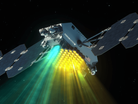
The space segment features CesiumAstro's Vireo Ka payload, an active phased array system that allows for multiple independently steerable beams.
Additionally, the B5G satellites are a crucial step in Taiwan's development of domestic capabilities to design, manufacture and operate communications satellites.
Real-time reconfigurability stands as a key feature of the Vireo Ka system, allowing operators to adapt to changing mission requirements without launching replacement satellites.
Shey Sabripour, Founder and Chief Executive Officer of CesiumAstro, says: “We are honoured to support TASA's vision for next-generation communications.
“Our modular, flight-proven payload technologies align with TASA's goals for performance, flexibility and future scalability.”
CesiumAstro Skylark terminals to provide ground connectivity network
CesiumAstro will also deliver its Skylark ground terminals, designed to provide user connectivity across various operational scenarios.
Trey Pappas, Chief Revenue Officer at CesiumAstro, says: “As Taiwan invests in secure, sovereign communications infrastructure, CesiumAstro is proud to contribute best-in-class technology and a commitment to mission success.”
The Taiwan Space Agency leads the B5G programme as part of the country's National Space Technology Long-Term Development Plan.
This initiative prioritises domestic resilience in space capabilities amid increasing global interest in establishing sovereign space-based communications networks.
“Our modular, flight-proven payload technologies align with TASA's goals for performance, flexibility, and future scalability and we look forward to delivering systems that support their ambitions for 5G and beyond,” says Shey.
The broader satellite connectivity scene
As global satellite connectivity accelerates, firms such as OneWeb are expanding maritime IoT partnerships – and Amazon's Project Kuiper is advancing LEO broadband trials.
Currently, Starlink, SpaceX's satellite internet service, is leading the market – accelerating global connectivity by providing high-speed broadband to remote and underserved areas.
Telco companies like T-Mobile have joined Starlink and launched a beta program for the US's first space-based mobile network, T-Mobile Starlink, covering over 500,000 square miles previously inaccessible to cell towers.
Starlink is now working on expanding its global rollout of satellite-to-mobile technology in additional countries in 2025 and aims to provide additional services for IoT devices, data and voice.
Explore the latest edition of Mobile Magazine and be part of the conversation at our global conference series, Tech & AI LIVE and Cloud & 5G LIVE.
Discover all our upcoming events and secure your tickets today.
Mobile Magazine is a BizClik brand