
Meta’s Investment Plans in the World's Longest Sea Cable
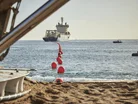
Global internet infrastructure continues to evolve as technology firms assume a greater role in building the physical connections that power digital communication.
As a result, submarine cables, once predominantly the domain of telco consortia, now are a strategic investment for technology companies seeking to control their digital supply chains and ensure capacity for data-intensive services.
Now, Meta, Instagram and WhatsApp, have unveiled plans to construct a 50,000-kilometre undersea cable system that will span five continents when completed – as technology firms face growing pressure to support expanding bandwidth demands driven by video streaming, cloud computing and emerging AI applications.
Project Waterworth connecting the world
The initiative, named Project Waterworth, aims to connect the US, India, South Africa, Brazil and other regions through what will be the world's longest underwater cable project.
"This project will enable greater economic co-operation, facilitate digital inclusion and open opportunities for technological development in these regions," Meta stated in a blog post announcing the venture.
Meta has been expanding its technological footprint beyond social media, with investments in AI and the infrastructure that supports it – and Project Waterworth is another strategic move to build this connectivity foundation.
How Meta’s cable system will utilise high-capacity fibre tech
Undersea cables form the backbone of global internet infrastructure, with industry estimates suggesting more than 95% of worldwide internet traffic travels through these submarine networks.
According to telco research firm TeleGeography, over 600 publicly-known undersea cable systems currently operate globally and they are vital for maintaining international communications and data exchange in an increasingly connected world.
Meta’s cable will implement a 24 fibre-pair system, providing increased data capacity compared to previous cable installations – allowing for greater bandwidth and faster data transmission rates, which are increasingly needed for data-intensive applications and services.
Meta has previously co-invested in similar infrastructure, including the 45,000-kilometre 2Africa cable project that connects three continents and represents one of the largest submarine cable networks in existence prior to Project Waterworth.
It has also developed telco partnerships with Orange, Vodafone and China Mobile.
Tech firms increase investment in global connectivity infrastructure
Meta is not alone in this investment trend.
Google announced in 2024 plans to build the first submarine cable connecting Africa and Australia, along with a US$1bn investment to enhance connectivity to Japan through two new undersea cables in the Pacific Ocean.
"Over the past decade there has been a shift in which these cables are increasingly laid by large technology companies," Professor Vili Lehdonvirta of the Oxford Internet Institute told the BBC.
Vili also noted that the trend reflects the financial capabilities of major technology corporations to independently fund such infrastructure, a development that "may be significant to policy makers concerned with concentration in digital markets.
Industry Analyst Paolo Pescatore adds to the BBC: "Meta has shown a strong desire to own more of the connectivity slice.”
"This is a further demonstration as it seeks to leapfrog rivals in providing users with an unique experience by tightly integrating hardware, software, platform and its growing aspirations in connectivity."
Project Waterworth avoids geopolitical hotspots amid growing security concerns
This cable comes amid heightened awareness of undersea cable vulnerability following recent cable disruptions – and security experts have identified submarine communications infrastructure as an emerging focus of geopolitical tensions.

NATO initiated enhanced surveillance operations in the Baltic Sea in January after damage to critical undersea cables last year.
Meanwhile, a UK parliamentary committee has requested evidence regarding national resilience against potential disruptions, citing "Russian and Chinese capabilities to hold undersea infrastructure at risk - particularly during periods of heightened tension or conflict.”
Meta addressed security considerations in its announcement, stating the cable system would be installed at depths reaching 7,000 metres and "use enhanced burial techniques in high-risk fault areas, such as shallow waters near the coast, to avoid damage from ship anchors and other hazards".
The cable route also appears to deviate from traditional paths by bypassing Europe and China while avoiding recognised geopolitical flashpoints such as the Suez Canal and South China Sea, according to Vili.
He added that establishing direct connections between the US and major emerging markets in the Southern hemisphere could be interpreted as "bolstering US economic and infrastructural power abroad.”
Explore the latest edition of Mobile Magazine and be part of the conversation at our global conference series, Tech & AI LIVE.
Discover all our upcoming events and secure your tickets today.
Mobile Magazine is a BizClik brand