Telcos Disrupted by Iberian Power Outage: A Warning?

On 28 April 2025, the Iberian Peninsula experienced a severe and unprecedented power outage that plunged large parts of Spain and Portugal into darkness.
The blackout, triggered by “anomalous oscillations in the very high voltage lines” and linked to extreme atmospheric conditions, rapidly severed the Iberian grid from the wider European network, causing widespread disruption across major cities, including Madrid, Lisbon, Barcelona and Valencia.
The telecommunications sector was among the hardest hit. Internet traffic in Portugal dropped by approximately 90%, while Spain saw an 80% decline compared to normal levels.
Mobile networks struggled as backup power systems at critical infrastructure points were depleted, leading to widespread difficulties in making calls and accessing data services.
Spain’s Prime Minister Pedro Sánchez warned that the country was at a “critical moment” for telecommunications, urging citizens to limit calls to essential communications only.
Modern telecommunications networks are the backbone of digital society, yet their operation fundamentally depends on a stable electricity supply.
The electrical grid and communications networks exist in a symbiotic relationship; power grids rely on communications for monitoring and control, while communications networks demand reliable power to operate. When national grids falter, telcos face profound operational and strategic challenges, with consequences that ripple far beyond the sector itself.
Grid instability: a growing threat
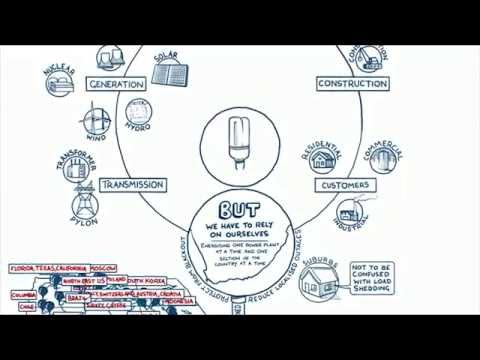
Grid resilience is under mounting pressure from several converging forces. Ageing infrastructure is a significant concern, with 70% of transmission lines and transformers over 25 years old as of 2023.
Extreme weather, increasingly frequent due to climate change, brings storms, floods and heatwaves that can break power lines, damage transformers and compromise substations.
Cyberattacks and physical sabotage pose a persistent threat, with attackers able to cause significant damage from a desktop potentially anywhere in the world - and with few, if any, clues left behind. The complexity of integrating renewables and distributed energy resources adds further volatility to grid management.
The direct impact on telecom infrastructure
When the grid fails, the effect on telecoms is immediate and severe. Critical equipment- cell towers, data centres, exchanges and fibre repeaters - all require continuous power. Backup systems, typically batteries and generators, provide only temporary relief.
Batteries, the most common initial backup, provide power for a finite duration, typically standardised at around eight hours. Still, frequent or prolonged outages, as seen in South Africa, can exhaust these reserves before they can recharge.
While offering longer runtime, generators are contingent on fuel availability, which is often disrupted during widespread blackouts.
Power failures risk damaging sensitive equipment due to voltage fluctuations or surges, compounding the cost and complexity of recovery.
Cascading consequences for telcos and customers
The loss of telecom sites triggers a cascade of negative impacts:
Service disruption: Widespread outages mean loss of mobile signal, internet and fixed-line services. During the Iberian blackout, “reports indicated widespread problems making phone calls and degraded performance of messaging apps like WhatsApp”.
Network quality degradation: Surviving network segments become congested, reducing speeds and increasing latency. Cloudflare data from the blackout revealed that “median download speeds more than halved and latency more than doubled in both Portugal and Spain.”
Economic and reputational costs: Operators face lost revenue, increased operational expenditure on backup power and potential reputational damage.
As Vodacom Group CEO Shameel Joosub stated regarding South Africa’s load shedding: “Instead of investing in rural infrastructure roll-out and in deploying new technologies, operators... have been forced to spend billions of rand just to ensure they are able to continue delivering services to consumers when the lights go out.”

Lessons from the Iberian blackout
The blackout that struck Spain and Portugal is a cautionary tale. Apart from cities plunged into darkness and chaos, internet traffic dropped, and data centres largely remained operational on backup generators. However, the network relies on intermediate systems that have a shorter autonomy.
Several hours into the outage, the exhaustion of backup power at these intermediate nodes led to further service degradation.
Chronic grid instability: South Africa and Venezuela
In South Africa, chronic load shedding has forced telcos to adapt. Standard battery backups cannot always recharge between outages, leading to intermittent service when there is no power.
Operators have invested heavily in generators, batteries and technician teams, but at the expense of network expansion and innovation. MTN South Africa noted that capital that could have gone to 5G or rural expansion was instead spent on resilience “to achieve the exact same result you would have achieved absent of load-shedding.”
Venezuela’s blackouts have been more severe, with government backup plants failing during national outages. Government attempts to restart Guri multiple times led to an explosion at a nearby substation, further destabilising the grid.
Building resilience: industry best practices
Telcos are not passive victims. They play a crucial role in societal resilience and must adopt robust strategies:
- Invest in backup power at all critical network points, including hybrid renewable solutions.
- Prioritise essential services and manage network capacity dynamically during outages.
- Collaborate with energy providers and the government to prioritise telecoms for power restoration.
- Regularly maintain and test all backup systems to avoid failures seen in Venezuela.
- Consider shared infrastructure or industry-wide resilience initiatives to reduce costs and improve coverage.
A call for collaborative solutions
Grid vulnerability is a systemic risk, intensified by the digital economy’s reliance on constant connectivity.
As recent events in Europe and ongoing challenges in South Africa and Venezuela demonstrate, telcos must view resilience as a core business imperative.
The costs of grid instability are externalised onto the telecommunications sector and its customers, impacting national competitiveness. Only through investment, innovation and cross-sector collaboration can operators ensure that connectivity endures even when the lights go out.
Explore the latest edition of Mobile Magazine and be part of the conversation at our global conference series, Tech & AI LIVE and Cloud & 5G LIVE. Discover all our upcoming events and secure your tickets today.
Sign up to receive the Mobile Magazine weekly newsletter.
Mobile Magazine is a BizClik brand