
AI for Telcos: AMD, AT&T and Microsoft Announce OTel 2.0
One of the thornier problems facing the telecoms industry is that conventional AI models fall short when trying to understand telco standards jargon or helping operators analyse their network data.
This was why the GSMA launched the Open Telco AI initiative back in March 2026 at MWC Barcelona.
The goal of fit-for-telco use AI has taken another step forward with the news that AMD, AT&T and Microsoft have announced OTel 2.0, a new open-source model trained specifically for telecoms, using data provided by the Open Telco AI initiative.
AT&T states that OTel 2.0 is the largest and best-performing model for telco use due to its training regime.
Using GSMA data alongside managed Azure compute, the ongoing collaboration aims to help telecom operators build and deploy safe and reliable models.
Over time, these dedicated tools will support automated operations, faster network troubleshooting, improved resiliency and better customer experiences.

How did they make OTel 2.0?
AT&T processed more than one trillion tokens through Azure-hosted AI models running on AMD Instinct GPUs to identify the most meaningful 400 billion tokens and used those tokens to post-train the new OTel 2.0 model on AMD hardware.
Switching to AT&T's general use of AI, the operator's cache-aware AI gateway processes an average of 45 billion tokens daily. The gateway has reduced its AI costs by as much as 80%, saving millions of dollars.
In a blog post, Andy Markus, AT&T’s Chief Data and AI Officer, explains that this AI Gateway works by “intelligently [matching] each task to the most cost-effective model – without compromising on quality”.
Making AI work for the enterprise
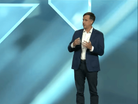
During AMD’s Advancing AI 2026 keynote, Jeremy Legg, AT&T’s CTO, talked about how AT&T is using AI in a general sense. He explained that the company is “beginning to rebuild entire workflows inside of the company", agentifying them. He gives the on-boarding process for new employees as an example.
Jeremy also emphasised the human element: “You need world-class teams to do this and you need people that think in workflows.” Otherwise, there can be a lot of “racing from stop light to stop light” caused by people not working out how AI should be used in the context of all of a full workflow’s components.
Therefore, he says that it is important for enterprises starting their AI journey to focus on the quality of their people.
Another point he emphasised is the importance of data sovereignty. “We are big believers in data sovereignty, and data sovereignty for us means not being tied to a specific chip set, not being tied to a specific model or a specific set of development tools.”
Data management was also top of mind. “You need, as an enterprise, to manage your data. Your data is your fuel in terms of how you implement AI.”
Powering telco scale
“AT&T’s progress shows what becomes possible when open collaboration, telecommunications expertise and right-sized compute come together,” says Dan McNamara, senior vice president and general manager, Compute and Enterprise AI at AMD.
Dan continues, “By combining AMD Instinct GPUs, the open AMD ROCm software platform and flexible compute from core to edge, we can help operators build and deploy telco-specific AI at scale while balancing accuracy, performance and cost.”
The rise of Models as a Service
In his blog, Andy described the Models as a Service (ModaaS) operating model.
“Every part of the AI ecosystem needs to work together. The costs and the accuracy need to be combined with strong security and robust governance.
“When all of those pieces work together, this sets up a company for a viable AI management system that’s been gaining [ground]: Models as a Service.”
He explains that ModaaS involves end-to-end control and management of an AI stack, including controlling proprietary data flow and optimising the running costs of high-scale AI.
“It's a major lever for protecting enterprise IP, driving return on your AI investments, and transforming operations from the ground up. And it provides a pathway to truly sovereign AI,” Andy adds.
“I believe AT&T is building something truly unique by combining our telco expertise with our AI proficiency—and setting a foundation that can extend well beyond telecom.”




Executives

Andy Markus
Chief Data & AI Officer
Dan McNamara
Senior Vice President & General Manager, Compute & Enterprise AI
Jeremy Legg
Chief Technology Officer