How Will Apple AI Exec Moves Impact Connectivity & Networks?
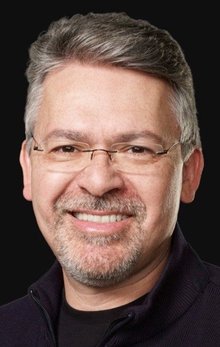
Apple announced that John Giannandrea, SVP for Machine Learning and AI Strategy, will step down from his role and act as an advisor before his planned retirement in spring 2026.
It confirms that Amar Subramanya joins as VP of AI, reporting to Craig Federighi, with Apple stating that the remaining parts of John’s organisation will move under Sabih Khan and Eddy Cue.
The shift signals changes to the structure that guides internal work on features that run across Apple services and devices, including those linked to connectivity, search and distributed processing.
John’s group has been responsible for Apple Foundation Models, Search and Knowledge, Machine Learning Research and AI Infrastructure.
These functions operate across many layers of Apple platforms, including those that interact with network-dependent features such as Siri requests, on-device inference and cloud-supported processes.
Apple outlines the change as an update to reporting lines rather than a directional shift in its technical plans.
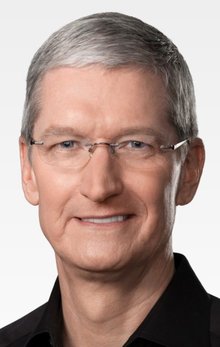
Tim Cook, Apple’s CEO, says: “We are thankful for the role John played in building and advancing our AI work, helping Apple continue to innovate and enrich the lives of our users.
“AI has long been central to Apple’s strategy, and we are pleased to welcome Amar to Craig’s leadership team and to bring his extraordinary AI expertise to Apple.
“In addition to growing his leadership team and AI responsibilities with Amar’s joining, Craig has been instrumental in driving our AI efforts, including overseeing our work to bring a more personalised Siri to users next year.”

Apple Foundation Models shape network-linked features
Amar will oversee Apple Foundation Models and the related research that supports Apple Intelligence features.
The systems are used in services that depend on network behaviour and real-time input, including voice requests, device-to-device interactions and cloud processing.
Apple confirms that Amar will manage ML research and AI safety and evaluation, which are central to functions spanning device, edge and cloud environments.
Before joining Apple, Amar served as Corporate Vice President of AI at Microsoft and previously spent 16 years at Google, where he was head of engineering for the Gemini Assistant.
His background includes work on large-scale model training and deployment, as well as on integrating AI into user-facing products.
Many of these AI-driven features rely on latency-sensitive network paths and on models that must adapt to different usage conditions.
Craig, Apple’s Senior Vice President of Software Engineering, will oversee a broader portfolio that includes Apple Foundation Models and the tools that support them.
It creates a structure in which teams working on platform integration, client-side operations, and server-assisted inference share a common leadership.
For operators, it may influence how Apple devices interact with network functions, particularly as future Apple Intelligence features rely on hybrid processing models.
Apple, Google and Microsoft experience influences AI integration
Amar’s previous roles at Google and Microsoft provide insight into model development processes used in large-scale consumer services.
The services frequently depend on distributed processing, content retrieval and cross-platform synchronisation, which in turn rely on stable network connections.
Apple signals that this experience will support the development of features that require coordination between on-device systems and external processing layers.
John’s advisory role until his retirement provides continuity for Apple’s internal research work. His involvement ensures that ongoing programmes can transition without significant disruption to teams that manage AI infrastructure and Apple Foundation Models.
Apple’s decision to reallocate parts of John’s organisation to Sabih Khan and Eddy Cue reflects a structural alignment with its operations and services groups.
It aligns AI functions with departments that manage supply chains, device deployment, media services and other network-integrated offerings.
For telecoms stakeholders, Apple’s leadership change offers insight into how it intends to handle the growing overlap between device capabilities and network-supported AI processes.
Apple Intelligence features, including those linked to Siri, depend on coordination between local execution and cloud-supported operations.
Tim’s statement that “AI has long been central to Apple’s strategy” outlines how Apple presents the transition and how it positions its long-term investment in AI.
Apple's internal structure sets AI development direction
The new reporting lines clarify how Apple intends to organise research, engineering and evaluation across its AI programmes.
With Craig guiding software engineering and Amar leading Apple Foundation Models, ML research and AI safety, it brings together functions that operate across device architectures and cloud systems.
For telecoms audiences, it signals the role that AI may play in shaping traffic patterns, endpoint behaviour and network-assisted features across Apple’s platforms.



Executives
Amar Subramanya
Vice President AI
John Giannandrea
SVP Machine Learning and AI Strategy
Tim Cook
Executive Chairman