
China’s 6G Tech Disrupts F-35 Jets & Sets Telecoms Benchmark
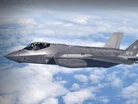
Chinese researchers have announced a groundbreaking 6G-based system that will disrupt advanced military aircraft while enabling high-speed data transmission.
The development signals a strategic leap in dual-use electromagnetic technology with profound implications for the telecommunications and defence sectors.
Revolutionary dual-function 6G system
Scientists claim the technology can simultaneously jam adversary communications while transmitting large volumes of data using the same frequency band.
By design, the system targets advanced platforms like the US F-35 fighter by intercepting and disrupting communication relays, generating thousands of false signals to overwhelm enemy sensors and maintaining high-bandwidth data transfer throughout operations.

Researchers describe it as the world’s first publicly disclosed platform with “simultaneous same-frequency communication and jamming capabilities”. The dual functionality marks a significant shift in the field of electronic warfare, representing a new paradigm in how such technologies can be applied.
China’s 6G patent dominance
The breakthrough highlights China’s dominant position in next-generation wireless technology. Current data shows that China holds over 40% of global 6G patents, with more than 13,000 active 6G patent filings originating from Chinese entities.
Major contributions come from companies such as Huawei, which accounts for 30% and ZTE, with 12%, alongside significant input from academic institutions.
China’s leadership in intellectual property facilitates the swift militarisation of commercial telecommunications innovations, placing it at the forefront of electromagnetic spectrum control.
Telecommunications sector implications
For telecommunications professionals, the development raises several critical considerations. Dual-use 6G systems could expose civilian networks to potential compromise during conflict, highlighting the need for more resilient and hardened infrastructure.
Using “same-frequency” operations challenges traditional spectrum allocation models, prompting a reassessment of current regulatory frameworks.
As commercial 6G deployments expand, there may be a growing need to integrate electronic counter-countermeasures (ECCM) directly into a network architecture to enhance defence capabilities.
Additionally, concerns over supply chain security are mounting, with Western telecom providers under increasing pressure to develop homegrown 6G technologies to reduce reliance on foreign systems.
Strategic military advantages
The technology offers significant strategic military advantages by delivering three key tactical benefits. First, it enables electronic deception by mimicking legitimate signals to confuse enemy sensors.
Second, it enhances network resilience, allowing friendly forces to maintain communications while disrupting adversary networks.
Third, it supports asymmetric warfare by providing a cost-effective means of undermining advanced military platforms.
“This represents a fundamental rethinking of electromagnetic spectrum dominance – where communication and electronic warfare become inseparable functions.”
The advancement is intensifying global competition. In response, the United States Department of Defense has allocated US$2.8bn towards 6G electronic warfare countermeasures.
Commercially, the growing divide between global standards may lead to export controls and a bifurcation of 6G supply chains. Meanwhile, regulatory bodies such as the ITU face mounting pressure to establish communication standards resistant to electronic warfare.
Telecommunications providers must now assess the risks of 6G deployment in geopolitically sensitive regions, particularly those involving Chinese infrastructure.

Industry analysts predict the arrival of commercially available dual-function systems within five years, with 6G expected to become the default standard for critical infrastructure. In parallel, new cybersecurity frameworks will likely emerge to address the challenges of “cognitive spectrum warfare.”
The rise of the technology cements 6G as both an economic and national security priority, demanding unprecedented collaboration among telecom operators, defence contractors and policymakers to navigate the evolving threat landscape.
Explore the latest edition of Mobile Magazine and be part of the conversation at our global conference series, Tech & AI LIVE and Cloud & 5G LIVE. Discover all our upcoming events and secure your tickets today.
Sign up to receive the Mobile Magazine weekly newsletter.
Mobile Magazine is a BizClik brand