
Chunghwa, Astranis Launch Taiwan's First Satellite
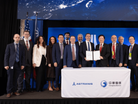
Chunghwa Telecom has partnered with US-based satellite innovator Astranis to develop Taiwan's first exclusive geostationary communications satellite system.
The collaboration, backed by a US$115m investment from Chunghwa, aims to strengthen the island's digital infrastructure by integrating Astranis's MicroGEO technology into its multi-orbit satellite architecture. The dedicated system is scheduled for launch later this year, with bandwidth availability projected by 2026.
"Astranis's MicroGEO solution introduces vital flexibility and resilience to our satellite strategy," highlighted Dr. Alex C.C Chien, Chairman of Chunghwa Telecom. "This collaboration enables us to build a dedicated, secure digital infrastructure for Taiwan—one that can serve as a critical real-time backup against natural disasters, submarine cable disruptions and evolving global uncertainties."
Astranis's microGEO technology: a game-changer for dedicated connectivity
Astranis, founded in 2015, specialises in compact, high-throughput geostationary satellites that challenge traditional industry norms. Its MicroGEO satellites weigh approximately 400 kg—far lighter than conventional multi-tonne GEO satellites—and leverage proprietary software-defined radio (SDR) technology to dynamically allocate bandwidth and adjust frequencies post-launch.
Astranis's next-generation Omega satellite, unveiled in 2024, represents a significant leap forward.
Capable of delivering 50+ Gbps of dedicated throughput—five times the capacity of Astranis's initial models—Omega combines advanced SDR capabilities with solid-state power amplifiers (SSPAs) and electric propulsion systems. "We've always understood that the time to market is incredibly important," noted John Gedmark, CEO of Astranis.
"Omega allows us to offer unprecedented flexibility at lower price points, making dedicated satellite connectivity accessible to new markets."
Addressing Taiwan's unique connectivity challenges
Taiwan's geographic vulnerability to natural disasters and reliance on undersea cables for international connectivity make satellite redundancy a strategic priority. Chunghwa's investment in a dedicated MicroGEO system ensures localised control over bandwidth allocation, reducing dependence on shared regional satellites.
The Astranis satellite will complement Chunghwa's existing hybrid network, which includes low-earth orbit (LEO) and medium-earth orbit (MEO) satellites.
Unlike shared HTS (High Throughput Satellite) systems offering 300+ Gbps across vast regions, MicroGEO's targeted 50 Gbps capacity focuses exclusively on Taiwan, ensuring uncontended bandwidth for critical services.

Technical innovations driving the partnership
Astranis's SDR technology allows seamless reconfiguration of satellite payloads in orbit, enabling Taiwan to adapt bandwidth allocation for disaster response or military communications without hardware modifications. Omega's Protected Tactical Waveform support further enhances its suitability for dual-use government and commercial applications.
The satellites' compact size reduces launch costs, as they can deploy aboard smaller rockets like SpaceX's Falcon 9. Once in orbit, electric propulsion systems facilitate precise positioning and relocations, a feature absent in traditional GEO satellites.
Market implications and future outlook
The collaboration positions Chunghwa as a regional leader in satellite resilience, setting a precedent for other telecom providers in disaster-prone regions. Astranis's vertically integrated manufacturing—70% of Omega's components are built in-house—ensures rapid scalability, with the first Omega satellites launching in 2026.
"Our founding vision was to provide dedicated capacity where it's most needed," said John. "Partnering with Chunghwa aligns perfectly with our mission to secure critical communications infrastructure."
- Throughput: 50+ Gbps dedicated capacity (Omega model)
- Operational Lifespan: 8–10 years
- Technology: Software-defined radio, electric propulsion, solid-state power amplifiers
- Launch Vehicle: Falcon 9 or equivalent
- Primary Use Cases: Disaster recovery, military communications, rural broadband
Chunghwa Telecom is future-proofing Taiwan's communications grid and establishing a blueprint for regional satellite resilience. The system's 2026 operational timeline highlights the urgency of addressing modern connectivity challenges through agile, purpose-built solutions.
Explore the latest edition of Mobile Magazine and be part of the conversation at our global conference series, Tech & AI LIVE and Cloud & 5G LIVE. Discover all our upcoming events and secure your tickets today.
Sign up to receive the Mobile Magazine weekly newsletter.
Mobile Magazine is a BizClik brand