Deutsche Telekom Secures European AI Infrastructure Deal

Deutsche Telekom has secured a contract worth tens of millions of euros from Leibniz University Hannover to provide infrastructure for the SOOFI research project.
T-Systems will host the Sovereign Open Source Foundation Models initiative in its Industrial AI Cloud, where scientists from six German research institutions and two startups will develop a 100-billion-parameter large language model trained entirely in Europe.
The SOOFI project marks a transition from experimental AI development to operational deployment.
The initiative builds on Teuken-7B, a seven-billion-parameter model released in late 2024 that was trained across all 24 official languages of the European Union.
The new model will operate on German soil using Nvidia DGX B200 systems, with training scheduled to begin in March 2026.
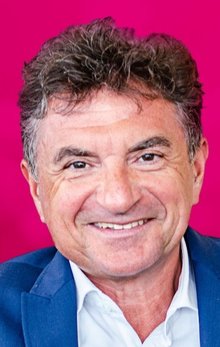
Dr Ferri Abolhassan, Member of the Board of Management of Deutsche Telekom and CEO of T-Systems, says: “Digital sovereignty is critical to Europe as a business location.
“We are proud to be working with Leibniz University, the Fraunhofer Institute and the German AI Association on a project that is crucial to Europe’s future viability and independence in the field of AI.”
The German Federal Ministry for Economic Affairs and Energy is funding the research consortium with approximately €20m (US$23m) until July 2026.
The SOOFI consortium includes the L3S Research Center at Leibniz University Hannover, Fraunhofer IAIS, Fraunhofer IIS, DFKI, the University of Würzburg, TU Darmstadt, Beuth University of Applied Sciences Berlin and startups Ellamind and Merantix Momentum.
The SOOFI project aims to replace the Teuken-7B model
The transition from Teuken-7B to a 100-billion-parameter architecture represents a fundamental shift in capability and infrastructure requirements.
Teuken-7B was trained on the JUWELS supercomputer at Forschungszentrum Jülich, using four to six trillion tokens across 24 EU languages.
The model’s training data comprised approximately 50% non-English content and 40% English content.
Prof Wolfgang Nejdl from the L3S Research Center at Leibniz University Hannover says: “With SOOFI, we are laying the foundation for the next generation of European AI models; sovereign, powerful and entirely in European hands.
“Large AI models that respect European values are essential for building trust in AI, especially in sensitive areas such as education, medicine, administration and production.”
The 100-billion-parameter scale enables complex reasoning, zero-shot learning and multilingual understanding.
The SOOFI consortium will develop a reasoning model on top of the base large language model, allowing analysis of technical, regulatory and organisational contexts.
The L3S Research Center develops multilingual datasets for fine-tuning, safety benchmarks and reward models to strengthen logical capabilities.
Researchers explore neuro-symbolic approaches combining neural networks with structured knowledge graphs to reduce hallucinations.
Fraunhofer IAIS leads the development of the training pipeline and optimisation of the tokeniser, leveraging expertise from the OpenGPT-X project.
Dr Nicolas Flores-Herr from Fraunhofer IAIS says: “SOOFI brings together leading research teams from Germany to train large open-source LLMs, which represent an important area of a sovereign AI value chain.”
Nvidia DGX B200 systems anchor European AI factory
The partnership between Deutsche Telekom and Nvidia establishes what both companies describe as sovereign AI cloud infrastructure.
For Nvidia, the collaboration aligns with its strategy of partnering with telecommunications operators to build facilities that comply with data residency requirements.
For Deutsche Telekom, the partnership enables a transition from connectivity provision to platform services, selling AI supercomputing capacity to German industry.
The facility integrates with SAP's Business Technology Platform as part of the Deutschland-Stack, a public-sector and regulated-industry offering.
It creates what Deutsche Telekom describes as a German-controlled environment for data processing, shielding users from implications of the US CLOUD Act, which can compel US companies to disclose data stored abroad.

European cloud computing infrastructure has historically been dominated by Amazon Web Services, Microsoft Azure and Google Cloud, which collectively hold more than 70% of the market share in Europe.
Approximately 20% of companies plan to repatriate business-critical data from public clouds to facilities with local data storage by 2025 due to geopolitical considerations.
The Industrial AI Cloud supports applications beyond SOOFI training. The platform integrates Nvidia Omniverse for digital twin simulations, allowing manufacturers to plan and optimise production lines virtually.
Agile Robots, a spin-off from the German Aerospace Center, uses the cloud to train foundation models for robot manipulation using synthetic data.
Teuken-7B establishes multilingual AI foundation
The Teuken-7B model demonstrated consistent performance across EU languages, trained from scratch in all 24 official languages rather than English-first training with subsequent fine-tuning.
Developing a custom multilingual tokeniser improved training efficiency for European languages. For German texts, the Teuken tokeniser incurred 22% additional cost compared to English processing.
Jörg Bienert from the German AI Association says: “Alongside initiatives such as the Gigafactory and the EU AI Action Plan, it is an important step in developing independent AI models as a building block for an open, independent and powerful ecosystem in Germany and Europe.”
The EU AI Act and the General Data Protection Regulation require infrastructure that ensures compliance by design.
SOOFI is positioned to provide what consortium members describe as a trustworthy alternative to models including GPT-4 and Claude.
The initiative ensures that data resides within the EU and that processes comply with European standards.
Fraunhofer IAIS developed the European LLM Leaderboard to validate model performance reflecting European priorities. The benchmark suite evaluates models across all 24 EU languages using translated datasets, including HellaSwag, ARC and TruthfulQA.
The contract structure represents a form of industrial policy. Rather than providing research grants to purchase hardware that would become obsolete, the government acts as an anchor tenant for commercial cloud services.
The arrangement de-risks Deutsche Telekom's investment in Nvidia hardware by guaranteeing multi-year utilisation beginning March 2026.
Company portals


Executives
Ferri Abolhassan
CEO T-Systems, Board Member of Deutsche Telekom AG