Ericsson and Telstra: Advancing 6G Research and Innovation

If 5G was about speed, 6G is shaping up to be about intelligence.
That is the message behind a new agreement between Telstra and Ericsson as the pair move to deepen collaboration on the technologies expected to define the next era of mobile connectivity.
The companies have signed a letter of intent focused on 6G research and trials, with work spanning standards development, testing environments and AI-native network capabilities.
The partnership forms part of Telstra’s Connected Future 30 strategy and comes as operators globally position themselves for the long-term transition beyond 5G.
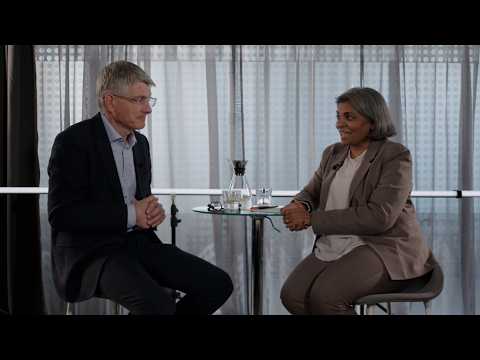
Under the agreement, Telstra engineers will gain access to Ericsson’s 6G testbed facilities in Sweden, where the vendor is developing and trialling emerging technologies tied to future network architectures.
Ericsson teams will also work from Telstra’s Innovation Centre on Australia’s Gold Coast, giving both companies an opportunity to explore how 6G performs across different geographical and operational conditions.
AI-native networks move into focus
Operators and vendors are framing 6G technology around AI, automation and sensing capabilities, instead of focusing on purely higher speeds.
Shailin Sehgal, Group Executive of Global Networks & Technology at Telstra, says: “Our letter of intent with Ericsson demonstrates how we’re delivering on our Connected Future 30 strategy by continuing to build the technology momentum that will underpin 6G.
“Mobile connectivity has been one of the most powerful economic engines of modern Australia.
“As the first G which is AI-native, 6G will be the most intelligent network yet, capable of advanced network connectivity and new Network as a Product innovations such as the ability to sense the environment around the network.
“The latter opens the potential for new use cases for public safety, agriculture, weather detection and more.
“Our focus is making sure Australia remains at the forefront of digital innovation, with connectivity that helps people, businesses and communities thrive.”

The emphasis on AI-native infrastructure reflects a broader shift taking place across the telco sector.
Vendors are pitching future networks as intelligent platforms capable of autonomously managing workloads, adapting to demand and enabling real-time enterprise services.
Testing the future of connectivity
Ericsson’s involvement with Telstra adds to a growing number of early-stage 6G collaborations emerging across global telco markets.
Unlike previous generational transitions, much of the current discussion centres on integrating AI directly into the fabric of the network itself.
Erik Ekudden, Ericsson Chief Technology Officer, says: “We are on a clear and exciting trajectory, from 5G Standalone today, to AI-powered 5G and autonomous networks, towards AI-native 6G that is meeting the evolving and future business needs.
“6G will redefine what a network fundamentally is – not just an AI-native technology platform, but a platform that senses, adapts and orchestrates resources to deliver outcomes for enterprises and society at scale; simply an intelligent fabric.
“Realising that potential requires the kind of early, deliberate collaboration we are building together.
“Australia is a market at the forefront of network innovation where the combination of operator ambition, technical depth and innovation culture makes this genuinely meaningful.
“Our work with Telstra, spanning research, standards and real-world testing, paves the way for the next era of advanced connectivity.”
The companies said collaboration will also extend to 3GPP standards evolution, an area likely to become more competitive as operators and vendors seek influence over the technologies underpinning future mobile networks.
Spectrum and investment for 6G
Alongside technical development, Telstra and Ericsson highlighted the need for continued investment and regulatory certainty around spectrum access to support future 6G services.
That issue is expected to become more prominent as governments and operators begin planning how spectrum policy will evolve over the coming decade.
For telco providers, securing access to the right frequencies is critical for balancing coverage, performance and emerging AI-driven network demands.
The agreement also reinforces the longstanding relationship between the two companies, which have worked together across multiple generations of mobile technology.
Telstra and Ericsson's latest collaboration signals a continued focus on keeping Australia positioned as an early adopter market as global telco firms begin laying the groundwork for the 6G era.


Executives
Erik Ekudden
Group CTO

Shailin Sehgal
Group Executive of Global Networks & Technology