Ericsson Mobility Report: How 5G SA Unlocks Value

The global telecommunications landscape is undergoing a fundamental shift. As the industry moves towards the close of 2025, the narrative is no longer solely defined by the race for coverage or raw speed. Instead, the focus has pivoted towards value creation through differentiated connectivity, enabled by the maturing deployment of 5G Standalone (SA) networks.
The Ericsson Mobility Report 2025 reveals the sheer scale of adoption is undeniable. By the end of this year, 5G subscriptions are expected to reach 2.9 billion, about one-third of all mobile subscriptions globally.
However, the true story lies beneath the topline numbers, found in the architectural evolution that allows operators to monetise experience rather than just bits and bytes.
The standalone era and differentiated connectivity
The transition from Non-SA to SA architectures is the linchpin for the new era. It is the technical foundation that enables network slicing and programmable networks, features promised at the dawn of 5G and now becoming commercial realities.
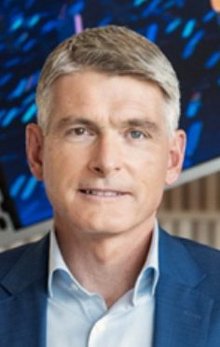
"This year, the industry has taken big steps in deploying the 5G standalone (SA) architecture needed to support differentiated connectivity services," observes Erik Ekudden, Senior Vice President and CTO at Ericsson.
By leveraging SA capabilities, operators can move away from generic "best-effort" connectivity to guaranteed performance levels tailored to specific use cases.
A prime example of the strategy in action is Singtel. The Singaporean operator has been aggressive in its pursuit of value over volume. In a market where connectivity is ubiquitous, the service provider aims to "change the conversation from data quantity to data differentiation."
The strategic pivot is essential for sustaining revenue growth in saturated markets. By offering tiered services based on latency, reliability and throughput, operators can unlock new value pools.
As Singtel notes: "Connectivity is enabling tailored experiences that deliver business outcomes when and where they matter most."
One of the most demanding testbeds for the technology is mobile gaming, where milliseconds can dictate the difference between victory and defeat.
Singtel has deployed specific network features to address this, utilising "5G Advanced Latency Priority Scheduling. The technology identifies and prioritises time-critical game data, such as player commands and in-game animations, reducing delays in real-time gameplay."

The convergence of AI, cloud and mobile
While 5G SA provides the connectivity layer, it does not exist in a vacuum. The telecommunications stack is increasingly converging with hyperscale cloud computing and Artificial Intelligence (AI). The convergence is reshaping traffic patterns, particularly in the uplink, as AI agents and Extended Reality (XR) devices demand continuous, high-bandwidth feedback loops to the cloud.
"The interdependence across the technology stack, especially as AI, cloud and mobile become ever more intertwined, means that fostering a collaborative and open ecosystem, particularly among leading industry players, is more important than ever," says Erik.
The intertwining of technologies is evident in consumer behaviour. The report highlights a distinct trend in how networks are utilised for media consumption. While streaming services like Netflix demand stable downstream bandwidth for high-definition playback, social media platforms have altered the traffic profile. Social media-generated videos account for 70–80% of all mobile video traffic on smartphones. It necessitates networks that are responsive enough to handle the rapid-fire requests of scrolling feeds, where 5G significantly reduces start-up times compared to previous generations.
Modernising the enterprise
Beyond the consumer segment, the enterprise sector offers the most significant opportunity for revenue growth. Businesses are actively seeking to shed legacy infrastructure in favour of more agile, cloud-native setups.
Here, 5G acts as a liberating force, allowing companies to rethink their IT estates entirely.
SoftBank Corp. has been at the forefront of the internal transformation.
"5G connectivity can simplify enterprise IT architecture while supporting zero-trust and AI-enabled workflows that enhance both security and productivity," the company states.
The traditional model of securing a physical perimeter via LANs and heavy on-premise hardware is becoming obsolete.
It is being replaced by "an endpoint-centric model, built on zero-trust, 5G and cloud technologies, is set to redefine enterprise IT architecture."
The shift is not just about agility; it carries a compelling financial incentive for CFOs looking to rationalise IT spend.
SoftBank suggests that "replacing parts of these conventional network environments with 5G-based architectures leveraging network virtualisation could reduce overall IT infrastructure costs by up to 50%."
Extreme connectivity in hybrid environments
The versatility of modern networks is further demonstrated in extreme environments where public and private networks must interoperate seamlessly.
Global racing championship SailGP operates in marine conditions that would challenge any standard network, requiring the transmission of massive amounts of telemetry from catamarans moving at 100 km/h.
To manage it, they utilise "a hybrid 5G public and private network is the perfect solution for deployment at the SailGP races, improving fan experiences and handling the data-heavy race operations."
The hybrid approach ensures resilience. Critical race data can traverse a dedicated private slice, while fan engagement and broadcast feeds utilise the public spectrum.
Looking ahead, SailGP believes "the optimum event solution is to expand 5G deployment across all use cases, combining private networks and public network slicing to fully leverage 5G's capabilities."
Future outlook: FWA and 6G
Looking further toward the horizon, the trajectory for 5G remains steep. The technology is playing a critical role in bridging the digital divide through Fixed Wireless Access (FWA).
Projections suggest that in 2031, around 1.4 billion people globally will be served by Fixed Wireless Access broadband.
Simultaneously, the industry is already laying the groundwork for the next generation.
While 5G is the present commercial reality, the research community is looking at "AI-native 6G networks, together with new capabilities such as integrated sensing and communication (ISAC), will enable entirely new use cases and classes of devices."
However, realising the future — from the immediate monetisation of 5G SA to the eventual rollout of 6G — means a unified approach. The complexity of integrating AI, cloud and edge compute prevents any single player from dominating the entire value chain.
"As we enter this next wave of mobile, I'm convinced that collaboration across the ecosystem will be the key to unlocking its full potential," Erik concludes.




Executives
Erik Ekudden
Group CTO