
Ericsson Mobility Report: Key Findings for 5G Operators
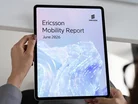
When it comes to 5G, Ericsson’s latest Mobility Report suggests operators should pay as much attention to how networks are being used as to how many customers are connected.
The June 2026 edition of the report reveals that global 5G subscriptions surpassed three billion during the first quarter of the year, while new opportunities are emerging around 5G Standalone (SA), network slicing and fixed wireless access (FWA).
At the same time, changing user behaviour is reshaping traffic patterns, with uplink traffic becoming a focus for operators.
A total of 162 million new 5G subscriptions were added globally in the first quarter, taking the total to 3.1 billion.
Ericsson forecasts that figure will rise to 6.4 billion by the end of 2031.
Network slicing gains commercial momentum
One of the clearest findings for operators is the growing commercial adoption of 5G SA network slicing.
Ericsson reports that the number of commercial differentiated connectivity offerings based on 5G SA network slicing increased to 84 globally, up from 65 reported in the November 2025 edition.
The growth points to operators moving beyond trials and early deployments towards broader commercialisation.
“With the upcoming transition to physical AI, traffic patterns will fundamentally shift as we move from centralised models in data centres to distributed, autonomous AI agents embedded across our device vehicles and cities, commonly connected by 5G,” says Erik Ekudden, EMR publisher and CTO at Ericsson.
“Mobile networks are no longer only about providing best-effort connectivity, they are becoming critical, intelligent infrastructure that meets diverse application needs.
“Reflecting part of this shift is the continued rise in new commercial service offerings based on 5G standalone network slicing and the number of communications service providers deploying 5G SA.”
The wider 5G SA ecosystem is also expanding.
Ericsson says around 390 service providers have launched commercial 5G services globally, with more than 90 deploying 5G Standalone networks.
5G traffic and FWA continue to grow
The report highlights the growing role of 5G as the primary platform for mobile data traffic.
By the end of 2025, 5G networks carried 48% of all mobile data traffic worldwide.
Ericsson expects that figure to reach 85% by 2031 as adoption continues to increase.
Western Europe, North America, North East Asia and Gulf Cooperation Council countries are all forecast to reach 5G adoption levels close to or above 90% by the end of the forecast period.
For operators focused on broadband services, fixed wireless access is another a key growth area.
The share of FWA providers offering services over 5G has reached 71% compared with 57% a year earlier.
Speed-based tariff plans are also becoming more common. Ericsson found that 57% of FWA providers now offer speed-tiered packages, up from 51% in 2025.
New 5G FWA launches were recorded in markets including Algeria, Argentina, Bangladesh, Morocco, Taiwan, Türkiye and Vietnam.
Strong uptake continues in North America, the Nordics, Gulf Cooperation Council markets and parts of Asia.
AI changes network traffic patterns
Another major takeaway for operators is the changing balance between uplink and downlink traffic.
According to Ericsson's measurements, uplink traffic is now growing faster than downlink traffic for most service providers.

The trend is linked to communication and collaboration applications, cloud storage usage and the sharing of user-generated content from smartphones.
Among 55 service providers analysed, 43 recorded faster uplink growth than downlink growth. The report also highlights that 17 operators experienced uplink growth rates more than 1.5 times higher than downlink growth.
Ericsson believes AI applications could accelerate this development further.
Its modelling suggests uplink traffic could be three times higher in 2031 than in 2025 as AI-generated and AI-assisted services become more widely used.
Overall network data traffic across mobile and FWA networks grew 22% year on year during the first quarter of 2026, exceeding expectations and driven largely by continued growth in India and North America.
Looking further ahead, the report notes growing industry attention on 6G, with standardisation work already underway.
The first implementable specifications are expected by the end of 2028 or early 2029, with initial commercial deployments anticipated around 2030.
For now, however, Ericsson’s latest findings indicate that operators remain focused on extracting greater value from expanding 5G networks through differentiated services, new broadband offerings and infrastructure capable of supporting future AI workloads.
Company portals

Executives
Erik Ekudden
Group CTO