
Ericsson and T-Mobile Push 5G Forward with AI RAN Trials

Streaming, gaming and video calls all compete for space on increasingly busy mobile networks, and Ericsson and T-Mobile think AI can help manage the traffic jam.
The companies are scaling live commercial trials of AI-native RAN software designed to predict changing radio conditions in real time and improve network performance across T-Mobile’s 5G Advanced deployment.
Ericsson’s AI-native Scheduler with Link Adaptation has now moved into large-scale commercial testing on T-Mobile’s live network, marking another step in the shift towards AI-native RAN architectures.
The software uses a neural network running directly on Ericsson hardware to predict changing radio conditions in real time and optimise how network resources are allocated.
The move comes as operators face increasing pressure to manage rising traffic demands while extracting more capacity and performance from existing spectrum assets.
Ericsson and T-Mobile claim the trials delivered close to a 10% increase in spectral efficiency and up to a 15% improvement in downlink throughput compared with rule-based scheduling methods.
The companies added that the results mirrored previous testing carried out in smaller geographic areas, suggesting the software can maintain performance gains across wider deployments and different network environments.
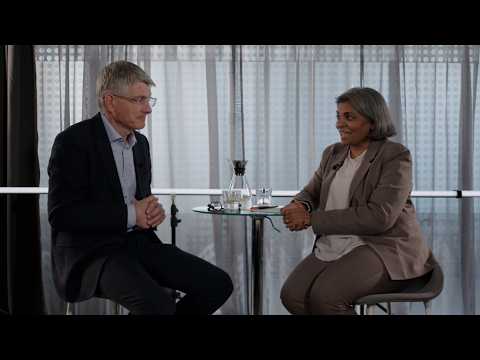
Grant Castle, Senior Vice President of RAN Engineering & Emerging Technologies at T-Mobile, says: “Following our milestone as the first U.S. operator to deploy 5G Advanced nationwide in 2025, we’re continuing to push the boundaries of RAN innovation.
“Our work with Ericsson on AI-native Scheduler with Link Adaptation demonstrates how real-time, AI-driven optimization can enhance spectral efficiency and throughput while delivering a more consistent experience for customers at scale.”
AI moves deeper into the RAN
The latest trials highlight how AI is increasingly being integrated directly into RAN software rather than operating solely through external automation or network management layers.
Ericsson said its scheduler software continuously adapts to rapidly changing radio frequency conditions, allowing the network to make faster decisions around modulation, coding and resource allocation.

The company argues this is particularly important in congested or high-interference environments where traditional rule-based systems struggle to react efficiently.
The potential gains for operators are closely tied to spectrum efficiency, allowing carriers to deliver more capacity and throughput without acquiring additional spectrum resources.
Ericsson also positions the software as part of its wider push towards programmable and AI-native networks, an area vendors increasingly see as central to the evolution of 5G Advanced.
Johan Hultell, Head of Product Line RAN Software, Business Area Networks at Ericsson, says: “AI is central to our vision for high-performing programmable networks.
“By embedding intelligence directly into RAN software, we can deliver real-time performance gains that enhance user experience while helping operators like T-Mobile maximize the value of their spectrum.”
Focus on customer experience
While the technical focus of the trials centres on spectral efficiency and throughput, Ericsson and T-Mobile are also framing the work around customer experience improvements.
According to the companies, the AI-native scheduler helps maintain more stable performance during periods of high demand or in areas with weaker radio conditions.
They say this can improve consistency for bandwidth-intensive applications including video streaming, cloud gaming and video calling.
Ericsson and T-Mobile say they plan to continue working together on additional AI-native RAN use cases aimed at improving network performance and operational efficiency across the carrier’s 5G Advanced deployment.
Company portals


Executives

Grant Castle
Grant Castle, Senior Vice President of RAN Engineering & Emerging Technologies
Johan Hultell
Global Head of Product Line Cloud & Purpose-Built 5G RAN