
How Airtel Africa Cut Diesel Use Amid Network Expansion
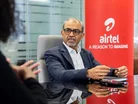
Keeping mobile networks running across sub-Saharan Africa is no mean feat.
In many regions, unreliable electricity supplies mean telco operators must depend on diesel generators to keep customers connected.
For Airtel Africa, that challenge has grown alongside its network footprint. Yet despite expanding infrastructure across 14 markets, the operator has managed to significantly reduce its diesel consumption.
The company's latest sustainability results show how investments in power infrastructure are helping support network growth while limiting emissions increases.
Over the past year, Airtel Africa converted 390 off-grid sites to grid power, increasing its total number of grid-connected sites to more than 21,500.
The operator's network estate now spans over 40,300 assets across the continent.
Alongside these grid connections, Airtel Africa introduced 176 new lithium-ion batteries and upgraded cooling systems at network sites.
Together, the measures reduced diesel consumption by 9.1 million litres during the year.
“Across Africa, access to connectivity, financial services and digital education is increasingly essential to economic opportunity,” says Sunil Taldar, CEO of Airtel Africa.
“Sustainability remains embedded in how we operate and grow our business.
“By improving energy efficiency and reducing reliance on diesel, we’re strengthening operational resilience while supporting long-term sustainable growth.”

Slowing Emissions Growth
The network upgrades had a measurable impact on Airtel Africa's emissions profile.
Scope 1 and 2 emissions reached 136,133 tonnes of CO₂-equivalent in 2025/26, representing a year-on-year increase of 1.6%.
While emissions continued to rise as the business expanded, the increase was significantly lower than the 4.3% growth recorded the previous year.
The company also reported a 20% reduction in emissions intensity compared with its 2022 baseline, bringing it closer to its target of reducing emissions intensity by 62% by 2032.
However, Airtel Africa's largest environmental challenge lies beyond the operation of its own network infrastructure.
The company estimates that Scope 3 emissions account for approximately 85% of its total greenhouse gas footprint in Africa, with upstream leased assets responsible for 79% of those emissions.
To address this, Airtel Africa has strengthened environmental requirements for suppliers and contractors.
As a member of the Joint Alliance for CSR (JAC), it completed five supplier audits during the year and closed 66% of outstanding corrective action plans related to responsible sourcing and ethical mining practices.
Extending Equipment Lifecycles
The operator is also focusing on reducing waste associated with telecoms infrastructure.
Through equipment take-back programmes with Nokia, Huawei, ZTE and Ericsson, Airtel Africa recovered, recycled or repurposed 532 tonnes of electronic network waste during the year.
No e-waste was sent to landfill and the company achieved an overall waste circularity rate of 94%.
The emphasis on sustainability extends into Airtel Africa's governance and commercial operations. ESG performance metrics are linked to executive remuneration, while women now account for 29.9% of the Group workforce and 36.3% of Board representation.
“From a Board perspective, there is a strong and consistent focus on ensuring that sustainability remains fully embedded in how the business operates and grows,” says Annika Poutiainen, Board Member and Airtel Africa's sustainability champion.
“The Board, supported through its committees, regularly reviews progress against key priorities and maintains oversight of how the business manages evolving risks, including those related to climate.
“This provides assurance that sustainability is not treated as a separate agenda but as an integral part of decision-making and long-term value creation.
“Operating across diverse environments brings challenges, particularly in relation to energy and resource use.
“The company continues to strengthen its approach, working to balance expansion with careful stewardship.”
Women account for 44.1% of the platform's customer base, reflecting the increasing role mobile services play in extending access to financial tools across underserved communities.
Airtel Money also grew its active customer base by 21.3% to more than 54 million users, processing around US$196bn in transactions.
Company portals





Executives

Annika Poutiainen
Board Member
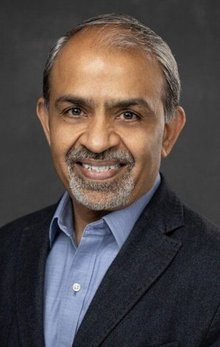
Sunil Taldar
MD and CEO