
How HumeLink Power Towers Tackle Regional Mobile Blackspots
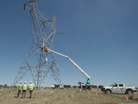
A transmission project supporting Australia’s energy transition is addressing mobile coverage gaps, as telco equipment is installed on electricity towers to improve reception across New South Wales.
The HumeLink project introduces a model where energy infrastructure supports telco delivery, creating a corridor of connectivity alongside power transmission.
Transgrid, working with its subsidiary Lumea Telecommunications, is fitting telco boosters to transmission towers along a 365km route.
The aim is to improve mobile and internet access for communities, businesses and services that operate in areas with limited or no reception, offering a practical response to long-standing blackspots.

Infrastructure meets connectivity
The HumeLink corridor extends across several local government areas including Cootamundra-Gundagai, Wagga Wagga, Snowy Valleys, Upper Lachlan Shire and Yass Valley.
Up to 10 telco boosters are planned, with installations already completed at Myrtleville, Chatsbury and Wyangle. Additional sites are scheduled for rollout this year.
The boosters function by capturing mobile signals from distances of up to 20km and redirecting them into surrounding areas, typically covering a radius of up to three kilometres depending on terrain.
Early testing shows download speeds of around 30Mbps, offering stable connectivity in locations that previously lack coverage.
Lumea's Head of Telecommunications, Tim Stone, says: “With Transgrid’s transmission network spanning more than 11,500km, using electricity infrastructure to support telecommunications coverage could help address connectivity gaps in regional communities across NSW and the ACT.
“Major transmission projects are already transforming how electricity moves across the country and initiatives like this show how they can also play a role in strengthening digital connectivity for regional Australia.”
This integration reflects a shared infrastructure model, where telco equipment leverages the power supply and reach of transmission towers. It essentially reduces the need for standalone base stations while extending network reach into underserved areas.
Addressing regional blackspots
The project responds to community feedback about unreliable mobile service, including complaints about daily communication, access to online services and emergency response capabilities. By targeting known blackspots, the initiative aligns telco deployment with local demand.
Jeremy Roberts, Project Director for HumeLink, says: “As Australia builds the new transmission infrastructure needed to support renewable energy, there is an opportunity to think more broadly about how that infrastructure can benefit regional communities.
“We’ve heard consistently from landholders and communities along the HumeLink alignment that poor mobile reception is a real challenge, so improving connectivity has been a priority for us.
“For some residents and businesses, this will mean having dependable coverage for the first time – allowing them to make calls, send messages and access online services without relying on patchy or inconsistent reception.
“It will also boost coverage for motorists, visitors and tourists travelling along regional roads and assist emergency services such as the NSW Rural Fire Service.
“By integrating mobile boosters with electricity infrastructure, we’re demonstrating how the energy transition can also help improve digital connectivity for rural and regional communities.”
Community and telecoms impact
Local government representatives point to the immediate benefits of improved coverage for residents and travellers. This includes safety, business operations and access to digital services in regions where connectivity has been inconsistent.
Upper Lachlan Mayor Paul Culhane highlights the practical value of the rollout, saying: “These boosters are a welcome and practical improvement for local residents, landholders and anyone travelling through the area.
“It’s encouraging to see HumeLink delivering some benefits for the community alongside the construction work, particularly where better connectivity supports safety and day-to-day life in regional NSW.”
Installations are taking place on both existing and newly constructed towers, ensuring coverage aligns with the transmission corridor.
HumeLink itself connects Snowy 2.0 and other renewable energy sources to the grid, while also increasing competition in the electricity market. Within this framework, the addition of telco capability introduces a dual-purpose infrastructure model, where energy and connectivity needs are addressed in parallel.
The project illustrates how cross-sector collaboration can extend network reach for telecoms operators and infrastructure providers. By using transmission assets to host telecoms equipment, the model offers a scalable way to improve coverage in regional and remote areas without duplicating infrastructure.


Executives

Jeremy Roberts
Program Director - Humelink
Tim Stone
Head of Telecommunications