
How T-Mobile Solutions Will Connect the 2028 LA Olympics
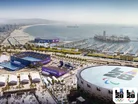
The telecommunications infrastructure for the 2028 Los Angeles Olympic and Paralympic Games presents challenges that extend beyond traditional single-venue events.
To help connect the most distributed Games in Olympic history, the Los Angeles Organizing Committee has selected T-Mobile for Business as its official telecommunications services provider, tasking the carrier with connecting operations across Southern California’s sprawling geography.
Unlike previous Olympics held in compact urban areas, LA28 will utilise existing facilities across multiple counties.
T-Mobile for Business must connect more than 110 locations, including in excess of 40 competition venues, while maintaining consistent performance across diverse geographical and technical environments.

“The LA28 Games will set the standard for how technology can connect people to the biggest stage in all of sports,” says David Michael, Chief Information Officer for LA28.
“Harnessing new technologies and partners who align with our vision is key to the future of the Movement.
“T-Mobile for Business will play a crucial role in connecting Games stakeholders to the action as events unfold at more than 110 connected locations – including more than 40 competition venues – across Southern California.”
T-Mobile 5G Network addresses Olympic broadcasting evolution
As part of the partnership T-Mobile for Business will establish secure, low-latency connections between the International Broadcast Center and all competition venues, supporting Olympic Broadcasting Services as it coordinates with more than 100 international broadcasters.
The network architecture utilises T-Mobile 5G Advanced Network Solutions with network slicing technology to create dedicated pathways for broadcast traffic.
This approach provides broadcasters with guaranteed performance levels while separating broadcast operations from other network usage.
The technical requirements reflect how broadcasters now deliver multiple camera angles, real-time statistics and interactive content alongside traditional coverage.
- More than 110 connected locations across Southern California, including over 40 competition venues
- SuperMobile platform will connect more than 15,000 Olympic staff members via push-to-talk services
- T-Mobile 5G will link the International Broadcast Center to all venues for more than 100 broadcasters
Timing proves critical for Olympic broadcasting, where seconds of delay can affect live coverage coordination between venues and international broadcast partners.
T-Mobile’s infrastructure must accommodate these timing-sensitive applications while maintaining capacity for operational communications and spectator connectivity.
SuperMobile platform manages distributed staff communications
The distributed nature of LA28 creates communication challenges not present in compact Olympic venues.
T-Mobile’s SuperMobile platform will connect more than 15,000 staff members through push-to-talk services, enabling coordination between venues separated by significant distances across Southern California.
The LA28 Games will set the standard for how technology can connect people to the biggest stage in all of sports.
SuperMobile incorporates nationwide network slicing, integrated security features and satellite coverage to ensure connectivity in areas where terrestrial networks may face coverage limitations.
The platform creates separate communication channels for different staff functions, allowing security personnel, venue operations and broadcast teams to maintain dedicated paths while sharing the same infrastructure.
Network slicing proves particularly important for managing peak usage periods when spectators simultaneously access digital services while operational systems require guaranteed performance.
T-Mobile must balance these competing demands across venues with different capacity requirements.
Network architecture addresses commercial operations security
Olympic Games generate significant commercial activity through ticketing, merchandise sales and hospitality services across multiple venues.
T-Mobile’s network slicing technology enables LA28 to operate these commercial systems on dedicated network segments, providing transaction security while ensuring operations continue during peak spectator usage.

Point-of-sale systems and event ticketing utilise secure network slices separate from general connectivity, reducing security risks while maintaining high-bandwidth performance.
This architectural approach reflects broader telecommunications industry trends toward application-specific network provisioning.
“T-Mobile for Business has the advanced, next-gen technology that will help redefine how the Games are run and experienced, making them faster, more connected and more immersive and epic,” says Mo Katibeh, Chief Marketing Officer, T-Mobile Business Group.
Olympic venue distribution creates network challenges
Each LA28 venue type presents different connectivity profiles, as, for example, aquatic venues require different network configurations compared to outdoor athletics facilities or indoor arenas.
T-Mobile must adapt its solutions to accommodate these variations while maintaining consistent performance standards.
The network infrastructure must also support real-time coordination between venues for events spanning multiple locations, with marathon and cycling events traversing public roads and requiring mobile connectivity solutions that extend beyond fixed venue installations.
“We’re thrilled this technology will be put in play on the biggest stage in sports to support LA28's goals to increase operational efficiencies, transform fan experiences and support a seamless broadcast,” Mo says.