How Vodafone Made the First Space Video Call Using Phones
In late January 2025, Vodafone made the world’s first space video call from an area with no mobile coverage using a standard phone and commercial satellites.
Achieving this required building a new satellite gateway in just weeks, a system designed to provide a full mobile broadband experience.
Building the gateway
Work began in early December 2024, and the team’s first task was to choose the temporary satellite gateway.
The site required space for a 2.4-metre diameter satellite dish, clear visibility of the sky in all directions to track the satellite and a structure able to support the dish’s one-tonne weight.
After reviewing several options, a car park at Vodafone’s Newbury office was selected.
Once the dish and its control system arrived from Europe, the team transported them to the top deck of the car park.
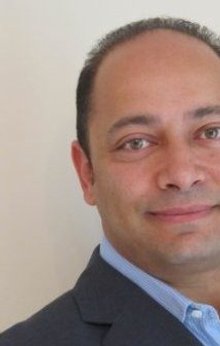
Sami Gabriel, Distinguished Engineer at Vodafone says: “I think there was ten of us on site doing that assembly.
“In the R&D team, we do a lot of trials so it’s a matter of finding a way to make it happen – no is not an acceptable answer.”
Within three days, the dish was in position and connected to Vodafone’s core network via cables running to an upgraded on-site base station.
“There’s no power supply beyond the lighting in the car park, so we had to run a dedicated 100-metre power extension from the nearest main supply to the dish,” explains Sami. “It actually worked first time.”
The base station allows the gateway to connect to other communications networks.
Once it receives a satellite signal, it transmits it to the receiving phone. This works like a normal mobile tower, which also sends and receives signals.
A standard mobile tower has a 4km range, which can be weakened by obstacles. In comparison, a satellite communicates from over 500km away with a clear, unobstructed path.
Next, the team integrated the AST SpaceMobile kit, which tracks the satellite and guides the dish to maintain communication. By New Year, coordination was complete and the team was ready to try calls.

Connecting the not-spot
To test the system, engineers needed a “not-spot” – an area with no mobile signal.
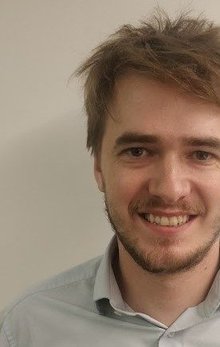
Using coverage maps, lead engineer Rowan Chesmer identified remote Welsh valleys.
The team, including colleague Abdirahman Farrah and Rowan’s dog Odin, faced snowy tracks, flooded roads and fallen trees.
They also re-farmed some spectrum to avoid interfering with terrestrial networks.
Now came the critical test – will the phones connect to the satellite? Rowan and Abdi used a spectrum analyser to detect the signal.
“You can't see anything, but you hold a spectrum analyser up and you can clearly see the signal,” says Rowan. “It looks really boring when you're doing it, but it’s incredibly exciting when there's something there.”
Sami describes seeing the satellite network as “euphoria”.
Sami and his team coordinated communications from base, while Rowan tested in the field. Rame Canolli and Yll Bajrami from the office team monitored servers to confirm that the base station recognised the connection and identified the user.
Initially, only one satellite was available, giving two to three passes a day when the satellite was above the horizon.
Soon, AST SpaceMobile dedicated passes from all five BlueBird satellites, providing up to 12 passes every 10–20 minutes over four to five hours.
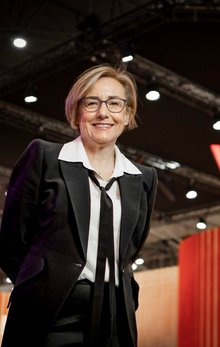
Despite narrow windows, the team succeeded, completing a voice call followed by a video call to Vodafone CEO Margherita Della Valle in the early hours of 29th January 2025.
Preparing for commercial service
Vodafone moves the temporary gateway from Newbury to a permanent location to support commercial services planned for 2026. Technically, the Newbury gateway could cover the whole of the UK.
The satellite network will have enough satellites to ensure continuous 4G and 5G coverage wherever a user is located.
Vodafone aims to deliver mobile connectivity to areas currently out of reach and expand broadband access across the UK and beyond.
Company portals

Executives
Margherita Della Valle
Group Chief Executive
Rowan Chesmer
R&D Future Technologies Researcher
Sami Gabriel
Vodafone Distinguished Engineer