Inside NVIDIA and T-Mobile's AI-RAN Strategy for Telcos
NVIDIA and T-Mobile are working together to bring AI into telecoms infrastructure, teaming up with Nokia and a growing developer ecosystem to move physical AI applications onto distributed edge networks.
The partnership focuses on AI-RAN, where AI is built into the radio access network.
Using NVIDIA’s Metropolis platform, developers are deploying vision AI agents across environments such as cities and industrial sites, turning 5G infrastructure into a platform that supports AI workloads alongside connectivity.
At the hardware level, NVIDIA has introduced its AI-RAN portfolio. These applications include ARC-Pro built on RTX PRO 4500 Blackwell Server Edition for power-constrained cell sites, and RTX PRO 6000 Blackwell Server Edition for higher-capacity mobile switching offices. The systems allow telecoms infrastructure to process AI tasks at the edge, closer to where data is generated.
T-Mobile is piloting NVIDIA’s AI-RAN with Nokia’s anyRAN software. The telco demonstrates how cell sites and mobile switching offices handle distributed AI workloads while maintaining 5G performance.
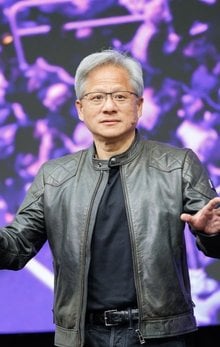
“Telecommunication networks are evolving into the AI infrastructure enabling billions of devices – from vision AI agents to robots and autonomous vehicles – to see, hear and act in real time,” says Jensen Huang, Founder and CEO of NVIDIA.
“By turning the 5G network into a distributed AI computer with T-Mobile and Nokia, we’re creating a scalable blueprint for the world’s edge AI infrastructure.”
5G networks move into edge AI computing
The telecoms network is positioned as a distributed computing layer, extending beyond connectivity into processing and intelligence. This model addresses limitations in existing systems, particularly around latency which is critical for real-time applications.
T-Mobile’s 5G standalone network provides wide-area coverage and consistent service quality. This supports AI agents that require continuous, low-latency connections in environments ranging from urban intersections to remote industrial sites.
Srini Gopalan, Chief Executive Officer of T-Mobile, said: “Turning networks into distributed AI computing platforms to unlock the full potential of Physical AI will require ultra-low latency and space time coherency at the network edge for billions of endpoints, and that’s what we’ve built at T-Mobile.
“With the first nationwide 5G Standalone and 5G Advanced network, we are uniquely positioned to help power a future where intelligent systems don’t wait on the cloud but rely on intelligent networks that allow them to act in real time.”
Shifting compute workloads from devices to the network edge means operators reduce the need for complex hardware in endpoints such as cameras and robots. In practice, this allows large-scale deployment of AI systems while controlling costs and improving efficiency.
Developers test real-world telco AI use cases
A group of developers works with NVIDIA and T-Mobile to bring AI applications into live telco environments. These use cases rely on distributed edge infrastructure to process data in real time.
In smart city operations, companies including LinkerVision, Inchor and Voxelmaps test computer vision-based systems that monitor traffic and simulate conditions through digital twins. These tools aim to improve traffic flow and response times.
Utility inspection projects use 5G-connected drones and AI to monitor transmission lines. Companies such as Levatas and Skydio deploy systems that detect faults like corrosion or overheating, reducing inspection times and enabling predictive maintenance.
In facility management, Vaidio applies AI to video feeds, moving beyond basic sensors to detect threats and anticipate equipment failures. This creates automated workflows that improve operational efficiency.
Industrial safety is another focus. Fogsphere develops AI agents that monitor hazardous conditions in construction and energy environments, identifying risks such as unsafe worker positions or chemical spills in real time.
These deployments illustrate how telco networks support continuous AI operations without reliance on Wi-Fi, which often lacks the range and security required for industrial use.

Video intelligence expands across telecoms edge
NVIDIA is advancing its Metropolis Video Search and Summarisation, or VSS, blueprint. This framework allows AI systems to analyse large volumes of video data, a growing challenge as more than 1.5 billion cameras operate globally while only a small fraction of footage gets reviewed.
The VSS 3 blueprint introduces features such as agentic information retrieval, where AI systems break down natural language queries and search video content to identify specific events in seconds. Its modular design is efficient as it allows deployment across sectors without redesigning infrastructure, reducing costs.
Partners including Caterpillar, KION, Hitachi, HCLTech, Siemens Energy, Tulip and Telit Cinterion have adopted the blueprint to enhance safety and streamline operations.
For telco operators, these developments reinforce the role of 5G networks as platforms for both connectivity and computation, supporting a new layer of services built on distributed AI.
Company portals


Executives
Jensen Huang
Founder and CEO

Srini Gopalan