
Microsoft Azure Hit by Red Sea Subsea Cable Cuts
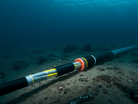
Microsoft has confirmed disruptions to its Azure cloud services following multiple subsea cable cuts in the Red Sea, leading to latency issues for internet traffic routed through the Middle East.
The incident highlights the growing fragility of global data infrastructure and the risk subsea cable disruptions pose to both cloud providers and the telecommunications sector.
Azure customers affected by latency
In a public status update, Microsoft stated that Azure traffic across the Middle East “may experience increased latency due to undersea fibre cuts in the Red Sea”.
It clarified that “traffic that does not traverse through the Middle East is not impacted”.
While it has rerouted services to alternative paths, enterprise cloud users across Asia and the Gulf are reporting slower speeds.
Microsoft remains the second-largest global cloud provider, serving hyperscale telecommunications workloads, AI-driven applications and BSS/OSS systems.
Service reliability is, therefore, a critical concern for operators utilising Azure for latency-sensitive processes.

Subsea cable routes disrupted
Reports from NetBlocks, which monitors connectivity worldwide, confirm “a series of subsea cable outages in the Red Sea have degraded internet connectivity in multiple countries”.
The watchdog noted that India, Pakistan and the UAE were notably affected.
According to its analysis, failures relate to the SMW4 (South East Asia–Middle East–Western Europe 4) system, operated by Tata Communications and the IMEWE (India–Middle East–Western Europe) cable, managed by a global consortium led by Alcatel Submarine Networks.
Supporting these findings, the Pakistan Telecommunication Company stated that the outages occurred in waters near Jeddah, Saudi Arabia.
Officials cautioned that services could suffer “significant degradation during peak hours” and warned business and consumer customers to expect reduced experience while engineers respond.
Regional service providers impacted
UAE-based operators du and Etisalat also reported issues, with users noting slow speeds and intermittent access.
Although regional authorities did not formally acknowledge the disruption, NetBlocks confirmed the Emirati networks were attempting to stabilise connections amid cable repairs.
Satellite connectivity and terrestrial cables often serve as backup for disrupted routes, but reliance on subsea systems remains paramount.
With more than 95% of international data traffic carried on undersea infrastructure, the resilience of global networks remains a pressing concern for operators and vendors.
Previous incidents and security risks
The Red Sea has become a focal point for subsea cable disruption.
In February 2024, multiple communication cables were severed between Asia and Europe, significantly disrupting connectivity.
At the time, Yemen’s internationally recognised government claimed that the Iran-aligned Houthis movement intended to sabotage digital arteries, although the rebels denied responsibility.

The recent events follow a broader pattern of risks to subsea cables in geostrategic waters.
Since 2022, unexplained damage to cables and pipelines in the Baltic Sea has drawn suspicion of sabotage linked to broader geopolitical tensions.
In one case, Swedish authorities seized a vessel suspected of striking subsea infrastructure with its anchor, which was later treated as potential sabotage.
Anchoring accidents remain a significant cause of damage, yet deliberate targeting of subsea networks has fuelled broader security concerns.
For telcos relying on uninterrupted global interconnectivity, contingency planning and investment in multi-route redundancy are becoming unavoidable.
Implications for Telcos
Industry analysts say the disruption underlines how subsea dependency continues to shape service continuity.
As cloudification accelerates across the telco sector, undersea cable vulnerabilities translate directly into operational risks for enterprise and consumer services alike.
Operators running high-value workloads on Azure and other hyperscaler platforms face heightened exposure when routing bottlenecks occur.
Failover systems provide relief, but performance degradation persists where rerouting involves longer, less-efficient paths.
As the Pakistan Telecommunication Company noted, the strain grows “especially during peak hours”.
For global operators, the incident reinforces the need for active coordination with hyperscaler partners and regional carriers.
Increased investment in diverse subsea routes, terrestrial infrastructures and emerging satellite backhaul are all part of strategies to mitigate these risks.
The Red Sea cable cuts have again demonstrated how subsea infrastructure fragility can ripple through international networks, cloud platforms and telecom ecosystems.
With Microsoft forced to reroute Azure traffic and regional operators struggling to stabilise services, the episode raises urgent questions about resilience planning in critical data pathways.
Company portals
du
Etisalat

Microsoft
Tata Communications