
Nokia and du introduce an autonomous 5G slicing service AI

Nokia and du introduce an autonomous 5G Advanced network slicing model designed to align service delivery with real-time demand across enterprises, industries and consumer environments. The deployment establishes a new operational method within du’s mobile network by integrating machine-learning-driven controls, Nokia 5G AirScale base stations and the MantaRay service management and orchestration suite.
The announcement centres on the shift from predefined network slices to a system in which the radio access network adjusts its behaviour based on measured performance and business intent.
The approach connects slice characteristics directly to customer requirements without manual intervention. It links du’s strategic roadmap to its stated aim of preparing its network for future architecture developments.
Saleem Alblooshi, Chief Technology Officer at du, says the collaboration “represents a significant step forward in our mission to deliver exceptional connectivity experiences.
"By leveraging intent-based 5G advanced slicing, we are ensuring premium network performance and guaranteed capacity for our demanding customers while positioning our network for future advancements like 6G,” he adds.
Saleem frames the work as a structural change rather than a feature addition, positioning the model as part of du’s long-term engineering direction.
Autonomous controls inside Nokia MantaRay SMO
The autonomous slicing capability is anchored in Nokia’s MantaRay SMO suite, which integrates the MantaRay SON self-organising network platform and the MantaRay AutoPilot rApps engine.
The components interpret operational data from the radio network and apply policies across the AirScale base station layer.
The system evaluates conditions such as cell load, latency behaviour and traffic distribution, then triggers slice-specific policies without human intervention. Nokia positions the model as a mechanism for linking enterprise intent with RAN behaviour.
Each decision loop is based on live performance indicators and historical patterns, allowing the slice to maintain the service characteristics requested by customers under changing network conditions.
Mikko Lavanti, Senior Vice President for Mobile Networks in the Middle East & Africa at Nokia, states that the project with du “is a great example of Nokia’s co-innovation with leading technology and business partners".
"Autonomous network slicing enables telecommunications providers to provide valuable service differentiation to their customers with efficiency and high quality, setting the stage for adopting and monetising next-generation technologies.”
Mikko presents the collaboration as evidence of a broader industry direction in which operators integrate automated control into core network functions.
Nokia AirScale and rApps guide slice operation
Nokia AirScale sites form the radio layer in which the autonomous behaviour is enforced. The AirScale platform accepts the rApps instructions generated by MantaRay AutoPilot, turning business intent into technical action.
The integration links slice policy management to each cell’s operational state, thereby aligning demand with resource allocation.
In urban enterprise environments, machine learning models assess required throughput and latency for business-critical applications. When the system identifies that an enterprise customer’s traffic requires additional capacity, it adjusts RAN behaviour to match the service request.
The same logic applies in live event zones or transport hubs, where the ratio of users to available spectrum shifts throughout the day.
For consumer segments, du highlights the role of autonomous slicing for low-latency applications such as 5G gaming.
When network data indicates a cluster of gaming users in a dense area, the system enforces a low-latency RAN slice policy to maintain expected service levels. It allows du to offer a consistent user experience without static provisioning or manual tuning.

du positions autonomous slicing for future use
du frames the deployment as an operational foundation for its 5G Advanced programme. By connecting machine-learning-driven controls with service intent, the operator aims to extend slice usage across broadcasting, extended reality and AI-assisted applications. The design supports enterprise environments requiring predictable behaviour for industrial automation or business applications that depend on continuous performance.
The collaboration with Nokia further introduces an engineering model in which network performance becomes tied to real-time service needs rather than predefined assumptions. It connects du’s service catalogue with measurable indicators inside the RAN, enabling a consistent link between customer expectations and radio behaviour.
Saleem reiterates that intent-based slicing “ensures premium network performance and guaranteed capacity”, positioning the project as part of du’s future network direction. Mikko notes that the work “sets the stage for adopting and monetising next-generation technologies”, presenting autonomous slicing as a platform for later development across the telecommunications sector.
Company portals
du
Nokia


Executives
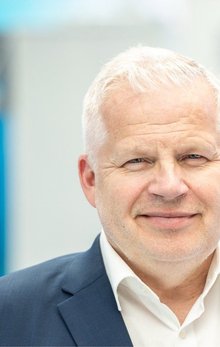
Mikko Lavanti
Senior Vice President for Mobile Networks in the Middle East & Africa

Saleem Alblooshi
Chief Technology Officer