Nokia Bell Labs and KDDI Research Expand 6G Collaboration
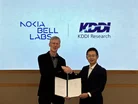
Nokia Bell Labs and KDDI Research have signed a new joint research agreement to develop approaches for energy-efficient and resilient 6G networks. The agreement, finalised on November 5, 2025, deepens their existing collaboration in advanced communications research and extends years of cooperation between the two companies.
The new phase of work will bring together KDDI’s operational data and network experience with Nokia Bell Labs’ expertise in programmable architectures and energy consumption models.
The partnership, the companies state, will provide the foundation for 6G networks designed to deliver both commercial and practical benefits.
According to Peter Vetter, President of Core Research at Bell Labs, Nokia, progress in network innovation depends on cooperative work across the sector.
“Tackling the inherent challenges in a new generation of networking requires close collaboration in the industry.
"Working side by side, KDDI Research and Nokia Bell Labs can advance the state of the art in networking thanks to different perspectives on the problems and possible solutions. Ultimately, the joint outcomes will make 6G a more resilient, efficient and intelligent technology,” he says.
Joint research aims to optimise 6G energy use
One of the primary areas of focus for the collaboration is energy performance in large-scale networks.
The research will focus on advancements in massive multiple-input multiple-output (MIMO) technology, aiming to enhance base station operations for the proposed 6G spectrum bands.

By integrating Nokia Bell Labs’ detailed energy models with KDDI’s field data, the research teams intend to test and verify more efficient transmission and resource allocation methods.
The developments are seen as essential for reducing network power consumption across multiple layers of future mobile infrastructure.
The partners will further examine how new antenna configurations and hardware-software optimisation can reduce energy requirements without compromising communication potential.
The approach emphasises the production of verifiable results that can be scaled from research environments to commercial networks.
Satoshi Konishi, President and CEO of KDDI Research, highlights the shared commitment to advancing both technical capacity and social utility. “Through our strategic and close collaboration with Nokia Bell Labs, we aim to accelerate R&D initiatives and further strengthen the ‘Power to Connect’ toward 6G.
"We strive to continuously deliver new value to our customers and make meaningful contributions to societal progress,” Satoshi says.
Resilient core networks for continuous connectivity
Beyond energy considerations, the partnership includes research into distributed and programmable core network technologies. By design, the systems maintain communications capability even during infrastructure disruptions or natural disasters.
The concept of distributed core architectures is based on decentralising network control functions and service operations across multiple nodes. It would support service continuity if primary sites fail or experience outages.
Nokia and KDDI Research expect that programmable network frameworks can further enable more flexible and responsive service restoration methods, adapting dynamically to changing network conditions.

Collaborative trials will investigate mechanisms that enhance resilience without increasing complexity in system management. By testing prototype architectures and distributed topologies, both organisations aim to identify data-handling and automation solutions suitable for global 6G deployments.
Peter notes that shared experimental work will guide the technology’s future direction. “Tackling the inherent challenges in a new generation of networking requires close collaboration in the industry,” he explains.
“Working side by side, KDDI Research and Nokia Bell Labs can advance the state of the art in networking thanks to different perspectives on the problems and possible solutions.”
Expanding on the established collaboration between Nokia and KDDI
The joint 6G research represents the latest stage in a long-standing partnership. Previous projects between the two organisations have addressed mobile technologies and network performance enhancements, laying the groundwork for this expanded initiative.
Both companies indicate that the current research scope builds on mutual strengths. KDDI brings its experience in advanced communications R&D and live network operations, while Bell Labs contributes its scientific methodologies for modelling and programmable network design.
The research agreement aligns with global efforts to define 6G’s technical frameworks. It addresses specific aspects that could determine how the next generation of mobile systems minimises power demands and protects user connectivity during critical events.
Company portals

Executives
Peter Vetter
President of Bell Labs Core Research