Nokia, Deutsche Bahn Launch 1900 MHz 5G Rail Network
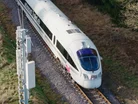
Nokia and Deutsche Bahn (DB) have successfully deployed the world’s first 1900 MHz (n101) 5G radio network with a 5G Standalone (SA) core on live outdoor test tracks in Germany. The solution is a landmark for the rail sector, providing a foundation for the Future Railway Mobile Communication System (FRMCS) and accelerating the industry’s shift from legacy systems to mission-critical 5G.
Preparing rail for the FRMCS era
FRMCS, the 5G-based standard designed to replace GSM-R, supports the next generation of railway communications. It supports real-time data exchange between trains and infrastructure while enabling rail automation, smart monitoring and digital services.
Nokia’s deployment with DB demonstrates the technology’s readiness for operational use, meeting stringent safety, reliability and latency requirements.
“The deployment of 5G-based telecommunications is key to upgrading railway communication infrastructure," said Rainer Fachinger, Head of Telecom Platforms at DB InfraGO.
"Collaborating with technology experts like Nokia allows us to bring the latest innovations into real-world operations.
"This pilot builds on earlier 5G trials and paves the way for standardising our private mobile network as a platform for future rollout.”
Industry Breakthrough on 1900 MHz Spectrum
The solution represents the first commercial use of the 1900 MHz band for railway 5G communications in Europe. DB’s test field in the Ore Mountains in Erzgebirge, Germany, has equipped live trains with Nokia’s 5G radio and core infrastructure, delivering capabilities essential to FRMCS. These include built-in failover, self-healing mechanisms and real-time monitoring to support safety-critical operations.
By adopting 5G at 1900 MHz, DB positions itself as a frontrunner in deploying spectrum dedicated to evolving mission-critical rail networks. Nokia confirms it is a pivotal milestone for automation, intelligent infrastructure and smarter stations.
“We are proud to deliver the first-ever commercial 5G solution that utilises the 1900 MHz spectrum band on live rail tracks," said Rolf Werner, Head of Europe at Nokia. "This milestone unlocks benefits such as automated train operations, smart maintenance and digital stations.
"It also provides a benchmark for FRMCS deployments across global markets over the coming years.”
Enhancing rail efficiency and passenger experience
Adopting 5G for railways extends beyond digital infrastructure. The technology increases operational capacity, strengthens efficiency and improves passenger experience through reliable connectivity.
With its standards-compliant platform and rigorous build, Nokia’s solution ensures rail networks remain interoperable and future-ready.
DB’s 1900 MHz deployment complements earlier test work with Nokia’s 3700 MHz (n78) 5G field trials, building on lessons learned while advancing resilience and coverage.
The newest setup integrates Nokia’s AirScale radio portfolio and an optimised 5G SA core designed for seamless GSM-R migration.

European collaboration and next steps
Furthermore, the infrastructure will form part of the European FP2-MORANE-2 project, which coordinates FRMCS adoption across Europe. By harnessing interoperable 5G standards and digital communications, rail operators can enhance sustainability and reduce costs in future operations.
For DB, the test facility at the Ore Mountains acts as a proving ground for ongoing innovation. In parallel with Europe-wide FRMCS projects, the railway operator’s partnership with Nokia supports the industry’s overarching goal: deploying high-availability, mission-critical connectivity across all rail networks.
Nokia’s commercial 1900 MHz 5G deployment signals a step-change for railway digitalisation. It combines stability, scalability and advanced network intelligence to meet evolving requirements, ensuring that European railways remain competitive and globally benchmarked for connectivity innovation.