
Nokia Drones and 5G Transform Digital Mining Operations
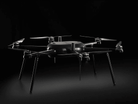
Mining is undergoing a profound transformation, propelled by digitalisation and the adoption of new-age connectivity solutions.
The integration of drones and advanced aerial surveillance is now central to optimising mining processes, safeguarding workers and delivering tangible business value.
Telcos, as the architects of industrial connectivity, have a pivotal role in unlocking the full potential of the digital revolution.
Enhancing safety in hazardous environments
Frequently cited as the most significant benefit, drone technology is transforming mine safety.
Unmanned aerial vehicles (UAVs) grant real-time oversight of extensive and potentially dangerous mining areas, minimising the necessity for personnel to enter unsafe or unstable zones.
“Real-time kinetic positioning improves situational awareness for enhanced safety and security of your workforce and assets across your mine.”
The ability to deploy drones for routine monitoring or emergency reconnaissance means reducing risks to human life, a critical advantage in an industry marked by hazardous conditions.
Elevating operational efficiency through automation
Drones are more than cameras in the sky.
Equipped with high-definition video, thermal sensors and LiDAR scanners, these UAVs execute surveying, mapping and volumetric analysis with efficiency, precision and consistency that manual methods cannot match.
Nokia’s modular drone network, CE-certified across its core components, supports “beyond-line-of-sight” flights and multi-network redundancy for compliance and operational resilience.
The unique architecture allows remote steering and scheduling for continuous flight operations – “Benefit from more than 50 minutes’ flight time across 40km or more,” a Nokia spokesperson highlights.
It translates into uninterrupted data harvesting for site assessments, stockpile quantification and infrastructure inspections.
Operational productivity receives a further boost from seamless, low-latency private wireless networks.
As one mining executive remarked after a successful deployment in Canada: “Using drones for perimeter patrols and gas leak detection at a remote mine spanning several kilometres delivered rapid insights and enabled corrective action before issues escalated.”
Enabling environmental stewardship and ESG compliance
Regulatory bodies and investors are demanding transparency in environmental, social and governance (ESG) performance.
Drones facilitate detailed geospatial and environmental monitoring: land rehabilitation, vegetation regrowth, dust and water management can all be tracked with quantifiable precision.
As a third-party analyst observed: “Drones offer a critical lens, by which mining stakeholders can evidence compliance, respond to community concerns and document every phase of environmental impact.”
The data-driven approach helps mining companies meet their reporting obligations while building trust with local communities.
Integrating with digital platforms and private networks
Sophisticated aerial surveillance is only as powerful as the networks it relies upon.
By combining UAVs with 4.9G/LTE or 5G private wireless, operators ensure real-time transmission of high-volume data, video and telemetry, even in remote or underground environments.
The robust connectivity underpins applications such as autonomous vehicle coordination, predictive maintenance and command centre operations.
Nokia’s “digital automation cloud” provides secure local processing, so sensitive information is governed on-site yet remains instantly actionable.
Additionally, open APIs and third-party application integration open up further customisation for mines with complex requirements — from swapping payloads (such as searchlights or gas sensors) to incorporating bespoke analytics for predictive insights.
Delivering cost savings and sustainability
Replacing manned aerial surveys with drones yields considerable savings.
Organisations report up to 90% reduction in surveying costs, plus substantial reductions in downtime due to faster, more frequent data acquisition.
Furthermore, drones’ lower energy consumption and minimal site disturbance contribute to mines’ sustainability goals, supporting their move towards greener operations and reducing carbon footprints.
Robustness and reliability for mining’s harshest conditions
Drones designed for mining must withstand the sector’s challenging environments.
Nokia’s hardware, for example, comes with an IP54 rating, suitable for dust-laden and weather-exposed settings.
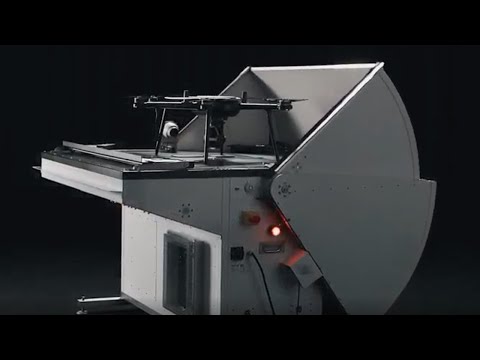
Automated docking stations shield drones between missions, offering remote charging and maintenance capabilities, enabling “24/7 fully remote drone operations,” in the words of the manufacturer.
Paving the way for smart mining
Drones and aerial surveillance, enabled by advanced telecoms infrastructure, are redefining what is possible in mining.
From boosting worker safety to delivering operational intelligence and demonstrating environmental commitment, these solutions present a compelling case for industry-wide adoption.
As the digital mining era unfolds, telecommunications professionals are in a unique position to connect, orchestrate and accelerate this transformation for their enterprise customers