How Are Nokia And E.ON Upgrading Energy Infrastructure?

Nokia has entered into a strategic agreement with E.ON, one of Europe's largest energy companies, to upgrade its mission-critical communications infrastructure.
The partnership will begin in Germany and involves Nokia delivering a modernised, automated telecommunications network for E.ON's distribution system operators (DSOs).
This collaboration establishes a framework that E.ON could replicate across its other European affiliates, showcasing the telecommunications sector's role in advancing the digital transformation of critical industries.
The project highlights the increasing reliance of the energy sector on robust telecommunications. E.ON's distribution grid in Germany connects 1.4 million renewable energy plants requiring a high-performance and flexible communications network.
The modernisation effort will focus on the IP optical and fixed access layers of its DSO telecommunications network, a foundational element for managing a decentralised energy system.

Advanced networks for energy grids
The upgrade is a critical step for E.ON to maintain secure and reliable services as it supports Germany's energy transition. The new infrastructure provides the digital backbone needed to manage the complexities of a grid with a high penetration of renewable sources.
Lars Ramelow, Head of Supply Chain, Grid Communication Infrastructure at E.ON Group, explains: "Modernising our network and harmonising our technical infrastructure is a crucial step to ensure E.ON Group continues to deliver secure, reliable and energy-efficient services across Europe."
Lars adds: "We're investing in a next-generation telecommunications network that is ready for future demands operationally, technologically and environmentally. Nokia is a trusted long-term supplier and its ability to support our network makes it the right choice as we scale our digital transformation."
Delivering efficiency through a single-vendor solution
E.ON's decision to partner with Nokia as a single vendor across its IP, optical and fibre domains could demonstrate how consolidating suppliers can enhance performance and efficiency in critical network operations.
According to Nokia, its chipsets and new network infrastructure could reduce energy consumption by up to 50% compared to E.ON's existing systems. This offers a substantial operational saving while improving scalability and service continuity.
The deployment will include Nokia's fixed access fibre solutions, providing a flexible platform that can be upgraded to 25G PON and beyond. This offers a clear path for future network evolution, a key consideration for long-term infrastructure investments.
The deal includes Nokia's IP routing and switching, optical transport, fixed broadband access (XGS-PON) and a range of network automation solutions.
A blueprint for secure European infrastructure
The partnership extends beyond a simple technology supply agreement. It reflects a shared objective to build future-ready networks capable of supporting critical national infrastructure.
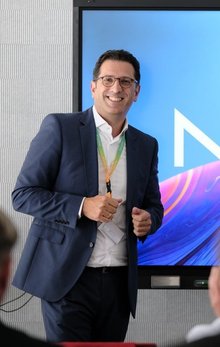
Eleftherios Papadopoulos Managing Director, Germany at Nokia, says: "Our long-standing relationship with E.ON reflects a shared commitment to building secure, efficient and future-ready networks. As a European company with global reach, Nokia brings the scale, security standards and domain expertise needed to support critical national infrastructure."
Eleftherios adds: "What sets this project apart is the ability to deliver across all key domains as a single vendor. That end-to-end capability, combined with high-quality platforms and proven experience in mission-critical environments and telecommunications, perfectly positions us to enable E.ON to digitise its grids in Germany."
The new network will be designed to meet KRITIS (critical infrastructure) security and resilience requirements. The full-stack delivery from Nokia also prepares the ground for future advancements including the potential integration of quantum-safe networks.
This positions the project as a potential blueprint for other utility providers looking to modernise their telecommunications infrastructure.

Executives
Eleftherios Papadopoulos
Managing Director Nokia Germany and Head of Enterprise Sales Germany

Lars Ramelow
Geschäftsführer