Nokia has launched what it describes as the telecom industry’s first commercial AI-native RAN platform.
Developed in collaboration with chipmaker NVIDIA, this software-defined platform is designed to transition mobile networks from traditional hardware setups to AI-centric architectures, while boosting uplink and downlink capacity through enhancing spectral efficiency.
The technology incorporates Nokia’s anyRAN software alongside NVIDIA’s Aerial AI-RAN platform.
Nokia states that pilots for its new AI-RAN solution are scheduled to begin at the end of this year, with full commercial availability planned for 2027.
The company forecasts that this solution will lead to more than 100% gains in spectrum efficiency by 2028.
“AI-RAN is the biggest innovation in radio in decades,” says Justin Hotard, President and CEO at Nokia.
“AI-RAN makes the network intelligent, extends AI into the physical world, and allows telcos to get more from their existing infrastructure, including a software upgrade path to 6G.
“Nokia’s anyRAN software, powered by NVIDIA’s Aerial AI-RAN platform, unlocks greater performance from the spectrum operators already have and can be deployed with existing Nokia or ORAN-compliant radio units.
“For operators, that means more performance, better returns and faster delivery of new services.”

Boosting spectral efficiency
The newly introduced platform aims to double the capacity of existing spectrum assets within the next four years.
Nokia states that early trials of the AI-RAN system have demonstrated a 20% improvement in spectral efficiency.
The company expects these efficiency gains to reach 50% by 2027 before hitting the target of more than 100% by 2028.
Improving spectral efficiency allows operators to manage denser cell traffic, lowers the cost per bit and enhances the customer experience.
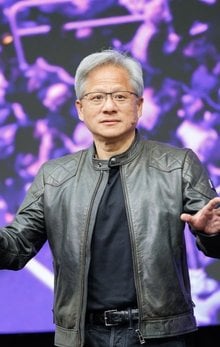
“Telecommunications is entering the AI era – the radio access network is the next AI infrastructure,” says Jensen Huang, Founder and CEO of NVIDIA.
“Together with Nokia, we are bringing NVIDIA CUDA and AI into the baseband, transforming RAN into a planet-scale AI computer.
“This is a generational shift for operators – unlocking more capacity and efficiency from today’s spectrum while creating the foundation for new AI services and the 6G era.”
Three options for operators
To accommodate different cloud and physical setup strategies, the platform supports 4G, 5G and future network standards through three distinct hardware paths:
- A GPU-powered Airscale capacity plug-in unit for existing Nokia customers
- A standalone AI-RAN mode, which supports 4G, 5G and future 6G workloads on a common platform
- AI-RAN COTS server solutions delivered through Nokia’s ecosystem partners, intended for those operators using cloud-native architectures
Nokia states that the system adheres to Open RAN standards, allowing mobile operators to use it within complex multi-vendor environments.
Shift to software models
Nokia is also introducing a software subscription model to allow AI innovation, new features and performance enhancements to be integrated into mobile networks independently of hardware refresh cycles.
“Nokia’s AI-RAN launch represents an important step in bringing AI-RAN from industry vision to commercial reality,” says Rémy Pascal, Practice Leader, Mobile Infrastructure at Omdia.
“The addition of the new AI-RAN node alongside the AirScale capacity plug-in unit and cloud-native deployment options gives operators practical choices for adopting AI-native networks based on their existing infrastructure and transformation goals.
“By combining AI-accelerated computing with a software-defined architecture and a clear product roadmap, Nokia is helping operators unlock greater capacity, improve network economics and accelerate the transition toward AI-native RAN.”
Other analysts were quick to weigh in on this announcement.
"These Nokia moves contrast enormously with Ericsson: on that company's earnings call Ericsson said all options were open on the best way forward and there was market uncertainty," says Ian Fogg, Research Director Network Innovation at FDM CCS Insight, in a LinkedIn post.
Yes, there's uncertainty, there always is, but companies do need to place bets if they wish to gain competitive advantage. Whether Nokia's move is the right one will come down to the economics of this approach and Nokia's ability to achieve those spectral efficiency boosts."
Fogg adds that the key question is one of economics, particularly just how good Nokia's AI-RAN platform will be in terms of performance and the extent to which rising component costs could hurt it.
"Ironically, if AI data centre investments were to slow, it would make the economics of distributed AI in the RAN better!", he adds.
"The real test will be how well this platform performs in the field trials planned for Q4. This announcement is a stepping stone to those trials and indicates Nokia believes it is on track."
Company portals


Executives
Jensen Huang
Founder and CEO
Justin Hotard
President and CEO

Rémy Pascal
Practice Leader, Mobile infrastructure