
How Nokia's Modul8 Will Prepare Astronauts for Artemis III

Nokia’s decision to spin out its space communications venture, Modul8, marks a turning point in how the telco industry is extending connectivity beyond Earth.
As the company collaborates with Axiom Space to integrate its lunar surface communications system into NASA's Artemis III lunar spacesuit, called the Axiom Extravehicular Mobility Unit, the decision carries historical significance.
The move is all made possible through Nokia's Definitive Agreement with Celestial Acquisition Corp, giving the business the focus and funding which is needed to compete in a rapidly evolving space economy.
It reflects how telco networks are steadily expanding skyward, beyond the terrestrial infrastructure they were once confined to.
Non-terrestrial networks are now emerging as pillars of future connectivity strategies as the industry looks towards 6G.

Telco ambitions in orbit
Modul8 merges advanced telco engineering and space exploration. The business, which is currently a venture within Nokia Bell Labs, develops communications and compute technologies designed for the harsh realities of space, spanning hardware and software.
Its mission is rooted in a major telco priority: connectivity everywhere.
But in this case, “everywhere” extends far beyond traditional coverage maps.
As non-terrestrial connectivity (NTN) capabilities mature, satellite and space-based systems are expected to complement terrestrial networks, extending reach into remote regions and strengthening resilience.
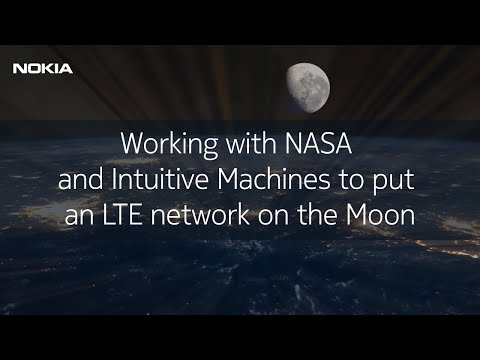
Modul8’s progress offers a glimpse of that future. In March 2025, the team deployed and operationalised the first cellular network on the Moon as part of the IM-2 mission.
Right now, though, one of Modul8's major priorities is its collaboration with Axiom Space for the AxEMU space suit, in preparation for rocket launch in 2027.
This will mean astronauts can benefit from the same principles of reliable, standards-based connectivity that networks on Earth already have.
Independence to accelerate scale
Space-based connectivity has been developed within Nokia Bell Labs as part of its wider push to extend telco networks beyond terrestrial limits.
Chris Jones, Nokia VP of Strategic Partnerships, said: "We’re excited about this next step because the market is moving fast and Modul8 is ready.
"While the venture is early in its revenue growth curve, an independent path is intended to help the business attract growth capital, move from prototypes to products more quickly and scale deployments to meet rising demand without losing the Nokia Bell Labs rigor that got us here."
For Modul8, independence is intended to close the gap between breakthrough research and commercial deployment.
Freed from the structures of a large organisation, the company will be able to pursue a more targeted operating model aligned with the pace of the space sector.
Becoming an independent company, advancing cellular and optical communications for missions beyond low-Earth orbit, means Modul8 positions itself within a broader ecosystem for scalability.
Nokia’s strategic balancing act
While Modul8 will operate independently, Nokia is not stepping back. As a major shareholder and original incubator, the company will retain a strategic role in non-terrestrial activity.
In this way, space-based connectivity is an extension of the core network for Nokia.
Integrating satellite capabilities with terrestrial infrastructure offers a way to enhance coverage and resilience in scenarios where traditional networks fall short.
From lab to market
The spin-out spotlights a wide shift in how telco innovation is commercialised.
Nokia Bell Labs has long been a source of breakthrough ideas, but turning those ideas into viable businesses often requires new structures and partnerships.
Starting off by incubating ventures like Modul8, validating their potential and then enabling them to scale independently, Nokia is adopting a model increasingly used by businesses: to trial before a wider launch, almost like a product.
This allows companies to nurture innovation without constraining it within traditional organisational boundaries.
In Modul8’s case, that approach has already delivered tangible results, from lunar connectivity to partnerships supporting the next phase of human space exploration.
A new phase for space-based telecoms
The transaction is expected to close by early summer. As Modul8 prepares for its next phase as an independent company, attention will turn to how quickly it can push its early achievements for broader deployment.
The significance lies in what Modul8 represents: a shift from experimentation to execution in space-based connectivity.
As networks continue to evolve, the boundary between Earth and orbit is becoming less a barrier and more an extension of the telco landscape.






Executives
Christopher D. W. Jones
Vice President Strategic Partnerships