Nokia Unveils New Strategy and Focus For AI-Driven Networks

At its Capital Markets Day 2025 in Espoo, Finland, Nokia unveils its latest strategy, marking a significant realignment towards AI-powered networking and the anticipated AI supercycle. It plans to execute the refreshed direction by streamlining its operations into two primary segments: Network Infrastructure and Mobile Infrastructure.
According to Justin Hotard, President and CEO of Nokia, the organisation now aims to deliver an annual comparable operating profit between €2.7bn (US$3.1bn) and €3.2bn (US$3.7bn) by 2028, a step up from the last twelve months’ figure of €2bn (US$2.3bn) (Q4 2024 – Q3 2025).

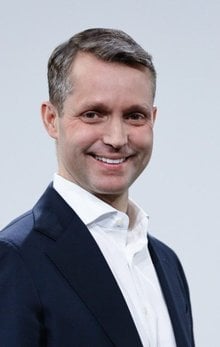
Justin Hotard, addressing the event, states, “Nokia changed the world once by connecting people and will again by connecting intelligence.”
He explains that, as a central player in secure connectivity, Nokia’s technology is influencing the AI supercycle.
He adds, “From fixed to mobile infrastructure, we are developing technology that accelerates value for our customers. I am proud of the work Team Nokia is doing to focus and lead this critical era in connectivity.”
Five priorities support the new strategy: accelerating growth in AI and Cloud, leading the next era of mobile connectivity, growing through co-innovation, focusing capital on areas of differentiation and unlocking sustainable returns.
Network Infrastructure and Mobile Infrastructure to become primary segments
A significant element of the restructuring, effective from 1 January 2026, will be the simplification of Nokia’s operating model into two core business segments.
Network Infrastructure is recognised as a growth driver, ideally placed to capture opportunities from increased demand for connectivity and AI-driven data centre expansion. David Heard, who continues to lead Network Infrastructure, will oversee three units: Optical Networks, IP Networks and Fixed Networks.
The Mobile Infrastructure segment consolidates Nokia’s Core Networks, Radio Networks and Technology Standards portfolios. Its mandate is to establish leadership across core and radio network technologies, positioning itself for the advance towards AI-native and 6G-enabled networks.
The portfolio is designed around mobile communication technologies that align with 3GPP standards and supported by strong IP licensing and cash flow. Justin will lead Mobile Infrastructure on an interim basis, managing three units: Core Software, Radio Networks and Technology Standards.
Realignment of the Group Leadership Team is underway. Raghav Sahgal will serve as Chief Customer Officer, focused on a seamless customer journey.
Patrik Hammarén takes on the role of President, Technology Standards, highlighting the organisation’s commitment to standards development. Tommi Uitto leaves the Group Leadership Team as of December 31.
Nokia establishes Portfolio Businesses for selected units
Following an extensive review of its portfolio, Nokia identifies several units with growth possibilities but not as central to its long-term strategy. These will transfer to a newly formed segment, Portfolio Businesses, where their future evaluation will determine the best value creation.
The units moving into this segment include Fixed Wireless Access CPE, Site Implementation and Outside Plant, Enterprise Campus Edge and Microwave Radio.
The affected businesses, together, contributed net sales of about €0.9bn (US$1.04bn) with an operating loss of €0.1bn (US$0.12bn) in the previous twelve months. Nokia sets 2026 as the year to reach a definitive direction for these units, prioritising ongoing support for customers and staff throughout the process.
Incubation unit for Nokia Defense and future financial targets
In addition to changes in its core businesses, Nokia launches a dedicated incubation unit for its defence portfolio. Nokia Defense will leverage the role of its Federal Solutions arm in the US, aiming to deliver defence-grade solutions across allied countries, including the US and Finland, centred on Nokia’s network and Mobile infrastructure technologies.
Nokia introduces new long-term financial targets, pivoting to a comparable operating profit target of €2.7 to 3.2bn (US$3.1 to 3.7bn) by 2028. It replaces previous goals for market growth, operating margin and free cash flow conversion rates.
A focus on new strategic KPIs illustrates Nokia’s intent to drive shareholder value. These include net sales growth in Network Infrastructure, with a target CAGR of 6–8% for 2025 to 2028 and 10-12% for the combined Optical Networks and IP Networks units.
Network Infrastructure aims for an operating margin of 13 to 17% by 2028, while Mobile Infrastructure targets a gross margin of 48 to 50%.
Operating profit for Mobile Infrastructure starts from €1.5bn (US$1.7bn), with Group Common and Other operating expenses targeted at €150m (US$173m), reduced from the current €350m (US$404m) by 2028. Free cash flow conversion is expected to range from 65% to 75%.

Starting from the first quarter of 2026, Nokia will report under the updated segment structure, with provisional financial information provided to help investors understand the organisational transition.
Recast financials for 2024 and 2025 will be published early in 2026, ensuring transparency ahead of the integration of the Infinera acquisition.
Complete segment reporting on net sales, gross profit and operating profit will be supplied quarterly, alongside revenue details for each business unit within the newly established segments.
Company portals


Executives
Justin Hotard
President and CEO

Raghav Sahgal
Chief Customer Officer