SK Telecom Plans AI Cloud Build for Korea's Digital Future
Telco operators have spent decades building the networks that connect people and devices.
Now, one such telco is setting its sights on an even bigger ambition: becoming the infrastructure providers behind the AI economy itself.
That shift is at the heart of a new partnership between NVIDIA and SK Telecom, which will see the South Korean operator build a gigawatt-scale AI Cloud powered by NVIDIA’s DSX platform.
The first AI factory is expected to come online in 2027, forming part of a wider strategy to support AI services across Korea and, eventually, the broader Asian market.
This project highlights a growing opportunity for telcos to move further up the digital value chain.
Telco operators are now exploring how their networks and infrastructure expertise can support the computational demands of AI.

Telco networks as AI infrastructure
The announcement comes as demand for AI computing accelerates, driving investment in new infrastructure capable of supporting training, inference and emerging agentic AI workloads.
According to NVIDIA, AI Clouds differ from traditional cloud platforms because they are purpose-built for AI processing, using GPU-based infrastructure designed specifically for AI applications.
SK Telecom intends to use the platform to provide sovereign AI services and enterprise AI applications for industries across Korea.
The partnership with NVIDIA reflects a widened view of how telco operators could evolve in the AI era.
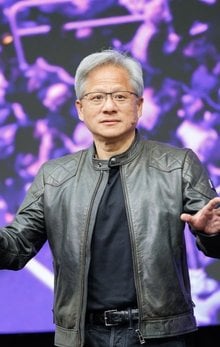
“Telecom networks are becoming national AI infrastructure,” said Jensen Huang, founder and CEO of NVIDIA.
“They connect people, companies, devices and machines – and now they can become the backbone of new AI clouds.
“With NVIDIA DSX, SK Telecom can build Korea’s AI cloud at scale and bring agents, enterprise and physical AI to the companies and industries that power Korea and the world.”
Building a full-stack AI capability
The project also marks a significant step in SK Telecom's ambition to strengthen its AI credentials beyond connectivity.
The operator says it has secured capabilities spanning the full AI infrastructure stack, from processors and memory through to data centre operations.
That breadth will be especially important as operators seek to compete in a market where access to computing resources and specialised infrastructure is becoming a strategic advantage.
“Through our close partnership with NVIDIA, we have now secured full-stack AI infrastructure capabilities, from chips to data center operations,” said Chey Tae-won, Chairman of SK Group.
“We will work with NVIDIA to tackle GPU, memory and energy challenges and become a leading AI factory player shaping Asia’s AI ecosystem.”
As AI infrastructure is becoming more power-intensive, operators and technology companies alike are being prompted to search for more efficient ways to scale computing capacity while managing rising electricity demands.
From connectivity to AI services
The initiative builds on a series of AI projects already underway at SK Telecom.
Just over a week ago, the company outlined work using digital twins and NVIDIA Omniverse technology to model semiconductor manufacturing facilities operated by SK hynix.

Earlier this year, it also adopted open-source NVIDIA Nemotron datasets to help train its A.X K1 model as part of South Korea's Sovereign AI Foundation Model Project.
As part of the latest agreement, SK Telecom will also join NVIDIA's Cloud Partner programme, gaining access to the company's latest AI infrastructure, software and developer ecosystem.
Beyond deployment
NVIDIA and SK Group have also announced plans to jointly research next-generation AI factory architectures, focusing on areas including accelerated computing and data centre operations.
As AI demand grows, telco operators are positioning their networks not just as connectivity platforms, but as the foundation on which national AI capabilities can be built.
Company portals


Executives

Chey Tae-won
Chairman
Jensen Huang
Founder and CEO