
SpaceX Plans to Target US Consumers With New Mobile Service
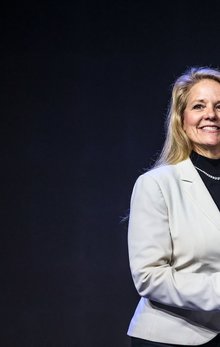
SpaceX’s President and Chief Operating Officer, Gwynne Shotwell, has told investors at a recent IPO roadshow that it is considering launching a new Starlink mobile service for US consumers and might build its own terrestrial mobile network in the US, according to an article in the Financial Times.
In a bond offering prospectus seen by the paper, SpaceX says that while it expects a Starlink Mobile service “to be most impactful for customers in remote areas uncovered by terrestrial mobile networks”, it suggests that it would “compete to be the preferred connectivity experience to [its] customers no matter where they are located, whether in rural, suburban or urban areas”.
Such a move would mean competing directly with the likes of AT&T, T-Mobile and Verizon. However, breaking into such a lucrative market, when the established competitors have spent decades investing many billions investing in their networks, is a risky proposition. Recent history shows this to be so.
The wireless spectrum licences that SpaceX recently paid US$17bn and US$2.6bn in September and November 2025 respectively were purchased from EchoStar – the owner of Boost Mobile, which tried and failed to become the US’s fourth national mobile operator and now exists only as an MVNO running on AT&T’s network.

David only had to fight one Goliath
These spectrum purchases have prompted much speculation over SpaceX’s future plans.
However, the sheer cost of building out a new terrestrial network and the spectrum that it would require has caused analysts to speculate that SpaceX may be pushing the idea to improve its bargaining power when negotiating with its telecom partners.
According to New Street Research, AT&T, T-Mobile and Verizon hold around 1,020MHz of spectrum compared with SpaceX’s 65MHz.
Speaking to the FT, David Barden, Partner at New Street Research, says that building a “wireless network in saturated markets around the world would be incredibly hard”.
“[But,] as a starting point for negotiating the best possible revenue-sharing deal with mobile network operator partners? It makes tremendous sense.”
SpaceX’s existing Starlink satellite-based fixed wireless service recently hit the 12 million subscriber mark and added service in more than 35 markets in 2025. It expects to start launching third-generation satellites this year, each with a capacity in excess of one terabit per second
Starlink also provides mobile operators with supplemental coverage from space. It underpins T-Mobile’s T-Satellite service in the US, along with Telstra and Optus’s similar services in Australia.
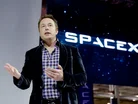
During the IPO roadshow, Elon Musk discussed plans for data centres in space and building a colony on Mars.
Company portals


Executives
David Barden
Partner

Elon Musk
Tesla CEO
Gwynne Shotwell
President and COO