
STL Invests US$100m in Connectivity for AI Data Centres

As hyperscalers race to build larger AI campuses across the US, telco networks are facing mounting pressure to keep data moving between servers, racks and sites at ever higher speeds.
That demand has pushed Sterlite Technologies Ltd. (STL) to plan an investment of up to US$100m in the US to expand production for AI data centre and telco customers.
The investment is expected to create between 400 and 500 jobs and increase STL’s production capacity for terminated optical fibre cables and other connectivity products designed for AI-ready infrastructure.
STL announced the investment during the SelectUSA Investment Summit on 6 May, a US federal initiative that focuses on attracting international business investment into the country.
It connects multinational companies with economic development organisations to support job creation and infrastructure expansion.

Telco networks support AI expansion
The investment reflects growing pressure on telco operators and infrastructure providers as hyperscale AI deployments increase GPU density and interconnect requirements across large campuses.
Fibre capacity and low-latency connectivity are core requirements for telco companies as AI workloads place heavier demands on network infrastructure between cloud environments and edge locations.
STL says its optical portfolio supports the high-capacity links needed between AI data centres.
The company positions its infrastructure as the foundation for what it describes as “AI Data Highways”.
The company already works with major US customers to support high-speed optical connectivity and data centre requirements using products including its Celesta 6912 Fibre cable.
STL has also expanded its US AI data centre offering through the launch of its Neuralis portfolio.
The company positions itself as a vertically integrated supplier that supports the full optical connectivity chain for AI environments.
“By owning the entire value chain-from glass to data centre portfolio, we are excited to enable our customers to build the physical foundation for the AI era”, says Rahul Puri, CEO at STL.
“This investment will ensure that the infrastructure required to build a strong AI backbone behind global intelligence is scalable and reliable.”
Optical infrastructure demand grows
As AI infrastructure demand increases, operators are seeking more domestic manufacturing capacity to reduce deployment delays and strengthen resilience across fibre and networking supply chains.
Regional manufacturing has gained importance in telecoms as operators build networks capable of supporting high-capacity AI traffic alongside enterprise and consumer demand.
Optical networking technology now plays a larger role as operators scale infrastructure to support compute-intensive AI workloads.
High-density fibre infrastructure has become a critical part of AI facility design as hyperscalers build larger GPU clusters that require faster and more efficient interconnectivity between servers, racks and campuses.
That infrastructure demand extends beyond hyperscale data centres into the telco sector, where operators continue expanding fibre footprints and upgrading transport networks to support AI-driven traffic growth.

US investment supports network capacity
STL’s investment highlights how telco suppliers are aligning manufacturing strategies with AI infrastructure growth across the US market.
As operators deploy more fibre infrastructure for cloud and enterprise connectivity, suppliers face pressure to provide faster production timelines and greater supply chain stability.
The planned expansion strengthens STL’s position in optical networking infrastructure at a time when telco providers and hyperscalers continue investing in high-capacity connectivity.
The investment also demonstrates how AI growth continues influencing telco infrastructure planning, with optical connectivity becoming a key requirement for both data centre operators and network providers building AI-ready systems across the US.
Company portals

Executives
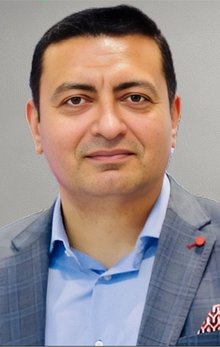
Rahul Puri
CEO