
Telcos Issue Call to Action on Subsea Cable Threats
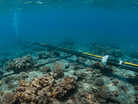
A coalition of leading telecommunications operators and subsea infrastructure providers — including GlobalConnect, Alcatel Submarine Networks, NKT, Orange, Proximus, Vodafone and Telenor — has issued a joint call to action, urging the European Union (EU), United Kingdom (UK) and NATO to strengthen protections for Europe’s subsea cable systems.
An open letter released in April 2025 stressed the urgency of coordinated policy and industry action to safeguard a critical yet often overlooked part of global digital infrastructure.
As geopolitical tensions escalate and hybrid threats become more sophisticated, the resilience of subsea networks has emerged as a key priority for national security and commercial continuity.

Subsea cables: Strategic infrastructure at risk
Subsea cables carry more than 95% of international internet traffic. Their uninterrupted operation underpins digital communications, financial markets, defence capabilities and cross-border trade. As the group of signatories notes, “subsea cables play a vital role in Europe’s connectivity, competitiveness, defence readiness and economic stability.”
Recent incidents in the Baltic and North Seas have highlighted the physical vulnerability of these networks to sabotage and interference. The letter warns that “with the rise in hybrid threats, including incidents affecting subsea cables... we emphasise the importance of enhanced, coordinated action to safeguard Europe’s cross-border networks.”
The case for a coordinated European approach
While Europe’s subsea infrastructure is generally resilient, fragmented governance and inconsistent security protocols leave room for vulnerabilities. Industry leaders are calling for a “comprehensive, risk-based approach that aligns security objectives with operational feasibility,” balancing the need for robust protection with practical deployment.
The EU’s Action Plan on Cable Security was welcomed as a step in the right direction. However, the industry seeks a more integrated dialogue that includes NATO and UK authorities, pointing out that “the instruments of the UK authorities and NATO could strengthen the momentum if coordinated effectively.”
Addressing implementation challenges: The role of the CEF
A key element of the proposed strategy is effectively deploying the Connected Europe Facility (CEF). The EU funding instrument supports projects that enhance digital infrastructure but faces several hurdles.
Industry stakeholders have identified regulatory bottlenecks and slow permitting processes as major barriers to progress. They call for “faster permitting processes and simplified governance structures,” noting that current procedures delay vital security upgrades.
Concerns remain regarding long-term budget allocation. The open letter underlines the need to “confirm and increase the budget allocated to digital, including the CEF, in the future Multiannual Financial Framework (MFF).”
Furthermore, there is a growing consensus that subsea cables must be formally recognised as critical infrastructure. Without the designation, securing dedicated funding and applying uniform standards across member states becomes increasingly tricky.

Innovation and redundancy: The path to resilience
Enhancing Europe’s subsea resilience is not solely about protection but innovation and redundancy. Industry leaders recommend developing alternative terrestrial and undersea routes to avoid single points of failure.
“The development of additional routes will reduce vulnerability,” the statement argues. Coupled with investment in real-time monitoring and rapid response capabilities, such measures can significantly reduce the impact of both deliberate attacks and accidental damage.
Technology plays a central role. The deployment of advanced detection and surveillance systems—funded through the CEF and other mechanisms—will provide early warning and faster repair capabilities.
Enhancing the systems can happen through industry-government partnerships, which the stakeholders describe as essential to achieving “improved awareness, response times and repair capabilities.”
A shared responsibility for the digital future
The telecommunications industry is clear: protecting subsea infrastructure is a shared responsibility requiring unified political will, strategic investment and sustained collaboration. As the open letter concludes, “by acting now, we can safeguard the networks that underpin our shared future.”
Through the alignment of policy frameworks, funding priorities and technical innovation, Europe can establish a robust, future-proof subsea infrastructure capable of supporting the continent’s digital ambitions while withstanding the complexities of an evolving threat landscape.
Explore the latest edition of Mobile Magazine and be part of the conversation at our global conference series, Tech & AI LIVE and Cloud & 5G LIVE. Discover all our upcoming events and secure your tickets today.
Sign up to receive the Mobile Magazine weekly newsletter.
Mobile Magazine is a BizClik brand