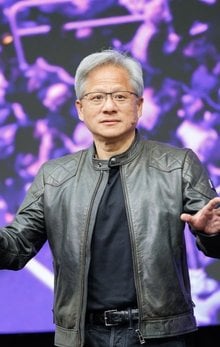
Why Telcos are Committing to AI-Native 6G with NVIDIA

NVIDIA joined a group of global telecom operators and infrastructure providers at MWC26 to set out a plan to build the next generation of wireless networks on AI-native and software-defined platforms.
Companies including Booz Allen, BT Group, Cisco, Deutsche Telekom, Ericsson, MITRE, Nokia, OCUDU Ecosystem Foundation, ODC, SK Telecom, SoftBank Corp. and T-Mobile join the initiative, which aims to shape how 6G networks are designed and deployed.
The companies state that the programme is all about open and trusted platforms for future wireless infrastructure. It also aligns with NVIDIA’s wider work with industry groups and governments in Europe, Japan, Korea, the UK and the US on research and development linked to 6G and AI.
“AI is redefining computing and driving the largest infrastructure buildout in human history, and telecommunications is next,” says Jensen Huang, Founder and CEO of NVIDIA.
“Together with a global coalition of industry leaders, NVIDIA is building AI-RAN to transform the world’s telecom networks into AI infrastructure everywhere.”

Telcos preparing for AI-native network architecture
Artificial Intelligence Radio Access Network (AI-RAN) is at the centre of the collaboration. Embedding AI in the RAN, along with edge and core network functions, forms the basis of the AI-native approach.
The companies involved say this architecture allows networks to evolve through software rather than hardware upgrades.
“Connectivity is the backbone of economic growth, and with this collaboration, we’re helping lay the foundations for a future ecosystem that is intelligent, sustainable and secure," says Allison Kirkby, CEO of BT Group.
“By building on open and trustworthy AI native platforms, we can simplify future technologies like 6G, ensuring they build upon the strengths of today’s 5G networks while still unlocking powerful new capabilities at scale.”
Aligning governments and operators on 6G strategy
Public sector agencies and telecom operators also position 6G as a strategic technology area.
“America’s 6G leadership will be critical to our nation’s economic prosperity, national security and global competitiveness,” says Arielle Roth, Assistant Secretary of Commerce for Communications and Information, and Administrator at the National Telecommunications and Information Administration.
“The United States and our allies and partners around the world are leading in this next-generation technology.
“We look forward to the next steps from this international industry coalition as they advance and implement their shared 6G vision.”
Global initiatives pushing AI-RAN and open platforms
The coalition links its work to a series of research programmes and industry alliances focused on open network technology.
In the US, NVIDIA joined the FutureG Office-led OCUDU Initiative, which focuses on accelerating open and software-defined 6G architectures.
The AI-Native Wireless Networks project, or AI-WIN, was launched with Booz Allen, Cisco, T-Mobile, MITRE and ODC. The project focuses on building an AI-RAN technology stack in the US to support development of future wireless networks.
Srini Gopalan, CEO of T-Mobile US, places the work in the context of operator investment in 5G and AI-enabled infrastructure.
“We’re at a pivotal moment. In the US, we’ve laid the foundation with 5G Advanced and AI-native networks where intelligence lives inside the network," he explains.
“As 6G becomes the backbone of the AI era, telecom will serve as the nervous system of the digital economy, enabling autonomous systems and intelligent industries at scale and unlocking new value for customers and businesses alike.”
Company portals



Executives

Allison Kirkby
CEO

Arielle Roth
Administrator and Assistant Secretary of Commerce for Communications and Information
Jensen Huang
Founder and CEO

Srini Gopalan
CEO