
Telecoms Power Israel’s Iron Dome Amid Rising Threats
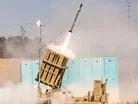
In the face of escalating tensions between Iran and Israel, modern conflict outcomes are increasingly shaped not just by firepower but by the real-time flow of information.
Israel’s Iron Dome missile defence system exemplifies the shift. The system’s effectiveness depends as much on advanced telecommunications infrastructure as on missile hardware, enabling high-speed data transfer, precision coordination and near-instant decision-making.
Israel’s technological edge lies in its ability to detect, evaluate and intercept threats within seconds.
The capability is made possible by seamless integration between radar, command centres and interceptor batteries via secure, ultra-reliable telecom networks.

Command, control and communication systems
The system’s heart is a command and control (C2) structure that assesses incoming threats and triggers responses. The operations rely on resilient, low-latency telecommunications to connect radar stations, decision-makers and interceptor sites.
Without the infrastructure, the Iron Dome would be unable to coordinate its response quickly enough to engage incoming projectiles, a delay that could result in avoidable casualties or infrastructure damage.
Missile interception: precision depends on connectivity
When a projectile is deemed a threat, the C2 centre relays launch commands to the relevant interceptor unit. Once launched, Tamir missiles receive continuous mid-course updates via encrypted telecom channels, adjusting in real-time to the incoming target’s movements.
These guidance operations require uninterrupted, secure communication channels. Any disruption could result in failed interception, making reliable telecom connectivity essential for defensive success.
Multi-threat environments: telecom-enabled coordination
The Iron Dome is engineered to handle multiple simultaneous attacks. During high-intensity scenarios, telecommunications infrastructure ensures that interceptors are distributed where needed most, radar data is shared between batteries, and low-priority threats, such as rockets heading for open areas, are ignored to preserve munitions.
The system’s ability to make these complex decisions on the fly is rooted in networked data and secure, rapid communication, key domains for telecom operators and defence technology providers.
Infrastructure vulnerabilities in conflict zones
Telecommunications infrastructure is not immune to conflict pressures. Deliberate attacks on fibre-optic lines, satellite uplinks or cellular towers can compromise the system’s ability to operate. The Gaza conflict illustrated this risk, as more than 75% of telecoms infrastructure sustained damage, severely affecting both military and humanitarian operations.
As a result, defence planning now views telecom resilience as a strategic imperative rather than just a technical concern.
Strategic and operational implications for telecom providers
For telecom stakeholders, national defence represents a high-stakes, high-value operational theatre:
- Ultra-low-latency networks are necessary for threat detection and missile guidance.
- High-bandwidth, encrypted communication supports data-intensive radar and C2 functions.
- Resilience planning must anticipate physical sabotage and cyberattack scenarios.
In short, defence systems like the Iron Dome depend on telcos to deliver performance that cannot fail, even under extreme conditions.
A new paradigm in missile defence
Telecommunications are no longer peripheral to national security, they are foundational. Without high-performance networks, missile defence systems such as the Iron Dome lose their speed, accuracy and coordination, rendering them ineffective against today’s complex threats.

Looking ahead, the role of telecoms in defence is only set to grow. The United States 'Golden Dome' missile defence system, announced by President Donald Trump in January 2025, exemplifies the evolution.
Modelled in part on Israel’s Iron Dome, the Golden Dome aims to defend the entire US homeland against a spectrum of threats, including hypersonic, cruise and ballistic missiles.
The proposed initiative incorporates satellite-based sensors, space and ground-based interceptors, directed energy weapons and AI-driven control systems, all dependent on a unified, secure telecom backbone.
The Department of Defense has allocated US$25bn in its 2026 budget for initial development, with long-term costs estimated to exceed US$175 bn.
While its ambition is unmatched, experts highlight its success will rely heavily on overcoming significant telecommunications, logistical, and operational challenges.
If realised, the Golden Dome would mark American history's most expansive missile defence project and a new benchmark for telecom-dependent military systems worldwide.
Explore the latest edition of Mobile Magazine and be part of the conversation at our global conference series, Tech & AI LIVE.
Discover all our upcoming events and secure your tickets today.
Mobile Magazine is a BizClik brand