Travel eSIM Interest Rises Despite Low Awareness
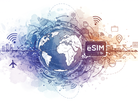
New research from Proximus Global has revealed a clear gap between consumer understanding and the commercial potential of travel eSIM technology. While only one in three consumers globally say they know what an eSIM is, nearly half would consider using one for travel after learning about its benefits.
The gap presents a significant opportunity for telecom providers, travel brands and digital platforms to unlock new revenue streams and deepen customer engagement.
The study, carried out in collaboration with YouGov, surveyed over 6,500 adults across the United Kingdom, the United States, and China. The research revealed that although the demand for seamless travel connectivity is increasing, the adoption of eSIM remains limited due to low awareness.
It is in stark contrast to the broad device compatibility already available. eSIM functionality is now supported by major smartphone manufacturers, including Apple, Samsung, Google, Huawei, Motorola, Oppo, Xiaomi, Sony Xperia, Nokia and Honor—as well as many smartwatches and tablets.
Gregory Gundelfinger, CEO of Telna, acknowledged the role of early adopters, “Apple really pioneered the adoption of eSIM and were real catalysts in getting mobile network operators to adopt it.”
Leading eSIM provider Airalo highlighted the shift in consumer expectations, stating, “Connectivity is no longer a luxury for travellers; it’s necessary... eSIM technology addresses this need by providing seamless, cost-effective connectivity worldwide, perfectly aligning with the expectations of modern travellers who demand constant access to information, navigation and communication.”
Lagging awareness
The data reveals that just 33% of respondents globally were familiar with the term “eSIM”, and 42% were unsure whether their devices even supported the feature. Awareness was lowest in the United States, where over half (52%) said they had never heard of eSIMs. By contrast, 27% of respondents in China reported previous use, the highest among the three countries surveyed. Interest in future adoption was particularly strong in the UK and China.
A travel eSIM is a virtual SIM embedded directly into a device. It allows users to access local mobile networks abroad without needing to physically replace their SIM card. It eliminates traditional roaming charges and the need to interact with unfamiliar foreign network providers, making travel connectivity more economical.

Consumer openness and new sales channels
The findings suggest a substantial untapped market. Once informed of the benefits, 49% of all respondents said they would be willing to use a travel eSIM. That figure rose to 56% in the UK and 60% in China.
Consumers are open to alternative purchasing models. More than a third (36%) would buy travel eSIMs from non-traditional retailers such as travel websites, airlines, or supermarkets.
The flexibility opens new doors for retail, fintech and travel-sector brands to enter the market without requiring legacy telecom infrastructure.
Innovative players like Revolut, NordVPN and Carrefour are already capitalising on the shift, launching their eSIM solutions to enhance brand ecosystems and increase customer retention.
Suresh Patel, Chief Revenue Officer at Proximus Global, highlighted the scale of the opportunity, stating, “Our research highlights the significant potential for brands in the global travel eSIM market. Demand for eSIM technology is rapidly increasing.
"Companies that act now will be well-positioned to capture substantial market share.
"The opportunity isn’t limited to telcos; with the right partner, establishing an eSIM offering is straightforward. Retail and travel brands can leverage their customer base to drive adoption and explore cross-selling opportunities for travel eSIMs.”
Jorn Vercamert, Chief Product Officer at Proximus Global, added, “To secure leadership in the expanding global travel eSIM market, businesses must prioritise developing innovative eSIM-enabled services that cater to the evolving needs of travellers while also focusing on consumer education.
"By closing the awareness gap, stakeholders can unlock the full potential of this untapped market opportunity.”
The case for urgency
Backed by the combined capabilities of Telesign, BICS and Route Mobile, Proximus Global offers the scale and infrastructure needed for businesses to enter the eSIM space securely and efficiently.
Its global network supports more than five billion subscribers and protects over 180 billion transactions annually, providing the foundation for enterprise-grade travel eSIM solutions.
For telecom operators, retailers and travel platforms, the next phase of mobile innovation will be defined not just by devices or tariffs, but by how easily and securely users can stay connected across borders.
Explore the latest edition of Mobile Magazine and be part of the conversation at our global conference series, Tech & AI LIVE and Cloud & 5G LIVE. Discover all our upcoming events and secure your tickets today.
Sign up to receive the Mobile Magazine weekly newsletter.
Mobile Magazine is a BizClik brand