US vs China: Who Blinks First — and What It Means for Telcos
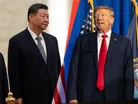
The escalating trade conflict between Washington and Beijing has reached unprecedented levels.
China imposed 84% tariffs on US imports in retaliation to America's 104% duties on Chinese goods.
These measures present acute operational challenges and strategic dilemmas for telco executives navigating global supply chains.
The escalation: From trade dispute to economic warfare
On 2 April 2025, the Trump administration announced 34% tariffs on 57 trading partners, citing unfair trade practices.
China responded with 34% duties on all US imports, effective 10 April, before raising them to 84% after Washington threatened additional measures.
By 9 April, US tariffs on Chinese goods hit 104%, the highest since the 1930s.
"This isn't merely about tariffs — it's a systemic decoupling of the world's two largest economies," a CSIS senior adviser says.
"Telecoms, reliant on Sino-US supply chains for semiconductors, fibre optics and rare earths, are now in the crosshairs."
- Bilateral trade has plummeted from US$661.5bn (2018) to US$582.4bn (2024)
- US tariffs on Chinese electronics now average 54%, directly impacting routers, base stations and GPUs
- China's export controls on gadolinium and terbium (critical for fibre optics) threaten US 5G hardware production
Telecom sector vulnerabilities: A threefold crisis
1. Supply chain disruptions
The tariffs target core components:
- Semiconductors: US "AI Diffusion" rules, effective May 2025, restrict China's access to advanced 5G chips, while Chinese tariffs inflate costs for Qualcomm and Intel
- Fibre optics: Silica fibre precursors, largely sourced from China, now face 84% import duties in the US

"Operators must choose between absorbing 50-100% cost hikes or reconfiguring supply chains in real-time," warns a Dell'Oro Group analyst.
2. 5G rollout delays
- Chinese vendors: Huawei and ZTE, already constrained by US sanctions, face inflated costs for non-Chinese components
- Western firms: Ericsson and Nokia may struggle with rare-earth shortages for antennas
Projected impact:
- 12-18-month delays in 5G Standalone (SA) deployments in emerging markets
- 20-30% higher capex for private 5G networks in Europe and North America
3. Enterprise solutions at risk
- Network slicing: Cloud infrastructure tariffs, for example, AWS and Azure, could hinder edge-computing partnerships
- IoT devices: Smart-city projects reliant on Chinese sensors face budget overruns
China's strategic countermoves
Beijing's 84% tariffs are calibrated to maximise pain:
- Rare-earth dominance: Controls on terbium, vital for fibre amplifiers, disrupt global 5G supply chains
- Domestic stimulus: A US$1.4tn surplus allows subsidies to offset lost US trade
- Third-market expansion: Pivoting exports to ASEAN and Africa mitigates US market losses
"China is playing the long game," notes an Al Jazeera trade expert. "Its rare-earth controls give it leverage no tariff can match."
The wildcard: A potential Trump-Xi summit could de-escalate tensions, but analysts deem progress unlikely before 2026.
Strategic responses for Telcos
Telcos are adopting a range of strategic responses to navigate ongoing geopolitical and supply chain challenges.
One key approach is supply chain diversification, including nearshoring production to countries like India or Mexico — though these regions still face capacity limitations.
Some operators are stockpiling critical rare-earth materials in anticipation of tighter export controls from China.
In parallel, lobbying efforts are intensifying.
US telcos are advocating for tariff exemptions that impact rural broadband deployment, while European firms are pushing for EU-wide rare-earth partnerships to reduce reliance on Chinese sources.
In parallel, lobbying efforts are intensifying.
US telcos are advocating for tariff exemptions that impact rural broadband deployment, while European firms are pushing for EU-wide rare-earth partnerships to reduce reliance on Chinese sources.
Telcos are accelerating localisation strategies to strengthen long-term resilience.
The tactics include investing in R&D to develop alternatives to rare-earth elements, such as gallium nitride, and adopting Open RAN technology to lessen dependence on major equipment vendors like Huawei and Nokia.
"The sector must treat tariffs as a permanent fixture," a Fierce Telecom analyst urges. "Business models built on globalised supply chains are obsolete."
Navigating the New Reality
The telecom industry's reliance on US innovation and Chinese manufacturing makes it uniquely vulnerable.
To mitigate disruptions, operators must act decisively — diversifying suppliers, recalibrating capex and engaging policymakers.
The key takeaways are:
- Short-term: Audit supply chains for tariff-exposed components
- Medium-term: Partner with governments to secure critical minerals
- Long-term: Invest in open architectures and alternative materials
According to Aston University, US$1.4tn in global GDP at risk, so resilience today will define competitiveness tomorrow.
Explore the latest edition of Mobile Magazine and be part of the conversation at our global conference series, Tech & AI LIVE and Cloud & 5G LIVE.
Discover all our upcoming events and secure your tickets today.
Mobile Magazine is a BizClik brand