What Is T-Systems’ Chief Sovereignty Officer Role?
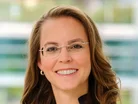
The role of Chief Sovereignty Officer (CSO) has rapidly ascended to the forefront of telecommunications strategy, reflecting seismic changes in how global telecommunications companies navigate compliance, technology and customer trust. With Christine Knackfuß-Nikolic’s appointment at T-Systems, Deutsche Telekom’s enterprise subsidiary, the function has become a bellwether for industry-wide dedication to digital autonomy and resilient cloud operations.
Why telcos need a CSO
Across Europe, the need for digital sovereignty is intensifying. Geopolitical tensions and stricter regulations have compelled operators to reassess their reliance on non-European hyperscalers, particularly US firms, whose infrastructure and legal frameworks can introduce unwanted vulnerabilities.
As Ferri Abolhassan, CEO of T-Systems, observes: “Due to geopolitical uncertainties, more and more companies in Germany and Europe are demanding sovereign cloud solutions. They want to free themselves from dependence on hyperscalers and regain control over their own data”.
The CSO’s mandate encompasses three pillars: data sovereignty, technological sovereignty and operational sovereignty, each core to telcos’ ambitions to secure their digital territory, comply with diverse regulations and differentiate in a competitive B2B market.
Three pillars of sovereignty
Christine articulates the sovereignty challenge in gradations, or “Shades of Grey.” She details: “The basic level is data sovereignty, i.e. the storage and processing of data are subject to the legal protection of the country in which the company has its headquarters.
“This is to ensure that no regulations are violated that companies must adhere to in this country. Data sovereignty means the ability to exercise complete control over one’s own data.”
Christine continues, defining operational sovereignty: “The question is whether I, as a company, have transparency and control over critical infrastructure and operational processes and whether I can maintain them.
“That is, can I guide the people who run the system and can I control who has access to the data centre? The goal is to protect the physical infrastructure from manipulation, control access rights and prevent the system from being hacked or business processes interrupted.”
Technological sovereignty, meanwhile, involves operators building technology stacks and cloud offerings tailored to European legal requirements, thereby minimising exposure to foreign acts, such as the US CLOUD Act.
Sovereign clouds are now marketed as differentiators that can safeguard critical business operations, even under challenging regulatory or geopolitical conditions.

Market impact and strategic response
The CSO’s arrival is a proactive industry response, not simply a measure of compliance. The telecom sector has watched governments and regulators enact stricter laws, seeing in them an opportunity to secure a commercial edge.
“Digital sovereignty is becoming a crucial competitive factor for cloud and AI solutions in Europe. Europe has the chance to shape its digital future itself... Big Tech is dependent on our data and our money,” Christine argues.
By concentrating leadership and accountability for sovereignty at the C-suite level, organisations can integrate risk management, security and innovation into a single strategy.
It actively insulates European businesses from disruptions tied to external legislative changes—such as sanctions or shifts in transatlantic relations—and reassures enterprise customers that their data and operations are protected from outside interference.
Telco leadership and CSO profile
Christine is a blueprint for the hybrid leadership now in demand. She brings technical depth from her tenure as T-Systems' CTO and broad strategic oversight, covering security, compliance and transformation.
Her mandate as CSO is to “define and implement a company-wide sovereignty strategy aligned with customer-specific, regulatory and geopolitical requirements and design differentiated value propositions that address the various sovereignty challenges in the market along the E2E stack”.

The CSO’s level of influence and visibility is notable. Retaining ownership of T-Systems’ entire security business, Christine collaborates closely with portfolio and strategy chiefs, integrating sovereignty into every facet of operations and service delivery.
Telcos looking to fill such roles are increasingly evaluating leaders who blend technical authority with consulting acumen, regulatory fluency and B2B sector expertise.
CSO: Strategic asset and market differentiator
The appointment of a Chief Sovereignty Officer is, therefore, more than a compliance measure—it is a strategic differentiator for telecoms.
By embedding sovereignty at the heart of corporate strategy, telcos can demonstrate proactive leadership to boards and customers alike.
The structure provides operators with tools to overcome regulatory challenges, innovate in sovereign cloud and AI and foster long-term trust and commercial advantage.
In Christine’s own words: “T-Systems has suitable offerings for all three levels of sovereignty”. For Europe’s leading telcos, the CSO is now a critical architect in building secure, sustainable and sovereign digital futures.