
Why Nexthink is Launching A New Mobile Solution for Telcos

Nexthink has announced its new Mobile Experience solution that extends its Digital Employee Experience DEX management capabilities to Android and iOS devices.
The launch places mobile connectivity and performance at the centre of enterprise IT operations, having clear implications for telco providers and network performance monitoring.
As mobile devices become the primary work tool for many employees, especially frontline staff, telco infrastructure carries a growing share of enterprise traffic.
This shift increases pressure on networks to deliver consistent connectivity, while also requiring better visibility into how devices interact with both Wi-Fi and cellular services.
Closing the mobile visibility gap
Nexthink created Mobile Experience as a way to address limited insight into mobile performance across enterprise environments.
While Unified Endpoint Management (UEM) tools focus on configuration and compliance, they often lack visibility into real-world user experience and network performance.
“For millions of employees, especially frontline workers, their primary device isn’t even a laptop anymore - it’s a smartphone or tablet,” says Samuele Gantner, Chief Product Officer at Nexthink.
“Yet mobile device insights are still a huge blind spot for IT. UEM tools help manage configuration and enforce compliance, but they don’t answer the question that should matter most: can mobile users actually do their jobs?
"Without knowing what’s happening with the mobile device, IT is just reactive to piling tickets or device replacement fire drills.”
Without clear data on device behaviour and network conditions, IT teams struggle to determine whether performance issues originate from the device, the application or the underlying network.
This gap creates challenges not only for enterprise IT but also for telco providers, which are often responsible for maintaining reliable cellular coverage and supporting enterprise connectivity needs.
Real-time insight into network performance
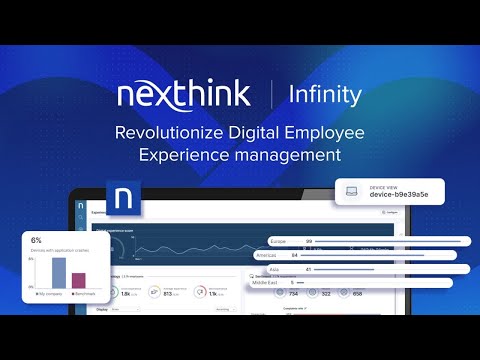
The Mobile Experience solution integrates with the Nexthink Infinity platform, which delivers real-time data on device health and connectivity.
For telco stakeholders, this level of insight helps distinguish between Wi-Fi and cellular network performance issues, providing clearer accountability across infrastructure layers.
Continuous monitoring of Wi-Fi and cellular data connections allows IT teams to identify whether disruptions stem from weak signal strength or local network coverage gaps.
This level of granularity is critical for organisations operating across multiple sites, where network conditions can vary widely.
“Nexthink is now providing a level of visibility that transforms mobile device management into a proactive and DEX-driven function,” Samuele explains.
With this visibility, enterprises can move from reactive troubleshooting to proactive optimisation. This creates opportunities for telco providers to align service delivery with measurable user experience metrics, rather than relying solely on network-level indicators.
The platform also tracks device performance metrics such as memory and battery health, which directly affect how users experience network services.
Implications for telcos and enterprise mobility
The introduction of Mobile Experience reflects a broader convergence between enterprise IT and telco operations. As mobile devices handle more critical workloads, the boundary between device management and network management is less distinct.
Nexthink enables organisations to better understand how mobile apps interact with telco infrastructure by offering visibility into application usage and network connection trends.
Security and compliance also play a role, with the platform tracking operating system updates and encryption. This data adds context to network usage patterns and potential vulnerabilities for telcos supporting enterprise clients.
Android and iOS support expands Nexthink’s wider ecosystem, which already includes virtual desktop infrastructure environments such as Citrix, Omnissa, Amazon Web Services WorkSpaces, Microsoft Azure Virtual Desktop and Microsoft Windows 365.
This cross-platform expansion reflects the growing complexity of enterprise connectivity, where users move between devices and networks throughout the working day.
“DEX management doesn’t stop at the laptop,” adds Samuele. “With Nexthink, organizations can now extend their DEX strategy across every device employees rely on – ensuring that wherever work happens, IT has the visibility to support it.”
As enterprises continue to rely on mobile connectivity, telco networks play an increasingly visible role in digital employee experience, with tools such as Mobile Experience linking device performance directly to network quality and availability.
Company portals

Executives

Samuele Gantner
Chief Product Officer