
Why Verizon is Pushing Private 5G for Connected Hospitals
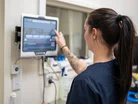
Hospitals are approaching a connectivity breaking point as growing numbers of connected medical devices and AI-driven tools place new demands on existing wireless infrastructure.
Verizon is urging the healthcare sector to adopt private wireless networks and integrated 5G cellular connectivity for medical devices, arguing that traditional Wi-Fi networks are no longer sufficient for modern clinical environments.
The operator says establishing standards around private wireless connectivity could help healthcare providers deploy new digital services more reliably while reducing network congestion.
Robin Goldsmith, Practice Leader of Healthcare and Life Sciences at Verizon Business, says the industry will increasingly need dedicated wireless infrastructure as hospitals modernise their digital environments.
“I believe that in the coming years, PWNs will be the standard requirement for every new hospital build. The reality is that the vast majority of hospitals are years away from being able to do so," he says.
“By standardizing 5G and Private Wireless connectivity for medical devices, we can help hospitals and health clinics that may not have the resources to upgrade their entire network infrastructure with the connectivity and solutions they need to improve patient care.”
The issue is becoming more pressing as hospitals introduce Internet of Medical Things devices (IoMT) alongside software platforms that process large volumes of clinical data. For example, blood and glucose monitoring systems are IoMT devices.
These systems rely on continuous connectivity for monitoring, diagnostics and operational management, but many healthcare facilities still run them on enterprise Wi-Fi networks designed for office workloads.
According to Verizon, the growth of connected devices and digital healthcare applications is now creating an unsustainable burden on those legacy networks.
Wi-Fi congestion creates operational risks
Hospitals typically run large shared Wi-Fi networks that serve clinicians and patients at the same time as medical equipment. The result is congestion across the commonly used 2.4 GHz and 5 GHz spectrum bands.
This essentially means that everyday devices used for administration or personal connectivity are competing with clinical systems for bandwidth. Equipment such as infusion pumps and telemetry monitors transmit critical patient information and require consistent connectivity to operate safely.
Under the IEC 80001-1 framework, which is an international standard governing risk management for IT networks that connect medical devices, hospital IT teams carry responsibility for ensuring the safety of equipment operating on their networks.
Managing interference and latency across busy Wi-Fi environments therefore becomes both a technical and administrative challenge. Verizon argues that a dedicated wireless infrastructure offers a more predictable alternative for healthcare environments.

Private wireless networks use cellular technology, often based on 5G, to create dedicated connectivity within a specific facility. They require devices to authenticate using Subscriber Identity Modules or eSIM credentials before connecting, which is different to how WiFi networks which are often open to public use.
Because only authorised devices can access the network, the environment is isolated from surrounding consumer devices.
Private cellular offers security and performance controls
Verizon highlights several technical advantages of private wireless connectivity for hospitals, including device-level security.
Each connected device contains a SIM or eSIM credential that links directly to the network. This hardware-based identity creates a one-to-one relationship between the device and the network infrastructure. Devices without the correct encrypted credentials cannot detect or connect to the network.
The operator says this architecture aligns with Zero Trust security models, which require every device and connection to be authenticated before access is granted.
Performance management also changes under a 5G network architecture with network slicing, where operators can divide a single network into multiple virtual segments. Each segment carries traffic with specific performance characteristics.
In a hospital setting, this allows engineers to prioritise critical clinical systems. For example, a slice dedicated to real-time patient monitoring could operate independently of routine data traffic generated by tablets or administrative systems.
Mobility across hospital environments also benefits from cellular design as many facilities contain materials that interfere with wireless signals, including lead-lined walls used in imaging departments and large medical equipment.
Cellular networks handle device movement between coverage zones through automated handovers, allowing connected equipment to move around a facility while maintaining connectivity.
Connectivity underpinning new healthcare services
As healthcare providers expand digital services, the reliability of network infrastructure is becoming increasingly important. Hospitals are exploring remote patient monitoring platforms and virtual nursing tools as part of wider digital transformation programmes.
These applications depend on low latency connectivity to transmit patient data in near real time, and private wireless networks can provide consistent bandwidth and predictable performance for these workloads.
The debate now centres on whether integrated cellular connectivity and private 5G will become the standard foundation for medical devices inside future hospital networks to avoid congestion in Wi-Fi infrastructure.
Company portals

Executives
Robin Goldsmith
Practice Leader, Healthcare, Insurance & Life Sciences
