Deutsche Telekom: Delivering on the EU's AI Gigafactory Plan
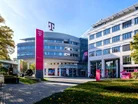
Deutsche Telekom has reportedly joined forces with SAP, Ionos and Schwarz Group to pursue European Union (EU) funding for an AI data centre in Germany.
The consortium aims to secure support from the European Commission's €20bn ($20.9bn) AI gigafactories initiative, designed to strengthen Europe's position against competition from the United States and China.
This news emerged following the European Commission’s announcement of plans to fund between three and five AI data centres across the EU. Each facility requires investment of €3-5 billion (US$3.39-5.66bn) and is expected to house approximately 100,000 AI chips capable of training advanced AI models.
The European Commission also intends to leverage public funding through the European Investment Bank to attract private investors to the project.
Supporting Europe’s data centre infrastructure strategy
Christine Knackfuss-Nicolic, chief technology officer of Deutsche Telekom's T-Systems division, emphasises the urgency of establishing independent AI infrastructure.
“The window of opportunity to create our own independent infrastructure for this is now,” she tells Reuters. “Rarely before have the signs and the common will in Europe been as strong as they are today.”
Deutsche Telekom operates 16 data centres and announced expansion plans in October 2024 to add five additional locations. The company has implemented AI systems within its existing data centres and networks to improve energy efficiency, aligning with its sustainability principles for data centre development.
The telecommunications provider's involvement reflects Germany's broader interest in hosting one of the EU’s planned AI gigafactories.
Notably, Ionos has told Reuters that it is holding talks with several companies and the German government on the subject.

“In principle, we see the European Commission's initiative as an important step towards greater digital sovereignty, and are interested in participating in it,” the company said to Reuters.
Bringing forward global data centre expertise to support Europe
The EU’s AI gigafactory programme responds to concerns about Europe’s competitive position in AI development. In comparison to other markets, European infrastructure currently lacks the computational capacity required for training large-scale AI models, creating dependency on facilities in other regions.
Each proposed gigafactory by the European Commission stands to function as a high-capacity AI infrastructure hub with significant computational power and automation capabilities.
The initiative targets the establishment of facilities capable of supporting next-generation AI model development within Europe. Not only does this aim to reduce reliance on external AI infrastructure providers, but it seeks to strengthen digital sovereignty across EU member states.
AI gigafactories are envisioned to be high-capacity AI infrastructure hubs with significant amounts of compute power and automation capabilities. The European Commission has expressed hope that each gigafactory built would host around 100,000 AI chips that can be used to train next-generation AI models.
The role of Germany in Europe’s digital landscape
Germany's participation in the AI gigafactory initiative aligns with national strategies for digital transformation and technology independence. Government officials have identified AI infrastructure as critical for maintaining economic competitiveness in emerging technology sectors.
The country's existing data centre market provides a foundation for expanded AI infrastructure development. Currently, German operators manage facilities across multiple regions, offering connectivity to European and international networks.
Additionally, the government has supported sustainable data centre expansion, implementing policies to encourage green strategy, energy efficiency and the use of renewable power.
Deutsche Telekom’s sustainability focus for AI development corresponds with these national objectives. The company's commitment to green technology adoption supports broader European goals for climate-neutral digital infrastructure.
Details about this project remain vague, but those companies mentioned by Handelsblatt already have a significant position in the data centre market and are actively advancing.
Explore the latest edition of Mobile Magazine and be part of the conversation at our global conference series, Tech & AI LIVE and Cloud & 5G LIVE.
Discover all our upcoming events and secure your tickets today.
Sign up to receive the Mobile Magazine weekly newsletter.
Mobile Magazine is a BizClik brand