Apple Maintains DEI Initiatives Despite Rising Opposition
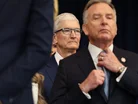
Apple has rejected a proposal to end diversity, equity and inclusion (DEI) initiatives, despite mounting opposition.
The company's shareholders rejected a proposal to terminate these programmes with 97% voting against the measure.
This news comes as a contrast to the actions of other technology firms including Google, Meta and Walmart, which have all disbanded their DEI departments in the wake of US President Donald Trump being elected.

The National Center for Public Policy Research (NCPPR) initially called on Apple to abolish its DEI policies, stating they expose businesses to “litigation, reputational and financial risks.” Apple directors responded at the time saying that such a proposal is unnecessary because the company has appropriate measures in place.
“The proposal is unnecessary as Apple already has a well-established compliance programme,” Apple commented via its response. “The proposal also inappropriately attempts to restrict Apple's ability to manage its own ordinary business operations, people and teams and business strategies.”
It added: “Apple is an equal opportunity employer and does not discriminate in recruiting, hiring, training, or promoting on any basis protected by law.”
Legal risks for DEI programmes
The shareholder decision comes during a period of intensified scrutiny for corporate DEI initiatives following Donald Trump's return to the White House in January 2025. President Trump has frequently criticised DEI policies during his campaign and has maintained this position since taking office.
Legal challenges to DEI programmes have emerged across the US. In February 2025, Florida Attorney General James Uthmeier filed a lawsuit against Target, claiming that its diversity initiatives misled shareholders and damaged the company financially.
The case has raised speculation that other corporations, including Apple, might face comparable legal action. This has generated concern in numerous boardrooms, prompting companies to reconsider their diversity strategies.
Apple's decision to preserve its DEI programmes coincides with efforts to maintain productive relations with the Trump administration - which have been described as cordial. The company has already had to navigate trade policies and secured exemptions from tariffs on its Chinese-manufactured iPhones through this relationship.
In a move interpreted as appeasing the Trump administration, Apple also recently announced a US$500 billion investment in the US, creating 20,000 jobs over five years. This commitment received praise from President Trump and demonstrates the balancing act Apple is performing—advancing DEI initiatives while preserving business-friendly government relations.
NCPPR challenges Apple's position
The proposal to end Apple's DEI initiatives was introduced by NCPPR, a conservative organisation targeting diversity programmes at major corporations throughout the US.
Stefan Padfield, Executive Director of the think tank's Free Enterprise Project, led the campaign against Apple's DEI commitments.
“The vibe shift is clear: DEI is out and merit is in,” Stefan said during a pre-recorded presentation at the meeting.
He argued that Apple's policies might contravene recent court rulings and face investigation from the Trump administration, which has directed the Department of Justice to examine whether DEI programmes discriminate against employees who do not meet diversity criteria.
Stefan also suggested that “forced diversity is bad for business” and that such policies could expose the company to legal challenges as the political and regulatory environment shifts.
Despite rejecting the proposal, Apple CEO Tim Cook acknowledged the changing legal landscape might necessitate adjustments to the company's approach.
“We will continue to create a culture of belonging,” he told shareholders.
During a Q&A session, he expressed awareness that Apple's position on DEI may have to change in the future.
“As the legal landscape around this issue evolves, we may need to make some changes to comply, but our north star of dignity and respect for everyone and our work to that end will never waver,” he explained.
As the legal landscape around this issue evolves, we may need to make some changes to comply, but our north star of dignity and respect for everyone and our work to that end will never waver.
Balancing political scrutiny
Apple's most recent diversity and inclusion report from 2022 revealed that approximately 75% of its global workforce identified as white or Asian, with men constituting nearly two-thirds of employees. These statistics reflect broader patterns across the technology industry, where workforce diversification efforts have shown limited progress.
It is clear that Apple remains determined to maintain its diversity efforts despite external pressures.
The company is not alone in maintaining its DEI programmes despite political pressure. Last month, Costco rejected a similar proposal at its annual meeting, indicating that corporate diversity initiatives retain substantial investor support.
The question now is how long these commitments will remain viable in the face of mounting political and legal challenges.
Catherine Howarth, CEO of ShareAction, believes companies abandoning DEI commitments will experience negative consequences.
“It's not popular with consumers and it's not popular with employees to abandon what were supposedly your principles in this area until very recently,” she said.
“They think it would go down very badly - and it would - with their global consumer base.”
Explore the latest edition of Mobile Magazine and be part of the conversation at our global conference series, Tech & AI LIVE.
Discover all our upcoming events and secure your tickets today.
Mobile Magazine is a BizClik brand