
How Deutsche Telekom Delivers 65% Energy Savings in 5G Core
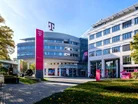
Deutsche Telekom has reported a step change in network sustainability, delivering up to 65% energy savings in its mobile core through a demand-driven approach to resource management and targeted hardware optimisation.
Anchored in the “Zero Bits, Zero Watts” principle, the operator’s strategy ensures minimal power draw when no data is transmitted, without compromising reliability or service quality.
“In initial live tests, we achieved up to a 65% reduction in energy consumption within the core network,” says Abdu Mudesir, Board Member Product & Technology at Deutsche Telekom.
“Efficiency is no longer driven solely by new hardware but also by intelligent, software-based management.”
The programme supports Telekom’s broader push to continually increase network efficiency and reduce CO₂ emissions, following its milestone of achieving full carbon neutrality in operations in 2025.
Partner ecosystem drives innovation
The results stem from a collaboration spanning Lenovo for optimised server platforms, HPE for energy-efficient network components, AMD for high-performance EPYC processors and supporting software, and Mavenir for pioneering 5G software features deployed at scale for the first time.
Together, the partners designed and tested a scalable concept that trims energy consumption across all layers of the 5G core.
With successful live trials completed, Telekom is now preparing a wider rollout and enhancing the system with AI to predict traffic and dynamically activate or power down resources as demand fluctuates.
Full-stack energy efficiency
At the centre of the initiative is Telekom’s “Full Stack Energy Efficiency” model, which treats the 5G core as an interdependent, multi-layered system rather than optimising components in isolation.
The operator maps the entire chain, from processors and cloud infrastructure to operating systems and 5G core services,to target interventions that deliver end-to-end energy gains.
“In the 5G core network, we continuously monitor utilisation, detect patterns in data traffic and dynamically allocate computing and network resources as required,” Abdu explains.
“Components no longer operate continuously but only when needed. This lays the foundation for a new approach to energy management, where every single service and component is optimised to save energy.”
Horizontal Telco Cloud as the foundation
Enabling this shift is Telekom’s “Horizontal Telco Cloud,” a unified, standardised platform developed with Amdocs, HPE, Mavenir and Nokia that replaces fragmented legacy stacks.
Built on open standards and open-source components, the platform simplifies operations, accelerates innovation and allows energy optimisations to scale consistently across the network. It also underpins AI-driven automation, where power consumption adapts in real time to network demand.
“Automation and AI are not add-ons for us, but an integral part of our infrastructure,” says Abdu.
“By consistently leveraging open standards and open-source components, we are establishing a blueprint for the industry.”
Net Zero telco strategies
Sustainability in telecoms will be in focus at Sustainability LIVE: Net Zero Summit on 4 and 5 March in London.
The Net Zero Telco Strategies panel brings together leaders from BT Group and Nokia to examine progress toward net zero through energy-efficient networks, renewable power adoption and circular technology.

- Tiffany Chow, Head of Responsible Business - Strategy and Governance, BT Group
- Clare McCarthy, Senior Principal Sustainability Solutions, Nokia
Panellists will discuss sustainable infrastructure, the role of regulation and consumer expectations, and the partnerships required to decarbonise the broader telecoms ecosystem.
Company portals



Executives
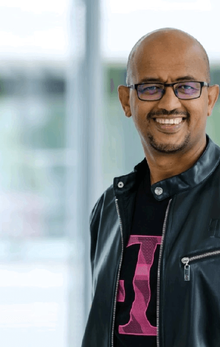
Abdu Mudesir
Board Member for Product and Technology