Top 10: Companies Investing in Autonomous Vehicles
The race to perfect autonomous vehicle (AV) technology marks one of the most transformative shifts in transport history. Industry giants, legacy automakers and agile startups are funnelling billions into reshaping how people and goods move. This evolution isn't just about automation, it's about safety, scale and redefining connectivity in motion.
Efforts range from Level 4 robotaxis to enhanced driver assistance systems (Level 2 and 3 ADAS), each with profound implications for telecommunications. As AVs grow smarter, the demand for ultra-reliable, low-latency connectivity becomes central. Without a robust communications infrastructure, autonomy is a pipe dream.

Mobile Magazine's independent analysis identifies and ranks the top 10 AV players globally, applying a robust methodology anchored in technological innovation, financial muscle, R&D commitment, strategic partnerships and deployment maturity. "We cross-referenced our selections with the 2024 Forbes Global 2000 list," stated Stella Nolan, Editor.
These findings are more than industry insight for telecommunications professionals—they signal where infrastructure, data services and mobility networks meet and evolve. The success of AVs hinges on network performance, making telcos vital players in shaping the connected roads of tomorrow.
10 | Volkswagen Group
- Founding Year: 1937
- Annual Revenue: US$351.3bn
- Group CEO: Oliver Blume - Board responsibility for CARIAD
- Employees: 646,501
Volkswagen Group is accelerating its push into autonomous vehicles with major investments in software and electrification. At the core is its CARIAD unit, developing a unified software platform and autonomous driving stack for Level 4 capabilities.
The Scalable Systems Platform (SSP) will support future electric models with rapid update potential. Strategic partnerships, including Mobileye's EyeQ™6 platform for Level 2+ ADAS, further strengthen Volkswagen's roadmap to autonomy across its global vehicle portfolio.
9 | BMW Group
- Founding Year: 1916
- Annual Revenue: US$154bn
- Member of the Board of Management of BMW AG, Purchasing and Supplier Network: Joachim Post
- Employees: 159,104
BMW Group is advancing autonomous driving, focusing on premium, high-tech solutions. It leads with its "Personal Pilot L3" system, delivering SAE Level 3 automation at up to 60 km/h in traffic on approved German motorways. The Level 2+ "Highway Assistant" complements this, enabling hands-free driving at higher speeds across multiple regions.
Strategic use of HERE Technologies' AI-powered UniMap supports both systems, while continued R&D investment drives BMW's future-ready "Neue Klasse" platform.
8 | Intel (Mobileye)
- Founding Year: 1968
- Annual Revenue: US$53.1bn
- CTO: Greg Lavender
- Employees: 108,900

Intel's autonomous vehicle ambitions are led by Mobileye, its majority-owned subsidiary and a global leader in ADAS technologies. Mobileye powers advanced driver assistance in millions of vehicles through its EyeQ chips and camera-based systems.
Building on its foundation, it is advancing toward SAE Level 4 autonomy with its Mobileye Chauffeur platform, featuring full sensor redundancy and powerful on-chip processing. Key innovations like REM mapping and RSS safety policy are central to the push, alongside major partnerships with Volkswagen, Ford and Zeekr.
7 | Toyota Motor Corporation
- Founding Year: 1937
- Annual Revenue: US$305bn
- Executive President: Hiroki Nakajima
- Employees: 380,793
Toyota is advancing autonomous driving through a safety-first, multi-pronged strategy led by the Toyota Research Institute and its software arm, Woven by Toyota. Its global Toyota Safety Sense (TSS) system forms the ADAS foundation, while the "Teammate" platform introduces more advanced automation.
A strategic partnership with Waymo signals Toyota's intent to accelerate its AV ambitions by combining cutting-edge autonomy with its proven vehicle platforms. Development is further supported by Woven City, Toyota's real-world testbed for future mobility technologies.
6 | General Motors (Super Cruise)
- Founding Year: 1908
- Annual Revenue: US$187bn
- Senior Vice President, Software and Services Engineering: Dave Richardson
- Employees: 162,000

General Motors is refocusing its autonomous vehicle strategy by integrating Cruise's advanced technology and expertise with its acclaimed Super Cruise system. Super Cruise, a leading Level 2+ hands-free driving solution, operates across 750,000 miles of North American roads.
After pausing Cruise's robotaxi operations in late 2023, GM took full ownership in early 2025. The new direction prioritises enhanced ADAS for personal vehicles, leveraging Cruise's AV capabilities to expand Super Cruise into more complex urban environments and drive future innovation.
5 | Amazon (Zoox)
- Founding Year: 1994
- Annual Revenue: US$574bn
- CTO/Tech Lead: Werner Vogels
- Employees: 1,556,000
Amazon made a bold move into autonomous vehicles with its US$1.2bn acquisition of Zoox in 2020. Zoox is developing a fully autonomous, bidirectional electric vehicle designed from the ground up for urban ride-hailing. It targets dense city environments and is equipped with a 360-degree sensor suite and innovative safety features.
While deployment has been cautious, Zoox now operates employee robotaxi services in California and Nevada. Amazon's backing offers scale, with future integration into logistics and services like Prime Mobility on the horizon.
4 | Mercedes-Benz Group
- Founding Year: 1926 (as Daimler-Benz)
- Annual Revenue: US$164bn
- Member of the Board, Development & Procurement & CTO: Markus Schäfer
- Employees: 175,264
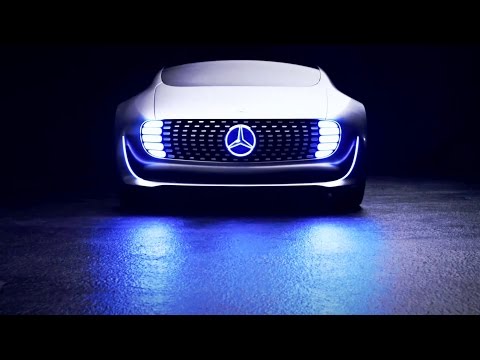
Mercedes-Benz is at the forefront of autonomous driving with its certified Level 3 system, DRIVE PILOT, which is approved for use in Germany and select US states. The system enables hands-off, eyes-off driving in heavy traffic on approved freeways under 40 MPH, using advanced sensors, including LiDAR, radar and HD mapping.
Mercedes is enhancing its ADAS offerings through strategic partnerships with NVIDIA and Google. As a luxury leader, the brand is well-positioned to integrate next-gen autonomy into premium in-car experiences.
3 | Tesla
- Founding Year: 2003
- Annual Revenue: US$94.7bn
- CEO: Elon Musk
- Employees (2024): 125,665

Tesla remains a dominant force in autonomous vehicle development, driven by its vast global fleet and data-rich Full Self-Driving (FSD) Beta programme. Unlike competitors, Tesla relies on a vision-based system powered by cameras and AI neural networks, trained on billions of real-world driving miles.
FSD, still classified as SAE Level 2, supports both highway and city driving but requires driver supervision. With custom-designed AI chips and extensive data collection, Tesla holds a unique position despite ongoing regulatory scrutiny and debate.
2 | NVIDIA
- Founding Year: 1993
- Annual Revenue: US$60.9bn
- CTO/Tech Lead: Michael Kagan
- Employees: 29,600
NVIDIA has emerged as a cornerstone of the autonomous vehicle ecosystem, supplying the AI computing power behind many of the industry's most advanced platforms. Through its DRIVE platform—including high-performance chips like Orin and the upcoming Thor, built on cutting-edge architectures—NVIDIA enables a full range of autonomy from advanced driver assistance to full self-driving systems.
Its broad partnerships span automakers such as Mercedes-Benz, Toyota and GM, as well as AV developers like Aurora and Zoox. With tools like Omniverse for simulation and AI training, NVIDIA drives the next generation of intelligent, software-defined vehicles.
1 | Alphabet (Waymo)
- Founding Year: 2016
- Annual Revenue: US$307bn
- CEO, Alphabet & Google: Sundar Pichai
- Employees: 183,323

Waymo, a subsidiary of Alphabet, leads the autonomous vehicle sector with its advanced Level 4 ride-hailing service, Waymo One. Evolving from the Google Self-Driving Car Project, Waymo now operates fully driverless vehicles in US cities like Phoenix, San Francisco, Los Angeles and Austin, completing over 250,000 weekly trips.
Its Waymo Driver technology, refined through extensive real-world and simulated testing, uses a robust sensor suite and AI to navigate complex environments. Backed by Alphabet's resources and key partnerships—including Toyota and Uber—Waymo continues to set the benchmark for safe, scalable urban autonomy.
Explore the latest edition of Mobile Magazine and be part of the conversation at our global conference series, Tech & AI LIVE and Cloud & 5G LIVE. Discover all our upcoming events and secure your tickets today.
Sign up to receive the Mobile Magazine weekly newsletter.
Mobile Magazine is a BizClik brand