Top 10: Chatbot Solutions
The transition from rudimentary voice response systems to genuine conversational AI is completely rewriting how telcos interact with their customers.
Top-tier carriers are moving beyond standard vendor wrappers to pioneer agentic ecosystems capable of multi-system workflows and predictive customer care.
This seismic shift represents a fundamental architectural reset where virtual assistants securely execute real-time transactions directly across network diagnostics and subscriber registries.
Evaluating chatbot effectiveness now requires analysing deep back-end integration and localised linguistic adaptability, instead of simple deflection percentages.
This Top 10 evaluates how global operators harness large language models, retrieval-augmented generation and specialised orchestration layers to automate complex troubleshooting trees and achieve massive returns on investment.
10. SoftBank
CEO: Masayoshi Son
Founded: 1981
Location: Tokyo, Japan
SoftBank is a leader in chatbot technology through its innovative SB Intuitions unit, which focuses on LLMs based in Japan.
Instead of relying on generic western options, the operator has engineered a proprietary conversational assistant deeply integrated with AI-RAN infrastructure.
This structural synergy allows its enterprise and consumer solutions to process queries at the network edge.
The result is an ultra-low latency and highly secure care bot capable of managing hyper-localised smart-home diagnostics and customer subscriptions with unrivalled and remarkable operational efficiency.
9. Singtel
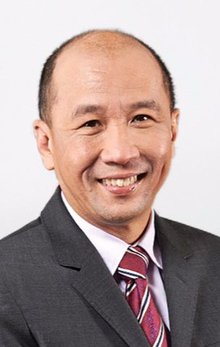
CEO: Yuen Kuan Moon
Founded: 1879
Location: Singapore

Singtel stands out by rejecting generic chatbot wrappers in favour of a highly specialised, Southeast Asian Gen AI assistant.
By participating heavily in regional telco alliances, the group has focused its engineering efforts on navigating unique regional dialects and mixed-language conversational queries, such as Singlish.
This specific focus significantly reduces friction for users across its broader market footprint, driving up automated resolution rates while optimising front-end customer experiences across its diverse corporate and consumer segments throughout the entire Asian region.
8. AT&T
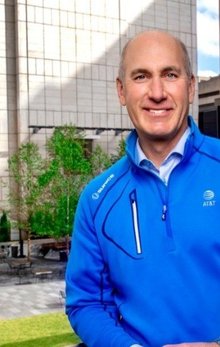
CEO: John Stankey
Founded: 1885
Location: Dallas, Texas, US
AT&T has integrated an advanced digital assistant with Google Cloud CCAI orchestration, which is an automated AI workflow manager.
The carrier's implementation prioritises multi-turn troubleshooting trees that seamlessly guide subscribers through the configuration of wireless and broadband accounts.
By implementing a unified conversational architecture that supports both external consumer care and internal IT infrastructure helpdesks, AT&T successfully drives high-volume deflection.
This dual-purpose strategy maximises corporate return on investment while maintaining service stability across millions of active American enterprise and consumer network connections each day.
7. Verizon
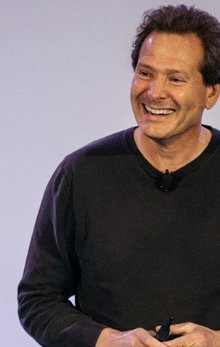
CEO: Dan Schulman
Founded: 2000
Location: New York City, New York, US

Verizon handles unparalleled transaction volumes by focusing its virtual assistant architecture on deep Layer-5 integration.
The company uses secure API orchestration layers to read and write directly across multiple legacy billing and network databases mid-conversation.
This allows the bot to securely process high-value customer intents like device upgrades and plan splits instantly.
Verizon proves that immense scale and operational utility can be achieved through highly disciplined, multi-system enterprise infrastructure database integration actions.
6. e& Group
CEO: Masood Mohamed Sharif
Founded: 1976
Location: Abu Dhabi, UAE
Driving the Middle East's conversational AI renaissance, e& Group relies on highly specialised, bilingual Arabic and English large language models tailored for complex reasoning.
Its enterprise agent excels at understanding cultural context and regional idioms, while it is also well known for its ability to complete tasks immediately.
By embedding this virtual assistant deeply into its primary customer application, the group provides subscribers with a frictionless portal for managing data caps, executing bill payments and purchasing hardware completely autonomously.
5. Telefónica
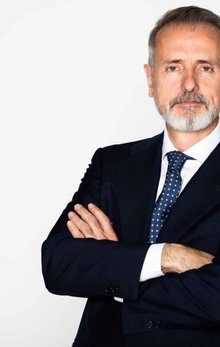
CEO: Marc Murtra Millar
Founded: 1924
Location: Madrid, Spain

Telefónica's Aura has successfully transitioned from an early cognitive intelligence platform into a state-of-the-art conversational solution.
By injecting its foundational architecture with Gen AI and Retrieval-Augmented Generation layers, the Spanish company is able to ensure exceptional processing accuracy while rigorously respecting customer data sovereignty across European and Latin American markets.
This modern overhaul allows Aura to combine historic user data with real-time predictive reasoning.
The result is a highly compliant virtual assistant that sets distinct international benchmarks for user privacy and data security standards.
4. Reliance Jio
CEO: Mathew Oommen
Founded: 2016
Location: Mumbai, India
Reliance Jio is a network that connects around 524 million subscribers across India, with its voice-powered assistant HelloJio processing more than half a billion voice searches every month.
The platform's technical marvel lies in its hyper-localised vernacular voice-processing capabilities, engineered to navigate dozens of distinct regional Indian dialects seamlessly.
It acts as a vital digital onboarding bridge, allowing subscribers to activate services, check data quotas and troubleshoot broadband setups using simple spoken native voice commands each single day.
3. Deutsche Telekom
CEO: Timotheus Höttges
Founded: 1995
Location: Bonn, Germany

Deutsche Telekom earns its podium position thanks to its world-class engineering leadership.
Moving beyond closed vendors, the carrier developed and open-sourced its Language Models Operating System.
This highly scalable multi-agent platform layer allows Frag Magenta to dynamically orchestrate and route customer queries across various highly specialised telco models.
By decoupling the front-end dialogue from a single model framework, Frag Magenta efficiently resolves hundreds of thousands of highly intricate home routing and hardware troubleshooting configurations automatically each month with absolute and total ease.
2. Vodafone
CEO: Margherita Della Valle
Founded: 1984
Location: Newbury, Berkshire, UK
For many, Vodafone has become the industry gold standard for scaling Gen AI across highly fragmented global markets.
By upgrading its legacy care infrastructure into Super TOBi through Microsoft Azure OpenAI, the carrier has successfully deployed an advanced agentic graph architecture.
Super TOBi autonomously manages over 60 million conversational touchpoints monthly across 16 distinct national markets.
Instead of simple query routing, the bot maps multi-step plans to resolve roaming diagnostic errors, handle billing anomalies and update accounts directly.
This technical depth delivers a phenomenal 82% automated resolution rate, dramatically reducing overhead costs while bolstering front-line customer satisfaction scores throughout its entire European footprint.
1. SK Telecom
CEO: Jung Jai-hun
Founded: 1984
Location: Seoul, South Korea
SK Telecom is helping to constructing the foundational infrastructure of the AI era.
Via the proprietary A.X K1 foundational model, a staggering 519-billion-parameter hyperscale engine, the operator powers Aster, a hyper-advanced life management assistant.
Moving far beyond traditional helpdesk workflows, Aster operates as an autonomous agent that seamlessly executes retail transactions, schedules personal tasks and navigates cross-application operations.
As the anchor member of the Global Telco AI Alliance, SK Telecom is completely exportable, establishing an incredibly high-compute sovereign AI blueprint that traditional global telco providers are racing to replicate across their networks now.
Company portals








Executives
Dan Schulman
Chief Executive Officer
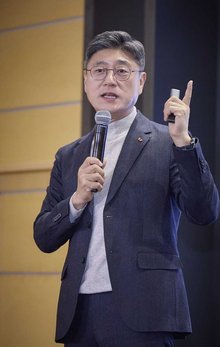
Jaihun Jung
CEO and President
John Stankey
AT&T CEO
Kuan Moon Yuen
Group Chief Executive Officer
Marc Murtra Millar
Chair and CEO
Margherita Della Valle
Group Chief Executive
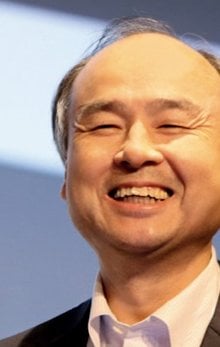
Masayoshi Son
CEO & Founder
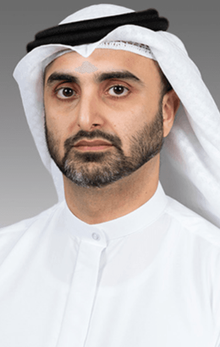
Masood Mohamed Sharif
CEO
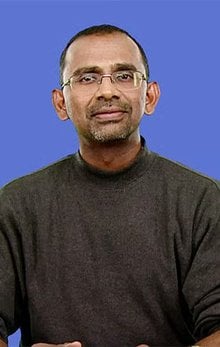
Mathew Oommen
Group CEO
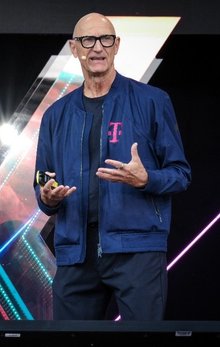
Timotheus Höttges
CEO