Top 10: Cloud Providers for Telcos
The telco sector has fundamentally shifted from hardware legacy to cloud-native architectures.
As we reach mid-2026, Gen AI and sovereign cloud needs have redefined what it means to be a top-tier provider.
For operators, cloud selection is a strategic decision, influencing network slicing, edge latency and Opex.
This month’s Top 10 evaluates leaders based on carrier-grade workloads, Open RAN commitment and AI prowess at the network edge.
From hyperscale giants to traditional vendors pivoting to software, these 10 companies are driving the digital transformation of the world’s most sophisticated carriers.
10. VMware by Broadcom
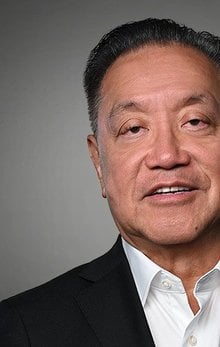
CEO: Hock E. Tan (Broadcom)
Founded: 1998
Location: Palo Alto, California, US
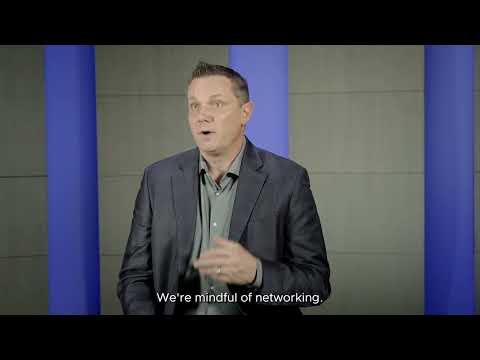
Broadcom’s acquisition of VMware initially sparked industry uncertainty, but the company has successfully stabilised its position by focusing on the VMware Cloud Foundation (VCF).
For telcos, VCF remains a vital layer for managing private clouds and transitionary workloads.
As operators move away from legacy hardware, Broadcom provides the virtualisation software to bridge the gap between traditional virtual machines and modern, container-based architectures.
The firm’s 2026 roadmap emphasises high-performance networking and simplified licensing, ensuring it remains an essential partner for established carriers.
9. IBM Cloud
CEO: Arvind Krishna
Founded: 1911 (Cloud division acquired in 2013)
Location: Armonk, New York, US
Leveraging Red Hat OpenShift, IBM Cloud has carved out a niche as the leading hybrid cloud provider for highly regulated telecommunications environments.
The firm’s "Cloud for Telecommunications" framework addresses the specific security and compliance needs of operators. By prioritising open-source flexibility, IBM allows carriers to deploy workloads across multiple environments without the risk of vendor lock-in.
The company’s recent focus on AI-driven automation for network operations has further solidified its standing with Tier–1 operators, offering resilient and secure infrastructure for modern digital services.
8. Oracle Cloud Infrastructure
CEO: Clay Magouyrk and Mike Sicilia (Co-CEOs)
Founded: 1977
Location: Austin, Texas, US

Oracle Cloud Infrastructure (OCI) has become the go-to platform for telcos looking to migrate mission-critical back-office systems to the cloud.
By specialising in the cloudification of Billing Support Systems (BSS) and Operations Support Systems (OSS), Oracle enables carriers to modernise their most complex data structures.
The firm’s distributed cloud strategy allows operators to run OCI services within their own data centres, meeting strict data sovereignty requirements.
With high-performance compute, Oracle is increasingly powering heavy-duty database workloads and real-time charging engines.
7. Huawei Cloud
CEO: Peter Zhou
Founded: 1987 (Cloud division 2017)
Location: Shenzhen, China
Huawei Cloud continues to dominate across the Asia-Pacific region, the Middle East and Africa by offering a deeply integrated hardware-software stack.
Huawei’s "Cloud-Network-Synergy" approach provides an end-to-end solution that is often more cost-effective than Western alternatives.
Its Pangu AI models have been specifically tuned for telco use cases, such as predictive maintenance and energy optimisation.
Despite experiencing some geopolitical challenges in certain markets, Huawei’s massive investment in R&D ensures it remains at the cutting edge of cloud-native infrastructure.
6. Nokia
CEO: Justin Hotard
Founded: 1865 (Cloud-native focus since 2016)
Location: Espoo, Finland
Nokia has successfully transitioned from a hardware-first vendor to a software-centric cloud leader.
The Finnish company’s "Any Cloud" strategy is built on the premise that telco functions should be portable across public and private infrastructure.
Nokia’s cloud-native IMS and subscriber data management systems are live on all major hyperscale platforms.
Furthermore, Nokia’s leadership in the AI–RAN Alliance has positioned it as a critical provider of the compute resources needed at the radio edge, helping operators monetise their 5G investments through low-latency applications.
5. Ericsson
CEO: Börje Ekholm
Founded: 1876
Location: Stockholm, Sweden
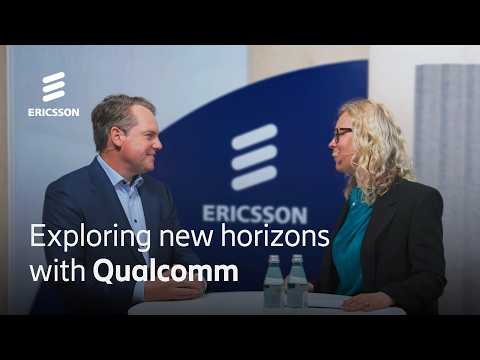
As the global leader in 5G Core deployments, Ericsson has made cloud-native architecture the heart of its portfolio.
Its cloud-native functions (CNFs) offer the high availability and reliability that carriers demand. Ericsson’s 2026 focus on intent-based networking allows the cloud to automatically reconfigure itself based on specific business objectives or traffic demands.
By providing a seamless path from legacy cores to 5G Standalone, Ericsson remains an indispensable partner for operators seeking to achieve true network slicing and automation across its global footprints.
4. Rakuten Symphony
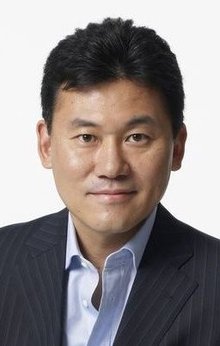
CEO: Mickey Mikitani
Founded: 1997
Location: Tokyo, Japan
Rakuten Symphony is the telco industry’s most significant disruptor, proving that a mobile network can be built and operated entirely in the cloud.
The Symworld platform, for instance, offers a unified "operating system" for the telco cloud, automating everything from site planning to network operations.
By championing Open RAN and disaggregated software, Symphony has forced traditional vendors to accelerate their own cloud-native journeys.
Rakuten’s expansion into global markets in 2026 goes to show how strong the global appetite for its highly automated, low-cost operational model truly is.
3. Google Cloud
CEO: Thomas Kurian
Founded: 2008
Location: Mountain View, California, US
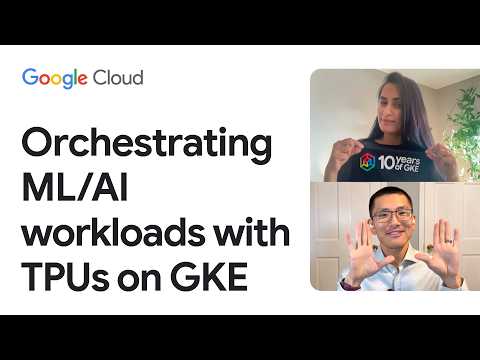
Google Cloud has distinguished itself through superior data analytics and artificial intelligence capabilities.
Its Vertex AI platform is the premier tool for telcos to harness the vast amounts of data generated by their networks.
By focusing on "Sovereign Cloud" partnerships in Europe, Google has addressed regulatory concerns while providing cutting-edge edge computing solutions.
The ability to integrate telco data with Google’s broader ecosystem makes the company a preferred partner for carriers looking to improve customer experience and network efficiency.
2. Amazon Web Services (AWS)
CEO: Matt Garman
Founded: 1994 (AWS launched 2006)
Location: Seattle, Washington, US
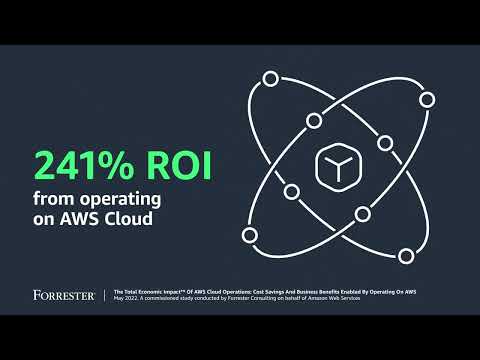
As the world’s largest public cloud provider, AWS offers a scale and an ecosystem of partners that are simply unmatched.
In 2026, its Telco Network Builder and AWS Ground Station services have become standard tools for carriers managing complex hybrid environments.
By providing a wide array of specialised instances and Graviton processors, AWS helps operators reduce their compute costs while increasing performance.
The company’s commitment to the edge is evident in its Wavelength zones, which embed compute within carrier networks to deliver ultra-low latency.
AWS remains the primary engine for telco innovation and digital transformation on a global scale.
1. Microsoft Azure
CEO: Satya Nadella
Founded: 2008
Location: Redmond, Washington, US
Microsoft Azure takes the top spot due to its hyper-focused "Azure for Operators" strategy and industry-leading integration of generative AI.
By embedding OpenAI’s capabilities into the network core, Azure allows carriers to automate complex troubleshooting and customer service tasks with unprecedented accuracy.
Microsoft’s acquisition of AT&T’s network cloud technology provided the blueprint for carrier-grade cloud operations at massive scale.
Today, Azure is the primary partner for Tier–1 operators seeking a secure, AI-native environment that supports both IT and network workloads.
The company’s deep expertise ensures that telcos seamlessly bridge network capabilities with modern business applications and operational intelligence.
Company portals





Executives

Arvind Krishna
CEO
Börje Ekholm
President and CEO

Clay Magouyrk
CEO
Hock Tan
President and Chief Executive Officer
Justin Hotard
President and CEO
Matt Garman
Chief Executive Officer
Mickey Mikitani
Chairman and CEO

Mike Sicilia
Chief Executive Officer

Peter Yuefeng Zhou
CEO
Satya Nadella
Chairman and CEO
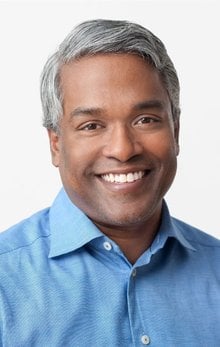
Thomas Kurian
CEO