The telecommunications sector is undergoing its most significant architectural upheaval in years, shifting from rigid, hardware-driven 4G networks to cloud-native, software-defined 5G and emerging 6G frameworks.
The transformation has erased the traditional network perimeter, exposing vast numbers of IoT devices, virtualised functions and containerised workloads.
Cybersecurity is now a strategic priority, as threats from state actors, ransomware and signalling attacks pose risks to national connectivity. At the same time, tougher regulations mean that operators maintain strict oversight of supply chains and data sovereignty.
As telcos integrate into a global cloud fabric, network security is increasingly inseparable from the security of the cloud itself.
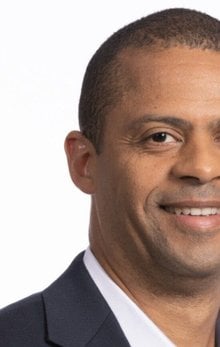
10) F5, Inc.
- Revenue: US$3.02bn
- Employees: 6,520
- CEO: François Locoh-Donou
- Founded: 1996
F5 plays a pivotal role in driving cybersecurity for telcos, offering capabilities uniquely tailored to high-traffic, high-risk network environments.
Evolving from hardware load balancing to a software-led model, it now secures critical interfaces such as the N6/Gi LAN with CGNAT, DDoS mitigation and consolidated traffic functions.
Its milestones include integrating NGINX and building Distributed Cloud Services, enabling strong API and application-layer protection essential for 5G networks. It positions F5 as a key guardian of telecoms’ application, signalling and API ecosystems.
9) Trend Micro
- Revenue: US$1.5bn
- Employees: 7,000
- CEO: Eva Chen
- Founded : 1998
Trend Micro is a global cybersecurity leader whose standout strength lies in securing telco cloud environments. With deep expertise in virtualisation, cloud-native security and virtual patching, it plays a pivotal role in protecting 5G infrastructure.
Notworthy milestones include its market-leading CNAPP capabilities, trusted by major operators, and the launch of CTOne to secure emerging Private 5G networks.
8) Check Point Software Technologies
- Revenue: US$2.4bn
- Employees: 6,000
- CEO: Nadav Zafrir
- Founded : 1993
Check Point is a long-established cybersecurity pioneer playing a vital role in protecting modern telco networks. Known for prevention-first security and exceptional reliability, it delivers high-performance solutions built for carrier-grade scale.
Distinctive strengths include its Maestro Hyperscale Orchestrator, which enables elastic 5G security, and significant milestones, such as its leadership in mobile protection and its award-winning Infinity architecture for unified, AI-driven defence.
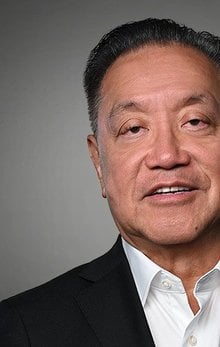
7) Broadcom Inc. (Symantec)
- Revenue: US$67.6bn
- Employees: 37,000
- CEO: Hock Tan
- Founded: 1991
Broadcom is a global technology leader, but its distinctive value for telecommunications lies in its role as an engine for cybersecurity innovation.
By unifying Symantec’s advanced security tools with VMware’s dominant telco-cloud platform, Broadcom delivers tightly integrated, telco-ready protection spanning hypervisor-level controls, SASE, and data-centric DLP.
Its rare silicon-to-software capability enables hardware-accelerated security that rivals cannot match. Key milestones, including the acquisitions of Symantec Enterprise and VMware, have positioned Broadcom as a uniquely influential architect of secure, virtualised 5G networks.
6) Oracle
- Revenue: US$57bn
- Employees: 162,000
- CEO: Clay Magouyrk and Mike Sicilia
Oracle is a global technology leader whose differentiating value for telcos lies in securing the signalling that supports modern networks.
Through milestones such as the acquisition of Acme Packet and the advancement of 5G SEPP technology, Oracle has become the gatekeeper of secure roaming and real-time communications. Its SBCs and SEPP systems protect voice, data, and interconnects from fraud and disruption, while OCI’s sovereign cloud supports strict data-residency needs.
Uniquely, Oracle secures the control plane itself, an essential foundation for telco cybersecurity.
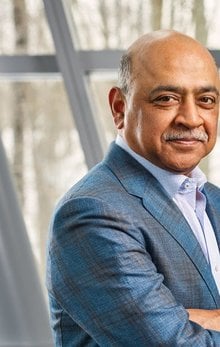
5) IBM
- Revenue: US$62.83bn
- Employees: 282,200
- CEO: Arvind Krishna
- Founded : 1911
IBM is a global technology pioneer whose key value for telcos lies in delivering integrated, future-proof cybersecurity.
Through milestones such as the acquisition of Red Hat and the advancement of quantum-safe cryptography, IBM offers a secure hybrid-cloud foundation for 5G, AI-driven threat detection via QRadar, and industry-leading managed security services.
Uniquely positioned as a systems integrator, IBM operates SOCs for major carriers and unifies fragmented security environments, giving telcos end-to-end visibility and resilience across complex, modern networks.
4) Fortinet
- Revenue: US$5.9bn
- Employees: 14,140
- CEO: Ken Xie
- Founded : 2000
Fortinet is a leading cybersecurity provider whose distinctive value for telcos lies in delivering ultra-high-performance security for 5G and carrier networks.
Through milestones such as developing proprietary SPUs, advancing secure SD-WAN and pioneering quantum-safe networking, Fortinet enables operators to inspect massive encrypted traffic volumes without adding latency.
Its Security Fabric, carrier-grade firewalls, and emerging AI data-centre protections make Fortinet uniquely capable of securing high-capacity, low-latency telecom environments while supporting new revenue streams for operators.
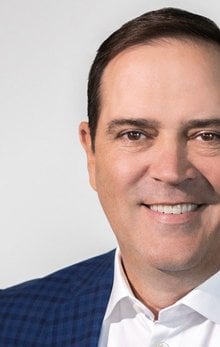
3) Cisco Systems
- Revenue: US$56.6bn
- Employees: 86,200
- CEO: Chuck Robbins
- Founded :1984
Cisco Systems is a global networking leader whose core value for telcos lies in delivering deeply integrated, network-embedded cybersecurity.
Through milestones such as acquiring Duo and Splunk, Cisco uniquely combines identity-driven security with full-stack observability. Its carrier-grade routers act as distributed sensors, using capabilities like Encrypted Traffic Analytics to detect threats within encrypted flows.
Supported by Cisco Talos’ global intelligence, the approach allows telcos to secure their networks from core to edge while unifying NetOps and SecOps for faster, more resilient defence.
2) Palo Alto Networks
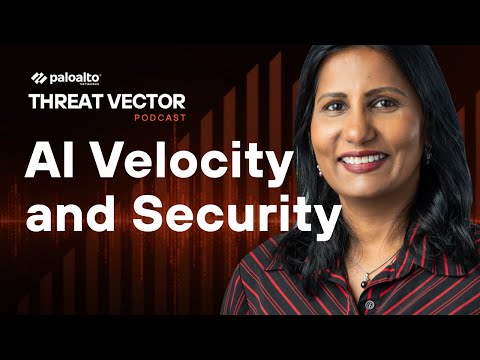
- Revenue: US$9.2bn
- Employees: 16,000
- CEO: Nikesh Arora
- Founded : 2005
Palo Alto Networks is a global cybersecurity leader whose distinctive value for telcos stems from its ability to deliver truly 5G-native, cloud-centred protection.
Having pioneered the Next-Generation Firewall and expanded into the Strata, Prisma and Cortex platforms, it has achieved key milestones that align directly with modern telecom architectures. Its firewalls understand 5G protocols and subscriber identities, enabling operators to secure network slices, apply device-specific policies and protect critical control-plane traffic.
Prisma SASE supports telcos in growing their B2B business by offering managed, cloud-delivered security alongside connectivity. Meanwhile, Cortex automates SOC operations using AI, helping carriers cope with vast alert volumes. Palo Alto Networks also plays a leading role in securing private 5G and industrial OT environments, supporting telcos as they enter new vertical markets.
Through partnerships focused on quantum-safe cryptography, it further ensures that telecom infrastructures remain resilient against future threats.
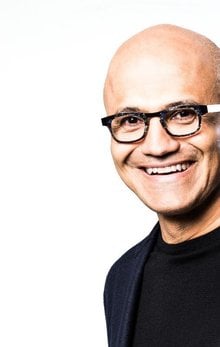
1) Microsoft

Revenue: US$281.7bn
Employees: 228,000
CEO: Satya Nadella
Founded : 1975
Microsoft has emerged as a defining force in telecommunications cybersecurity, placing its Azure for Operators platform at the heart of modern network protection. Rather than supplying standalone security tools, Microsoft provides the infrastructure on which telco networks now run, making security an inherent feature of the platform.
Through its acquisitions of Affirmed Networks and Metaswitch, Microsoft secured direct control of 5G core functions, enabling operators to host end-to-end network workloads within Azure Operator Nexus. The architecture is secure by default, combining protected data centres, hardened virtualisation layers and tools such as Defender for Cloud.
Milestones include the rise of Microsoft Sentinel as the leading cloud-native SIEM capable of unifying telemetry across IT, OT and core networks and the introduction of Security Copilot, which brings AI-driven analysis to telco SOCs. Microsoft’s ability to support sovereign cloud models and continually expand its partner ecosystem further differentiates it as the most influential cybersecurity platform provider for global telcos.
Company portals





Executives
Arvind Krishna
CEO
Chuck Robbins
Chair and CEO

Clay Magouyrk
CEO

Eva Chen
François Locoh-Donou
President and CEO
Hock Tan
President and Chief Executive Officer
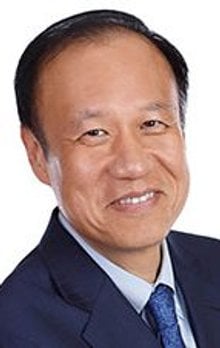
Ken Xie
Founder, Chairman of the Board, and Chief Executive Officer (CEO)
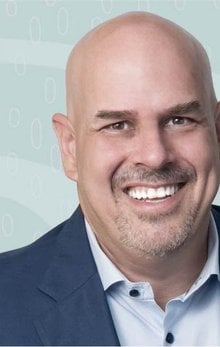
Mike Sicilia
Chief Executive Officer
Nadav Zafrir
Chief Executive Officer
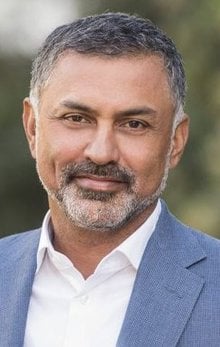
Nikesh Arora
Chairman CEO
Satya Nadella
Chairman and CEO