Top 10: Global Fibre Network Providers
Fibre optic networks have become the backbone of the global digital economy, powering 5G, edge computing, AI and the Internet of Things. The shift from legacy copper to all-fibre infrastructure is a generational technological leap, needing massive investment and long-term strategic planning. Fibre is now a critical geopolitical asset: its deployment and ownership across key submarine cables influence data security, economic competitiveness and international relations.
As connectivity becomes central to innovation and growth, the development and expansion of fibre networks will define the speed, reliability and accessibility of the digital world for decades to come.
10. KDDI
CEO: Hiromichi Matsuda
Founded: 2000
Employees: 64,640
Japan’s KDDI, formed from the merger of DDI, KDD and IDO, is a leading global fibre network provider. Its “au Hikari” fibre service delivers high-speed connectivity domestically, while its extensive international backbone, including submarine cables and data centres, supports wholesale and enterprise services worldwide.
KDDI has achieved significant milestones, including operating the first trans-Pacific cables and providing corporate internet access across 195 countries. With a 24/7 global network operations centre, KDDI ensures reliable, high-quality service, securing its place among Asia’s most influential fibre operators.
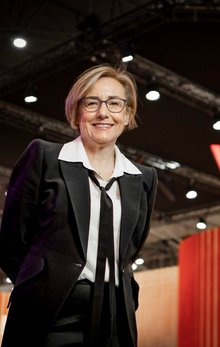
9. Vodafone Group
CEO: Margherita Della Valle
Founded: 1991
Employees: 93,000
The UK-based Vodafone Group is a leading global fibre network provider, serving more than 330 million customers across Europe and Africa.
Europe’s largest network operator, it connects 27 million broadband users, with nearly 32 million able to access Gigabit-capable speeds.
Vodafone’s extensive investment in fibre, including Fibre-to-the-Home (FTTH) and GPON technologies, supports its expanding 5G services and future-proof connectivity.
With a clear roadmap to next-generation XGS-PON, Vodafone is shaping the continent’s digital transformation and securing its position as a pioneer in high-speed, reliable European broadband.
8. Telefónica
CEO: Marc Murtra
Founded: 1924
Employees: 104,150
Telefónica has established itself as a leading global provider of fibre networks. Operating under Movistar, O2 and Vivo, its FTTH network in Spain – the largest in Europe – serves as a model for deployments across Latin America and Germany.
It has passed 48 million premises with its own fibre, achieving milestones through strategic partnerships, including Virgin Media O2 in the UK and FiBrasil in Brazil.
By combining extensive fibre infrastructure with converged services and global reach, Telefónica stands out as a pioneer in high-speed, reliable connectivity.
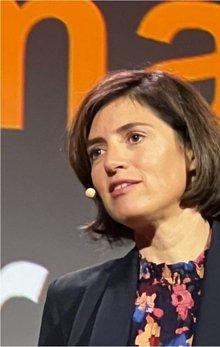
7. Orange S.A.
CEO: Christel Heydemann
Founded: 1994
Employees: 137,000
Headquartered in France, Orange S.A. is a leading global fibre network provider with a strong presence across Europe, the Middle East and Africa.
Its FTTH network supports broadband, mobile and TV services and in 2025, it became the first European operator to reach 10 million fibre customers domestically.
Orange Business leverages the robust international backbone to deliver dedicated fibre and advanced network solutions to enterprises worldwide, highlighting its technological leadership and commitment to high-speed, reliable connectivity.
6. Charter Communications (Spectrum)
CEO: Christopher Winfrey
Founded: 1993
Employees: ~95,000
Charter Communications, operating as Spectrum, is a leading US broadband provider and global fibre network player. Its “Spectrum Fibre Broadband Network” spans more than 950,000 miles, reaching more than 57 million homes and businesses across 41 states.
While historically reliant on hybrid fibre-coaxial infrastructure, Charter is investing heavily in multi-gig speeds and pure fibre expansion.
Its multi-billion-dollar Rural Construction Initiative extends high-speed connectivity to unserved areas. At the same time, its enterprise services deliver dedicated symmetrical fibre, highlighting Charter’s scale, ambition and role as a critical infrastructure provider.
5. Comcast (Xfinity)
CEO: Brian L. Roberts
Founded: 1963
Employees: 182,000
Comcast, the largest US cable company operating under the Xfinity brand, is a leading global fibre network provider. Its nationwide Hybrid Fibre-Coaxial network spans more than 300,000 miles, forming the backbone for broadband, video and voice services.
Comcast continuously innovates, upgrading its HFC network for multi-gigabit speeds while offering premium pure fibre-to-the-premises services with symmetrical speeds up to 10 Gbps.
By combining scale, advanced technology and selective FTTP deployment, Comcast secures its position at the forefront of US connectivity and high-end fibre performance.
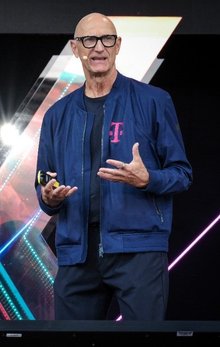
4. Deutsche Telekom
CEO: Timotheus Höttges
Founded: 1995
Employees: 198,194
Deutsche Telekom, Europe’s largest telecoms provider, is a leading global fibre network operator. Its domestic fibre expansion, with more than
750,000 km of cable laid, aims to reach 25 million German homes by 2030, reflecting a strategic pivot to FTTH.
Combined with the network assets of its US subsidiary, T-Mobile, Deutsche Telekom supports next-generation fixed and mobile services across continents.
Its scale, ambitious milestones and long-term investment plans make it a pivotal player in European and North American digital infrastructure.
3. NTT
CEO: Akira Shimada
Founded: 1985
Employees: 319,050
NTT is Japan’s leading telecoms and IT powerhouse, operating the nation’s most extensive fibre network through its NTT East and NTT West subsidiaries under the “FLET’S HIKARI” brand.
The infrastructure supports Japan’s highly connected society, reaching tens of millions of users. Beyond its domestic dominance, NTT operates one of the world’s largest Tier 1 IP backbones, spanning continents and carrying vast volumes of global internet traffic, making it a cornerstone of international digital connectivity.
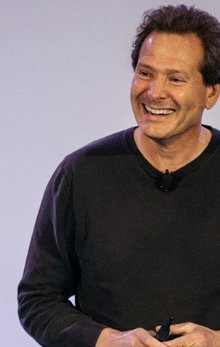
2. Verizon Communications
CEO: Dan Schulman
Founded: 1983 (as Bell Atlantic)
Employees: 99,600

Verizon, a leading US-based telecommunications company, is a global pioneer in FTTH deployment. Its Fios network, launched in 2005, is a 100% fibre-optic system serving more than 15 million homes and businesses in the US Northeast, setting the benchmark for speed, reliability and symmetrical performance.
Its deep fibre infrastructure supports Verizon’s premium broadband and TV services while providing critical backhaul for its award-winning 4G LTE and rapidly expanding 5G networks.
Verizon’s long-term commitment to pure fibre has given it a sustained technological advantage over competitors still reliant on hybrid or copper networks. By prioritising quality over sheer coverage, it delivers unmatched performance in dense metropolitan areas like New York, Boston and Philadelphia.
Its strategic focus has built a loyal, high-value customer base and established Fios as the core of Verizon’s operations, enabling synergies between fixed and mobile networks and reinforcing its position as a global leader in high-speed connectivity.
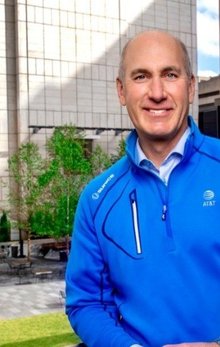
1. AT&T
CEO: John Stankey
Founded: 1885 (as American Telephone and Telegraph)
Employees: 140,990

AT&T stands as the largest fibre internet provider in the US and a significant force in global connectivity. It has surpassed more than 30 million homes and businesses with its fibre network and aims to reach approximately 60 million by 2030, an ambitious goal backed by multi-billion-dollar investment. The future-proof network delivers multi-gigabit symmetrical speeds and supports both AT&T Fibre broadband and its nationwide 5G mobile infrastructure, creating a seamless foundation for next-generation digital services.
AT&T’s fibre strategy represents a bold transformation from legacy copper to a full FTTH model. It is pursuing rapid expansion through organic network builds, strategic partnerships, such as the Gigapower joint venture and acquisitions, including Lumen’s mass-market fibre assets.
Since 2020, AT&T has added more than 5.7 million fibre customers.
Combining scale, technological expertise and financial strength, AT&T is redefining high-speed connectivity and solidifying its role as a global fibre leader.
Company portals

Executives
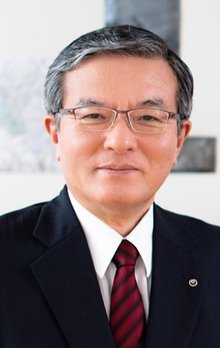
Akira Shimada
President and CEO
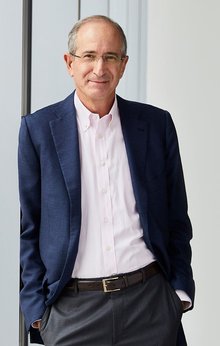
Brian L. Roberts
Chairman and CEO
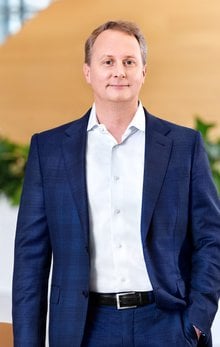
Chris Winfrey
President and CEO
Christel Heydemann
Chief Executive Officer
Dan Schulman
Chief Executive Officer
Hiromichi Matsuda
President & CEO
John Stankey
AT&T CEO
Margherita Della Valle
Group Chief Executive
Tim Höttges
CEO