Top 10: Low-Latency Network Providers
As we move deeper into 2026, the telco industry has transitioned from a race for coverage to a battle for milliseconds.
Readers of Telco Magazine will know that the arrival of 5G-Advanced (5.5G) and the integration of agentic AI-native networks have redefined the performance benchmarks of the modern carrier.
This top 10 list focuses on the innovators who have successfully combined massive small cell densification with distributed edge computing (MEC) to deliver consistent performance.
These carriers serve as the high-speed nervous system for a global marketplace that now demands near-instantaneous data exchange.
10. Singtel
CEO: Kuan Moon Yuen
Founded: 1879 (as the Singapore Telephone Board)
Location: Singapore
Singtel remains a dominant force in the Asia-Pacific region by turning Singapore into a high-tech 'living lab' for low-latency connectivity.
Their Paragon platform has become the industry benchmark for orchestrating 5G and edge computing within complex industrial environments.
By deploying a dense fabric of small cells throughout one of the world's busiest maritime ports, Singtel has achieved the reliable, sub-15ms latency required for autonomous cranes and tugboats, proving that architectural density is key to unlocking true 5G potential.
9. Rakuten Mobile
CEOs: Sharad Sriwastawa and Kazuhiro Suzuki
Founded: 2018
Location: Tokyo, Japan

Rakuten Mobile continues to disrupt the traditional telco model. Their "Symphony" platform allows for the rapid deployment of low-cost, software-defined small cells that bypass the constraints of legacy hardware.
Because their core is entirely cloud-native and decentralized, Rakuten can spin up edge instances closer to the end-user with unprecedented speed.
This agile architecture ensures that latency remains low even as data demand spikes across Japan’s most densely populated urban corridors.
8. Orange
CEO: Christel Heydemann
Founded: 1988 (as France Télécom)
Location: Paris, France
Orange leads the European push for vendor diversity through its commitment to Open RAN standards. By utilizing a multi-vendor small cell strategy, they have densified urban centres like Paris and Marseille with high-efficiency "Green Small Cells."
These units reduce power consumption without compromising on performance, maintaining a steady 12–18ms latency floor for consumer AR applications.
Their leadership in the European "Towards 6G" initiatives further cements their role as a primary architect of future low-latency infrastructure across the continent.
7. Telefónica
CEO: Marc Murtra
Founded: 1924
Location: Madrid, Spain

Telefónica’s strength in 2026 is its "predictive latency". Their AI engine, Aura, has evolved into a sophisticated agentic platform that manages network slices in real-time.
Anticipating traffic surges in major hubs like Madrid or São Paulo, the system reallocates small cell resources before users experience any jitter.
This proactive approach to networking ensures that enterprise clients in the manufacturing and healthcare sectors receive guaranteed latency levels, regardless of the overall load on the public network.
6. AT&T
CEO: John Stankey
Founded: 1885 (as American Bell Telephone)
Location: Texas, US
AT&T’s "Fiber + 5G" strategy provides a backbone for low-latency services. The company offers a "glass-to-air" latency profile that is incredibly stable by backhauling their massive small cell network with deep fiber assets.
AT&T has carved out a niche as the preferred provider for US hospital systems requiring remote robotic-assisted surgery, where reliability is as critical as speed.
Their focus on "Sovereign Clouds" allows for localised data processing, which keeps sensitive information close to the source and reduces round-trip times.
5. China Mobile
CEO: Replacement pending
Founded: 1997
Location: Beijing, China
With the world’s largest deployment of 5G-Advanced (5.5G), China Mobile operates on a scale that defines global trends.
They have successfully integrated Passive IoT into their small cell nodes, allowing millions of industrial sensors to communicate with near-zero latency without the need for internal batteries. This has revolutionised smart manufacturing across China.
Their ability to deploy millions of integrated 5.5G sites ensures that ultra-low latency is a ubiquitous utility rather than a localized luxury for the world's second-largest economy.
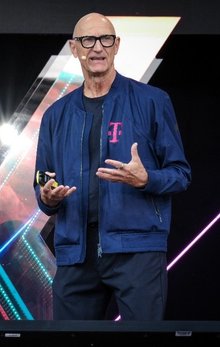
4. Deutsche Telekom
CEO: Timotheus Höttges
Founded: 1995
Location: Bonn, Germany
Deutsche Telekom is the primary architect of the European "Industrial Metaverse".
Their strategic leadership in L-Band spectrum and aggressive small cell densification across the German Mittelstand (the country's economic backbone of SMEs) has made them the gold standard for private industrial networks.
DT’s infrastructure is the invisible engine behind Germany’s automated automotive factories. By ensuring that robotic arms and AGVs operate on dedicated, low-latency slices, they have successfully merged traditional engineering with the digital-first requirements of the 2026 industrial landscape.
3. Vodafone
CEO: Margherita Della Valle
Founded: 1984
Location: Berkshire, England

Vodafone has pioneered the concept of the "European Edge Continuum."
Their architecture allows a developer to deploy an application that stays within a consistent "low-latency bubble" even as a vehicle or device crosses international borders.
This is facilitated by a highly distributed edge small cell network that is the most mature for cross-border autonomous logistics in the EU.
Their commitment to software-defined everything allows them to update network parameters instantly, ensuring that latency-sensitive applications remain performant across their entire multi-national footprint.
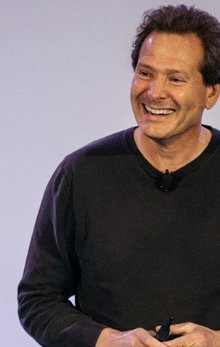
2. Verizon
CEO: Dan Schulman
Founded: 1983 (as Bell Atlantic Corporation)
Location: New York, USA
Verizon has doubled down on its "Latency Island" strategy with a combination of mmWave (Ultra Wideband) and its deep partnership with AWS Wavelength.
While competitors focused on broad coverage, Verizon prioritized "true edge" compute capacity in every major US stadium and transport hub.
This strategy has paid off in 2026, with their network frequently hitting single-digit millisecond response times in urban centres.
Their small cell density is unmatched in the mmWave space, providing the massive bandwidth and instantaneous feedback required for the next generation of spatial computing and real-time enterprise AI applications.
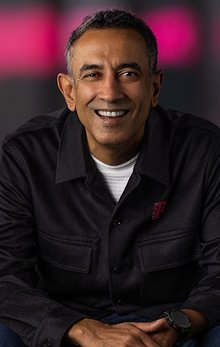
1. T-Mobile
CEO: Srini Gopalan
Founded: 1994
Location: Washington, USA

T-Mobile US claims the top spot for achieving the perfect balance of massive scale and minimal latency.
By being the first major carrier to fully optimize a 5G Standalone (SA) core nationwide, they have eliminated the legacy LTE dependencies that often bottleneck performance.
In 2026, their rollout of "Giga-Cells", which are AI-enhanced small cells that use advanced beamforming to navigate physical obstructions, has effectively removed the "jitter" that once plagued mobile connections.
This allows T-Mobile to deliver sub-10ms latency across a wider geographical footprint than any other provider.
Their network has become a high-performance engine for the modern AI-driven economy, providing the consistent, ultra-fast response times necessary for everything from cloud-based gaming to autonomous vehicle fleets.
Company portals










Executives
Christel Heydemann
Chief Executive Officer
Dan Schulman
Chief Executive Officer
John Stankey
AT&T CEO
Kazuhiro Suzuki
Ambassador of Japan to Australia
Kuan Moon Yuen
Group Chief Executive Officer
Marc Murtra Millar
Chair and CEO
Margherita Della Valle
Group Chief Executive

Sharad Sriwastawa
CEO
Srini Gopalan
Timotheus Höttges
CEO