Top 10: Network Optimisation Platforms
The telco landscape has shifted from manual oversight to a regime of "zero-touch" autonomous operations.
For the modern Tier-1 operator, network optimisation is not a periodic maintenance task but a real-time, AI-driven necessity.
As traffic patterns are becoming increasingly volatile and the energy costs of densification climb, the ability to orchestrate multi-vendor environments while maintaining stringent Service Level Agreements (SLAs) has become the primary differentiator.
In this list, Telco Magazine examines the platforms that are redefining the Radio Access Network (RAN) and core infrastructure.
These vendors are providing the software "brains" required to manage the complexity of modern, disaggregated networks. We look at the power players helping CSPs reduce OpEx and deliver the low-latency experiences promised by the next generation of connectivity.
10. Ciena's Blue Planet: Intelligent Automation
CEO: Gary B. Smith
Founded: 1992
Location: Hanover, Maryland, US
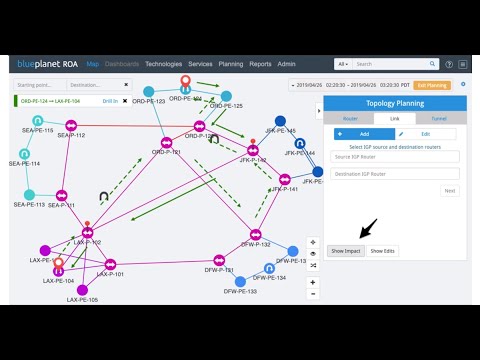
Ciena's subsidiary, Blue Planet, provides a vendor-agnostic approach to network automation.
By focusing on multi-domain orchestration, it allows operators to break down silos between the RAN, transport and core.
Its platform is highly regarded for its ability to inventory assets in real time, a crucial requirement for effective optimisation.
Through its advanced analytics and policy-driven automation, Blue Planet helps operators transition from static configurations to dynamic, self-healing networks that adapt to fluctuating subscriber demands without manual intervention.
9. ZTE: uSmartNet
CEO: Xu Ziyang
Founded: 1985
Location: Shenzhen, Guangdong, China

ZTE’s uSmartNet is a pillar of the company’s "Autonomous Networks" vision, using large-model AI to enhance performance.
The platform excels in cross-layer coordination, ensuring that high-level business intents are translated into precise network configurations.
By harnessing digital twin technology, uSmartNet enables CSPs to simulate optimisation strategies before deployment, significantly reducing risk.
Its strength lies in its deep integration with ZTE’s hardware, providing highly efficient energy-saving algorithms and automated interference management that are essential for large-scale urban 5G deployments across global markets.
8. IBM: Cloud Pak for Network Automation
CEO: Arvind Krishna
Founded: 1911
Location: Armonk, New York, US

IBM has successfully pivoted from general IT to a cloud-centric networking powerhouse.
Its optimisation capabilities are rooted in the IBM Cloud Pak for Network Automation, which uses AI to manage the lifecycle of network services across hybrid environments.
IBM’s platform is particularly strong in intent-based orchestration, allowing operators to define "what" the network should achieve while the AI determines "how" to execute it.
This level of abstraction is vital for managing the immense complexity of 5G slicing and enterprise-specific private networks.
7. HPE's Juniper Networks: Paragon Automation
CEO: Antonio Neri
Founded: 2015
Location: Houston, Texas, US

Mist AI from HPE's Juniper Networking is revolutionising network management with its AI-native solutions.
By moving away from traditional manual configuration, Mist AI uses a combination of AI and data science to optimise user experiences across the stack.
The platform is designed to provide proactive insights and automated troubleshooting, creating "self-healing" networks that identify and resolve issues before they impact the end user.
This AI-driven platform significantly reduces OpEx and ensures consistent performance for mission-critical telco infrastructure.
6. Cisco: Crosswork Network Automation
CEO: Chuck Robbins
Founded: 1984
Location: San Jose, California, US

Cisco is a dominant force in telco optimisation by offering one of the most comprehensive automation portfolios in the industry.
The Crosswork suite provides high-speed data collection and real-time visibility, which are the fundamental building blocks of optimisation.
Cisco’s recent focus on "Predictive Networks" allows the platform to forecast traffic surges and potential failures with remarkable accuracy.
By combining visibility with automated remediation, Cisco enables operators to run their networks closer to theoretical capacity limits, maximising the ROI for expensive spectrum and hardware.
5. NEC's Netcracker Network Automation Suite
CEO: Melanie Smith
Founded: 1899
Location: Minato-ku, Tokyo, Japan

Netcracker, a wholly owned subsidiary of NEC Corporation, is a leader in the orchestration of virtualised and containerised network functions.
Its suite is designed for the Open RAN era, offering the flexibility to manage diverse hardware ecosystems.
Netcracker’s platform stands out for its "Service Orchestration" capabilities, which link network performance directly to business outcomes.
By automating the placement of workloads and optimising resource allocation in real time, it ensures that high-value services always receive the necessary prioritisation and bandwidth.
4. Amdocs' Network Optimisation Suite by actix
CEO: Shimie Hortig
Founded: 1982
Location: Chesterfield, Missouri, US

Amdocs has fortified its position in the network space through strategic acquisitions, most notably actix.
Their optimisation suite is a gold standard for RAN performance management. It provides deep, geolocated insights into subscriber behaviour and network health.
This allows operators to target their Capex more effectively, expanding capacity only where it is truly needed.
Amdocs excels in multi-vendor, multi-technology environments, providing a "single pane of glass" that simplifies the management of legacy 4G systems alongside cutting-edge 5G infrastructure.
3. Huawei: iMaster NCE
CEO: Ren Zhengfei
Founded: 1987
Location: Shenzhen, Guangdong, China

Huawei’s iMaster NCE (Network Cloud Engine) is a sophisticated platform that merges management and control.
It is widely recognised for its industry-leading AI capabilities in the realm of optical and IP network coordination.
The platform uses "Intent-Driven Networking" to automate complex workflows, significantly reducing the time required to provision new services.
Its Autonomous Driving Network (ADN) framework aims for level-4 automation, where the system can handle almost all optimisation tasks independently, drastically lowering the operational cost per bit.
2. Nokia: MontaRay Portfolio & Network Services Platform
CEO: Justin Hotard
Founded: 1865
Location: Espoo, Finland

Nokia has consolidated its leadership through the MontaRay portfolio, which represents a significant leap in AI-native network management.
The platform is designed to handle the extreme scale of 5G Advanced, focusing on energy efficiency and spectral optimisation.
By using advanced machine learning models, Nokia’s NSP can predict network congestion and re-route traffic autonomously, ensuring seamless service continuity.
The strength of Nokia’s approach lies in its Open API philosophy, allowing CSPs to integrate third-party applications and customise their optimisation logic.
This flexibility, combined with Nokia’s deep heritage in radio technology, makes it a top-tier choice for operators looking to balance performance with sustainability goals.
1. Ericsson: Intelligent Automation Platform & Cognitive Software
CEO: Börje Ekholm
Founded: 1876
Location: Stockholm, Sweden

Ericsson claims the top spot for its uncompromising focus on the future of autonomous networking. The Ericsson Intelligent Automation Platform (EIAP) is a true industry pioneer, providing a robust environment for Apps (RAN applications) that can optimise everything from beamforming to energy consumption.
Its "Cognitive Software" suite uses massive datasets to provide predictive insights that were previously impossible to attain. By implementing AI at the edge, Ericsson allows for near-instantaneous optimisation decisions, which is critical for supporting mission-critical IoT and ultra-reliable low-latency communications.
Ericsson’s commitment to an open, multi-vendor ecosystem through its Service Management and Orchestration (SMO) capabilities ensures that it is the heartbeat of the modern global telco network.
Company portals




Executives
Antonio Neri
President & CEO
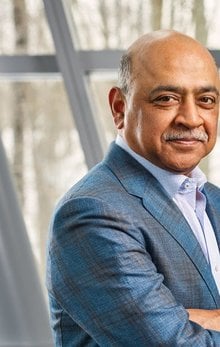
Arvind Krishna
CEO
Börje Ekholm
President and CEO
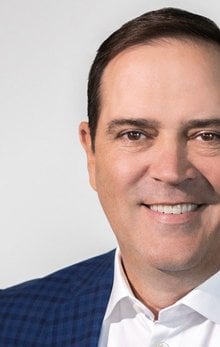
Chuck Robbins
Chair and CEO

Gary Smith
CEO
Justin Hotard
President and CEO

Melanie Smith
CEO

Ren Zhengfei
Founder and CEO
Shimie Hortig
President and CEO
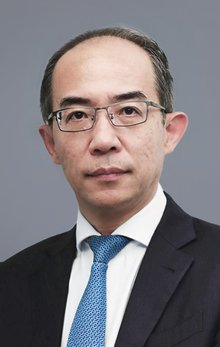
Xu Ziyang
CEO