
Top 10: Private 5G Vendors
The shift from public to private cellular networks represents one of the most significant architectural pivots in the history of telecommunications.
For the enterprise, the allure of 5G lies not just in raw throughput but in the granular control over latency, security and reliability that traditional Wi-Fi cannot match.
As Industry 4.0 matures, the demand for "on-premise" connectivity has moved beyond niche trials into large-scale industrial deployments.
For the modern telco, this evolution presents a dual-edged sword: a lucrative new revenue stream in managed services, balanced against the entry of hyperscalers and agile start-ups into the RAN space.
Navigating the ecosystem requires a deep understanding of who is providing the silicon, the software and the radio expertise.
In this week’s list, we examine the titans and the disruptors defining the private 5G landscape, ranking them on their portfolio depth, strategic partnerships and global deployment footprint.
10) Mavenir
- CEO: Pardeep Kohli
- Founded: 2005
- Location: USA
Mavenir is a pivotal player in the shift toward O-RAN architectures, offering cloud-native software solutions that break vendor lock-in.
The firm's private 5G solution is particularly attractive to enterprises seeking flexible, software-defined infrastructure that runs on commodity hardware.
By championing open interfaces, Mavenir allows for a more diverse ecosystem of components.
Its end-to-end 5G system is designed for automated deployment, making it a strong contender for industrial sectors looking to digitise operations without the traditional overhead of legacy hardware.
9) Amazon Web Services (AWS)
- CEO: Matt Garman
- Founded: 2006
- Location: USA
AWS has disrupted the market with ‘AWS Private 5G’, a managed service that simplifies the process of searching for, deploying and scaling private mobile networks.
By integrating cellular connectivity directly into the AWS console, they have lowered the barrier to entry for enterprises already embedded in their cloud ecosystem.
The AWS model removes the complexity of traditional telco procurement, offering a pay-as-you-go approach. This influence is forcing traditional vendors to rethink their delivery models and software integration strategies.
8) NEC Corporation
- CEO: Takayuki Morita
- Founded: 1899
- Location: Japan
NEC has established itself as a leader in the Japanese ‘Local 5G’ market and has successfully exported that expertise globally.
The corporation focuses heavily on the integration of AI and biometric security within their private networks, catering to high-security environments and smart cities.
As a major proponent of O-RAN, NEC provides high-quality radio units and system integration services.
NEC's ability to deliver bespoke, mission-critical connectivity solutions makes them a preferred partner for complex digital transformation projects in transport and manufacturing.
7) Celona
- CEO: Rajeev Shah
- Founded: 2019
- Location: USA
As the youngest company on this list, Celona has made a significant impact with its '5G LAN' concept.
Celona focuses on making private 5G as easy to deploy as enterprise Wi-Fi, targeting the mid-market and large enterprises alike.
The firm's platform integrates seamlessly with existing enterprise IP networks, allowing IT teams to manage cellular assets using familiar tools.
Celona’s strategic partnerships with major channel players have accelerated their growth, proving that specialised, agile vendors can compete with the established global giants.
6) Samsung Electronics
- CEO: Jun Young-hyun
- Founded: 1969
- Location: South Korea
Samsung has parlayed its success in the public 5G space into a robust private network portfolio.
Leveraging their expertise in end-to-end solutions – from semiconductors and terminals to core network software – Samsung can offer customers a highly cohesive ecosystem.
The Korean company's private 5G solutions are noted for their high capacity and reliability, frequently utilised in massive industrial complexes and smart factories in Asia and North America.
Samsung focuses on vRAN provides the scalability required for modern, data-heavy enterprise applications.
5) ZTE
- CEO: Xu Ziyang
- Founded: 1985
- Location: China
ZTE remains a powerhouse in the private 5G sector, particularly across Asia and emerging markets.
It offers a comprehensive suite of 'Private 5G-as-a-Service' options, ranging from lightweight, integrated i5GC (Industrial 5G Core) servers to large-scale campus deployments.
Its "NodeEngine" solution is a standout, allowing enterprises to process data at the edge of the network for ultra-low latency.
ZTE’s ability to deliver cost-effective, high-performance hardware at scale ensures they remain a dominant force in the global manufacturing and mining sectors.
4) Cisco
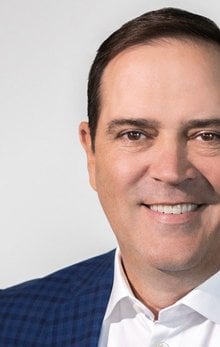
- CEO: Chuck Robbins
- Founded: 1984
- Location: USA
Cisco holds a unique advantage due to its dominance in enterprise networking, with a private 5G offering that is designed to complement, rather than replace, existing Wi-Fi and IoT frameworks.
By integrating 5G into their existing Meraki and Catalyst management platforms, Cisco allows IT administrators to manage cellular connectivity alongside their wired and wireless LAN.
This unified approach is highly appealing to enterprises that prioritise security and simplified management, making Cisco a natural choice for the corporate and healthcare sectors.
3) Huawei
- CEO: Ren Zhengfei
- Founded: 1987
- Location: China
Despite geopolitical challenges in certain markets, Huawei remains a global leader in private 5G technology and volume, having deployed thousands of private networks, particularly in the mining, port and manufacturing sectors.
Huawei’s strength lies in its massive R&D budget, resulting in highly advanced radio technology and industry-specific applications.
Their "5toB" (5G to Business) strategy has set the blueprint for how vendors can work with operators and enterprises to solve specific industrial pain points through high-bandwidth connectivity.
2) Ericsson

- CEO: Börje Ekholm
- Founded: 1876
- Location: Sweden
Ericsson has positioned itself as the premier partner for telcos looking to offer managed private 5G services.
The Ericsson Private 5G (EP5G) product is a high-performance, plug-and-play solution designed for industrial environments that require dedicated coverage and high security.
By focusing on ease of installation and operations, Ericsson enables enterprises to digitise their business-critical processes without needing extensive cellular expertise.
The Scandi firm's acquisition of Cradlepoint has further bolstered their enterprise edge capabilities, allowing them to provide a seamless transition between wide-area networks and local private deployments for global logistics and fleets.
1) Nokia

- CEO: Justin Hotard
- Founded: 1865
- Location: Finland
Nokia is arguably the most dominant force in the private wireless market, claiming over 920 customers across all industries.
The Nokia Digital Automation Cloud (DAC) and Modular Private Wireless (MPW) solutions offer unparalleled flexibility, catering to everything from small warehouses to sprawling mining operations.
Nokia has been highly successful in creating a rich partner ecosystem, ensuring their hardware is backed by relevant industrial applications.
Having a focus on "industrial-grade" private 5G emphasises ruggedness and ultra-reliability has helped to make Nokia the gold standard for mission-critical connectivity.
Through constant innovation in edge computing and network slicing, Nokia maintains its position at the top.
Company portals




Executives
Börje Ekholm
President and CEO
Chuck Robbins
Chair and CEO
Justin Hotard
President and CEO
Matt Garman
Chief Executive Officer

Pardeep Kohli
President & CEO
Rajeev Shah
Founder/CEO

Ren Zhengfei
Founder and CEO
Takayuki Morita
President and CEO (Representative Director)
Young-Hyan Jun
Vice Chairman, CEO and Head of Device Solutions (DS) Division