Top 10: Satellite Connectivity Providers
Space is no experimental playground for mainstream telco operators.
Telcos have passed that phase, now strongly driven by 5G Non-Terrestrial Network (5G NTN) standards and the commercial race for direct-to-device (D2C) cellular connectivity.
The convergence of satellite technology and terrestrial mobile networks has transitioned from a speculative tech trend into a core infrastructural reality.
Satellite connectivity is fundamentally rewriting the rules of geographic coverage, cellular backhaul and industrial IoT orchestration.
In this Top 10 ranking, Telco Magazine evaluates the global satellite providers reshaping the telco ecosystem.
We measure their impact based on constellation capacity, technical innovation, strategic carrier relationships and leadership in an increasingly crowded orbital marketplace.
Here is how the top players stack up.
10. Telesat (Lightspeed)
CEO: Dan Goldberg
Founded: 1969
Location: Ottawa, Canada
Telesat is a cornerstone of carrier-grade satellite connectivity through its highly anticipated Lightspeed low-Earth orbit (LEO) platform.
Unlike consumer-facing rivals, Telesat has focused entirely on enterprise-grade infrastructure designed to meet rigid telco service level agreements.
This B2B approach makes it a trusted partner for mobile network operators requiring secure, high-capacity transport without network congestion.
By combining its legacy geostationary expertise with cutting-edge LEO technology, Telesat provides the robust backhaul architecture necessary for deep network expansion across remote international markets.
9. Lynk Global (including Omnispace)
CEO: Ramu Potarazu
Founded: 2017
Location: Falls Church, Virginia, US
Lynk Global has established itself as an agile direct-to-device (D2C) pioneer by successfully demonstrating satellite-to-phone text messaging using standard, unmodified handsets.
Following its strategic merger with Omnispace, the combined entity boasts a formidable multi-orbit and multi-spectrum framework.
Lynk excels in providing baseline emergency alerts and messaging capabilities to smaller or mid-market mobile operators globally.
Its focus on early commercial rollout and turnkey integration allows regional telco operators to offer satellite redundancy without waiting for costly hardware upgrades.
8. Iridium Communications
CEO: Matt Desch
Founded: 2001
Location: McLean, Virginia, US

Iridium Communications represents the gold standard for global industrial IoT and critical communications tracking.
Operating a resilient, cross-linked LEO constellation, Iridium offers 100% global coverage unaffected by localised weather disruptions.
Rather than pursuing high-bandwidth consumer video streaming, the company dominates the telco space by providing mission-critical asset tracking, maritime safety and professional-grade 5G NTN roaming infrastructure.
Its specialised hardware modules and deep carrier integration make it an irreplaceable backbone for global asset management and heavy industrial telco services.
7. Globalstar
CEO: Paul E. Jacobs
Founded: 1991
Location: Covington, Louisiana, US
Globalstar occupies a unique position in the direct-to-device ecosystem, driven primarily by its blockbuster, exclusive partnership with Apple.
Funded heavily by infrastructure investments from Cupertino, Globalstar delivers emergency SOS and satellite messaging services directly to millions of standard smartphones worldwide.
This massive consumer deployment proves the scalability of its LEO network.
Under experienced wireless leadership, Globalstar is expanding its legacy spectrum assets into broader commercial telco services, bridging the gap between proprietary consumer ecosystems and global carrier standards.
6. Viasat (including Inmarsat)
CEO: Mark Dankberg
Founded: 1986
Location: Carlsbad, California, US

Following its successful integration of Inmarsat, Viasat controls a highly strategic portfolio of L-band and Ka-band spectrum.
The company has successfully pivoted away from highly competitive consumer rural broadband to dominate premium mobility markets.
Viasat is the undisputed leader in in-flight connectivity, maritime fleet operations and high-security defense communications.
For telco operators, Viasat provides high-value global roaming frameworks and enterprise networks that ensure seamless broadband handoffs across international transport corridors and remote industrial zones.
5. Amazon (Project Kuiper)
CEO: Andy Jassy
Founded: 2019 (Project Kuiper)
Location: Redmond, Washington, US

Project Kuiper, rebranded under the Amazon Leo banner, is the primary technological counterweight to Starlink’s LEO dominance.
Backed by Amazon’s massive capital resources and deep AWS cloud infrastructure, Kuiper has secured major anchor partnerships with global operators like Verizon and NTT.
Its system offers native cloud integration and high-speed enterprise connectivity extensions.
As deployment accelerates to meet regulatory deadlines, Kuiper stands out as a tech-neutral alternative for tier-one carriers seeking massive capacity without ecosystem lock-in.
4. AST SpaceMobile
CEO: Abel Avellan
Founded: 2017
Location: Midland, Texas, US
AST SpaceMobile is chasing the ultimate holy grail of satellite communications: delivering true 4G and 5G broadband speeds directly to standard smartphones.
While competitors initially limited themselves to text messaging, AST designed a LEO network capable of handling voice, data and video streaming.
Backed by more than US$1.2bn in revenue commitments and direct equity from AT&T, Verizon, Vodafone and Google, the company is the definitive standard-bearer for premium cellular broadband delivered straight from space.
3. SES (including Intelsat)
CEO: Adel Al-Saleh
Founded: 1985
Location: Betzdorf, Luxembourg

Following its monumental merger with Intelsat, SES has consolidated an unmatched volume of geostationary and medium-Earth orbit (MEO) capacity.
Powered by its high-throughput O3b mPOWER constellation, SES provides the heavy-duty trunking, mobile backhaul and government-grade security infrastructure that LEO networks often struggle to guarantee.
By offering a robust multi-orbit approach, SES enables legacy telco operators to bridge massive geographic gaps seamlessly, serving as a dependable, high-capacity backbone for premium enterprise networks and national infrastructure programmes.
2. Eutelsat OneWeb
CEO: Jean-François Fallacher
Founded: 1977
Location: Paris, France
Eutelsat OneWeb stands as the premier enterprise-first ally for the global telco sector.
Following its watershed merger, the group successfully combined extensive geostationary capacity with a fully operational low-Earth orbit constellation.
Eutelsat OneWeb rejects the direct-to-consumer model, choosing instead to operate exclusively as a wholesale partner to mobile network operators.
This strategy allows carriers like Orange, AT&T and BT to integrate seamless cellular backhaul and rural enterprise connectivity without fearing commercial self-sabotage.
By offering a unified multi-orbit fleet, the company delivers the reliable, low-latency infrastructure required to extend terrestrial network limits securely and efficiently.
1. SpaceX (Starlink)
CEO: Elon Musk
Founded: 2002
Location: Hawthorne, California, US
SpaceX’s Starlink is the undisputed juggernaut of the modern satellite era, commanding the vast majority of active orbital infrastructure and global space traffic.
Its massive LEO constellation delivers unprecedented broadband capacity across the planet, bypassing terrestrial limitations entirely.
For the telco sector, Starlink’s rapidly expanding Direct to Cell capabilities represent a massive paradigm shift.
By securing high-profile commercial partnerships with tier-one mobile network operators including T-Mobile, Rogers and Deutsche Telekom, Starlink is actively eradicating geographic dead zones.
Its unparalleled launch frequency, vertical integration and massive capacity lead ensure it remains the definitive pace-setter for global non-terrestrial connectivity.
Company portals








Executives
Abel Avellan
Adel Al-Saleh
Adel Al-Saleh
Andy Jassy
President and CEO
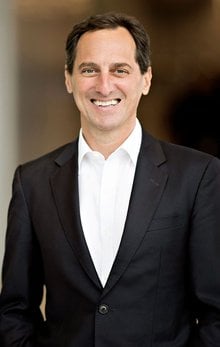
Daniel S. Goldberg
President and CEO
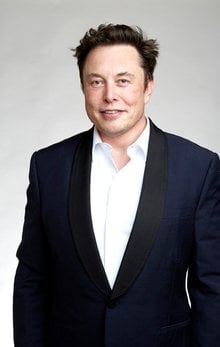
Elon Musk
Tesla CEO
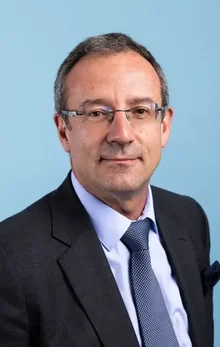
Jean-François Fallacher
CEO

Mark Dankberg
CEO
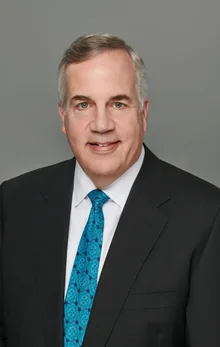
Matt Desch
CEO
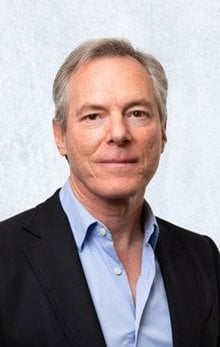
Paul Jacobs
CEO
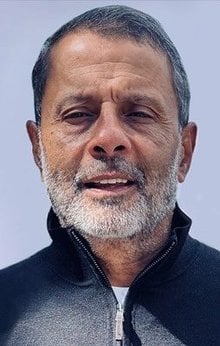
Ramu Potarazu
CEO